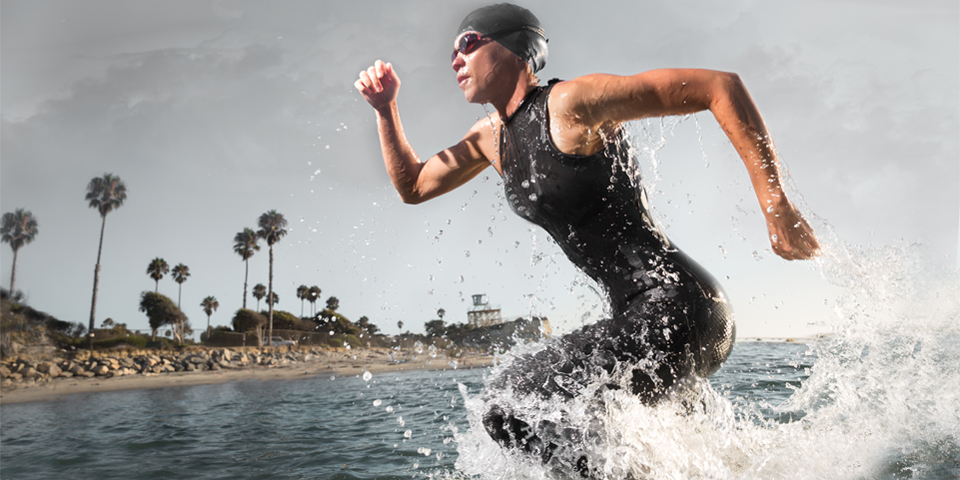
If you want to know what exquisite pain feels like, hang out at the finish line of an Ironman. Every athlete who goes through this course will experience equal parts exhaustion, physical and mental pain, and adrenaline rush. The sense of accomplishment you get when you take the final step in a multi-part race, whether it’s a full Ironman, Ironman 70.3, Olympic triathlon or sprint, is unparalleled. And if you’ve ever ingested this, you know how addictive it is and how terrifying that addiction can be.
So how do you stay fresh mentally and physically in a sport that’s all about testing your limits and challenging your mettle? I’ve spent nearly a decade as a professional triathlete trying to figure that out. Here’s what I learned.
take a mid-season break
Once race season begins and you’re in shape and ready to compete, it can be difficult to press pause. But a short, planned break mid-season can be a game-changer. While some people (particularly “Type A” athletes) may find it extremely difficult to take a step back, it’s the best thing you can do for your body and mind, especially if you’re planning races towards the end of the year.
A few years ago, when race calendars started stretching from March to October or November, I started taking mid-season breaks. There isn’t an athlete on the planet who can keep the training and racing fire going for this long without taking some downtime to let their body recover. I tried it in 2012 (I raced from March to December). And we made it through Christmas. Since then, I’ve decided to take some time in the middle of the season to reset, recover, and get ready for the second half.
To be clear, I’m not suggesting you ditch your bike, the pool, or the road to party hard or lie on the couch (well, maybe just a little!). My recommendation is to work with your coach to plan a week during race season that allows you to fully recover from the rigors of the sport.
It’s an ideal time to go on vacation with your partner and family, catch up with friends, and spend time indulging in passions and pastimes that are often sidelined by training. You can continue swimming, biking, and running if you like, but be unstructured and put away all your training gadgets (heart rate monitors, power meters, etc.). The focus should be on having fun and being social. Keep your competitive spirit in check as you casually enjoy spins, jogs, splashes, and more with your training buddies.
prioritize recovery
Let’s assume you take a mid-season vacation to feel refreshed and rejuvenated. Your goal now is to stay that way, and to do that you need to focus on recovery as much as training (which you should be doing anyway).
For example, I often schedule a light recovery day after, say, 3-4 days of progressively harder training. That doesn’t mean keeping your heels up 24 hours a day. Don’t confuse “recovery” with “lack of exercise.” But you might take a break from cycling or running for a light pool or gym workout. When I go running or cycling, I try to take it easy. I run 9-10 minute miles and use less than 150 watts for rides. I’m increasing my mobility, building strength, honing my swimming skills, and staying active without stressing my muscular, cardiovascular, or energetic systems. On the contrary, I am training them just enough to promote blood flow and promote repair and recovery.
If you think this sounds like polarized training (i.e., making hard tasks difficult and easy tasks easy), you’re right. This is the most effective way to not only optimize your training adaptations (strength, power, endurance, etc.), but also to keep your body ready for peak performance. When it’s time to really step on the gas during a race or a hard workout, polarizing training will help you have enough energy in the tank to give it your all.
On light days, I try to slow down outside of training. Everything is so relaxing. Take a nap, read a book, or get a massage. My goal is to calm the nervous system and release mental tension. The mind is just as important as the body when it comes to sports performance, so don’t neglect it.
maintain balance
Triathletes tend to adopt a “more is better” training philosophy. But in my experience, more of something isn’t better unless it’s offset by something else. Take a hard look at your lifestyle and make sure everything is balanced (and open-minded). If you only train for triathlons outside of work, you may not have a lot of balance in your life. If you spend all your waking hours thinking and talking about triathlons, it’s probably time to balance it out with other hobbies and interests.
I’ll be the first to admit that sometimes it’s easier to chase a goal time. But if you want to reach your goals, you need to look at every aspect of your life – work, health, relationships, recreation – and make sure all the boxes are checked. If not, take steps to change it. Get involved with a local charity, learn a new language, read, make time to see friends, or do whatever it takes to create balance in your life. I promise it will make you a happier, healthier person, and a harder, more successful triathlete.