
This post may contain affiliate links. Please read our disclosure.
I love CGM, but it took me a while to learn how to wear it all the time without it being irritating or itchy and without the adhesive tape peeling off after a few days.
These CGM tips and tricks are based on my experience with the Dexcom G6, Dexcom G7, and FreeStyle Libre 2, but should work with any CGM brand or model on the market.
How to find the CGM placement that’s right for you
We found that where you place the sensor has the biggest impact on overall comfort. This is one of my top CGM tips because where you place your CGM sensor has the biggest impact on your overall comfort level.
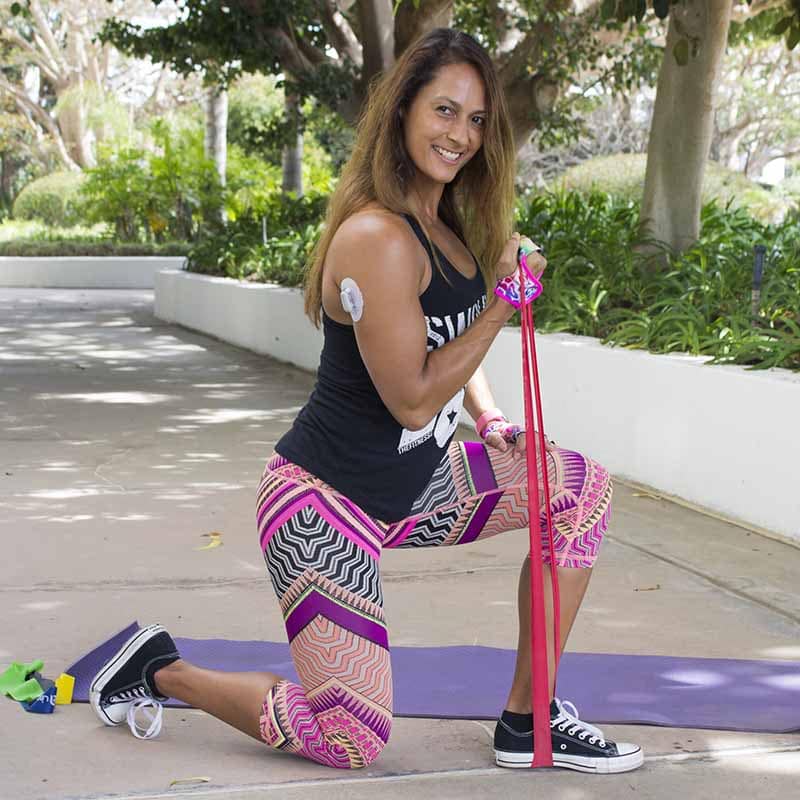
I prefer to place the Dexcom G6 and FreeStyle Libre 2 on my lower back and back of my upper arms (triceps), but I feel the Dexcom G7 is best on my stomach and upper thighs. This is the least likely place to hit something and rip it off.
In this video you can see some of the different places you can wear the Dexcom G7.
For the lower back, I find that it needs to be placed just above the belt/pants. If you put it under your belt, it’s more likely to come off every time you put on your jeans, and it’ll be uncomfortable if your pants press against the sensor.
You also want to move the sensor away from the bend. It is mounted horizontally so that it does not get in the way when moving.
Optimally placing the sensors can be difficult and there are some places I can’t reach on my own, so Tobias helps me out from time to time.
Then there are some sites that just scare me, so I haven’t had the courage to try them yet (I’ve seen people wear them on their calves!!).
How to keep CGM on
Keeping the CGM on for the life of the sensor can be problematic, but there are tricks you can use to keep the CGM on.
Use skin grip overlay tape
Regular overlay tapes, especially the ones shipped by Dexcom, can irritate your skin when the weather is very warm or when you’re doing a lot of aerobic exercise.
This is my arm just 3 days after using the Dexcom overlay tape. It was almost like a burn, but it was still visible three months later.

I think cloth patches like Skingrip are much easier to use. It was originally designed with an active lifestyle in mind, and it really does the job. This is one of our top CGM tips for summer.
It keeps the sensor in place for weeks without irritating my skin at all. The texture of the patch is more like a large bandage than plastic, so it doesn’t feel like you’re wearing a patch and you quickly forget about it.
Skin grips come in a variety of colors and designs, and there are also see-through types that make the tape less noticeable.
If you’re into colorful patches like I am, their products are for you. Get 10% off using code DIABETESSTRONG on the Skin Grib website.
Other overlay tape options
I prefer Skin Grip Overlay Tape, but there are many other options.
- Glyph grips come with lots of patches in crazy shapes and colors (how about a patch shaped like a Tyrannosaurus rex?). This makes it ideal for children and anyone who wants to accessorize their CGM.
- ExpressionMed also creates patches in a variety of designs (including the Taylor Swift collection). The patch is printed on a material that is more paper-like than sports tape, which I’m not a big fan of, but it’s still a strong option.
- Pump Peelz are similar in fabric to ExpressionMed, but the design is a little more “adult” than Griff Griff and ExpressionMed. I use it and like it, but it doesn’t last as long as Skin Grip.
Add adhesive to the sensor using Skin-Tac™ adhesive wipes.
If your CGM drops easily, Skin-Tac may be the solution.
This is basically a body glue that you apply to your skin and let dry before attaching the sensor. It makes the skin very sticky and acts as an extra glue.
I didn’t really like this because it got glue all over the place, but I know there are a lot of people in the diabetes community who love it.
Some people add a skin tack if the sensor starts to dislodge after a few days. Just add a little glue under the edge and reattach it that way.
Again, this method doesn’t work very well for me. Probably because it is quite difficult to clean the area where the sensor has come loose.
It is a little difficult to remove (from the painted area and hands), so I recommend using it. adhesive removal wipes This is to remove the adhesive.