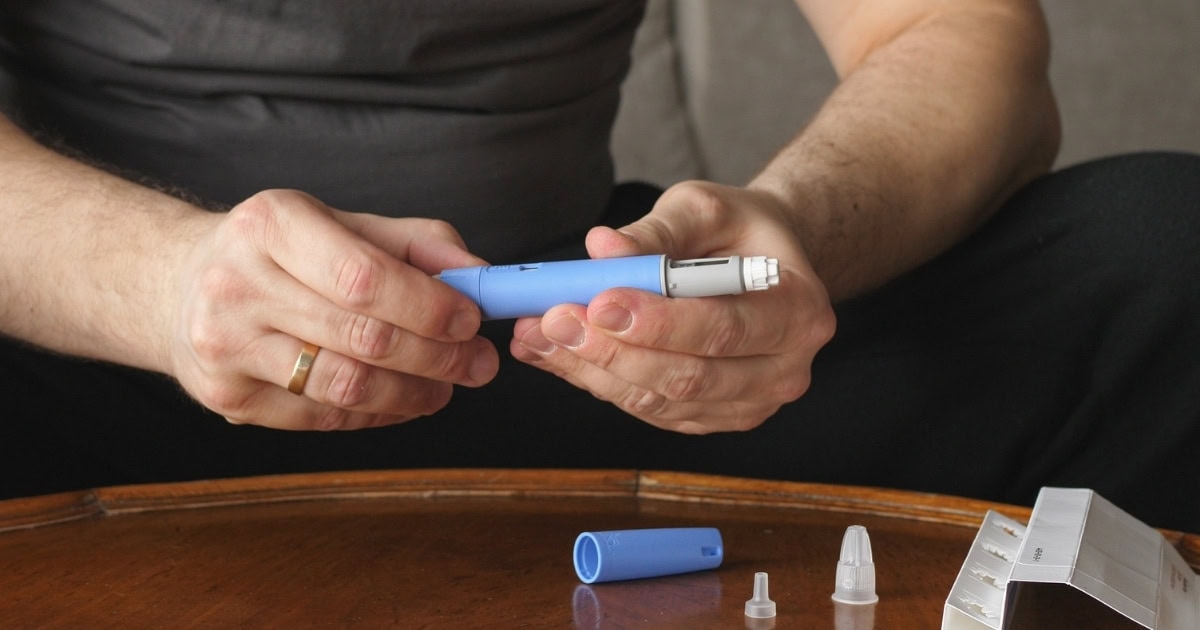
Almost 50% of people who start Ozempic experience side effects. Most side effects of Ozempic are mild and disappear with time or with dosage adjustment.
Common Ozempic side effects
A 2022 clinical trial conducted at Mayo Clinic Health System studying the effectiveness of Ozempic as a weight loss drug found that nearly half of all participants experienced side effects.
| Ozempic side effects | Percentage of study participants |
|---|---|
| any side effects | 48.6% |
| nausea and/or vomiting | 36.6% |
| diarrhea | 8.6% |
| fatigue | 6.3% |
| constipation | 5.7 |
| abdominal pain | 5.1% |
| headache | 2.9% |
| acid reflux | 2.3% |
Severity of common side effects
Although most side effects are mild, 11.5% of study participants experienced side effects severe enough to require an adjustment in the Ozempic dose or discontinuation of the medication.
| Severity of side effects | Percentage of study participants |
|---|---|
| none | 51.4% |
| Mild | 37.1% |
| Moderately | 8.6% |
| strict | 2.9% |
Mild This means that the person can continue taking Ozempic as usual.
Moderately That is, the person had to reduce the dose of Ozempic.
strict That is, the person had to stop taking Ozempic.
How long does it take for common side effects to stop?
Mild gastrointestinal side effects usually disappear within a few days or weeks as your body gets used to the drug. If your symptoms last longer or are severe, contact your health care provider.
If you stop taking the medicine, you may continue to experience side effects for several weeks until the medicine leaves your body.
How to reduce or reduce common side effects
The most common side effects are gastrointestinal (stomach-related). Therefore, it is best to avoid foods, medications, and activities that can upset your stomach.
- Avoid fatty, fried, and very sweet foods
- Eating bland foods such as crackers, rice, and toast
- Eat foods that contain water, such as soups and gelatin
- eat smaller meals more frequently
- eat slowly
- Do not lie down after eating
- Stay hydrated by drinking cold sugar-free drinks (such as water)
- Be careful with artificial sweeteners and sugar alcohols
- Take anti-nausea medication (only after consulting your doctor)
If side effects are severe or persist after several days, ask your doctor about adjusting your dose.
Note: After a drug is approved by the FDA, the agency continues to monitor its side effects. If you experience any adverse effects from using Ozempic, we encourage you to report them to the FDA through the MedWatch program.
Rare but serious side effects of Ozempic
Ozempic can cause rare but serious side effects.
thyroid cancer
Ozempic has received a warning from the FDA regarding thyroid C-cell tumors (thyroid cancer).
Concerns about thyroid tumors are based on research using Ozempic and similar drugs in animal studies. In this study, some rats and mice developed thyroid tumors, some of which were cancerous. It is unknown whether Ozempic has this effect in humans.
Regulatory agencies are monitoring the annual incidence of medullary thyroid cancer (MTC) in the United States to determine whether people taking Ozempic are more likely to develop this cancer (results expected from 2035 to 2037).
Tell your health care provider if you have any of the following symptoms of thyroid cancer:
- I have a lump or swelling on my neck
- hoarse voice
- dysphagia
- shortness of breath
Do not use Ozempic if you or anyone in your family has ever had MTC or has an endocrine system disorder called multiple endocrine neoplasia syndrome type 2 (MEN 2).
pancreatitis
pancreatitis A medical condition in which the pancreas becomes inflamed, causing severe pain and affecting the pancreas’ ability to secrete insulin.
in clinical researchSeveral people developed pancreatitis while taking Ozempic. However, it is divided into two parts. large scale researchpeople taking Ozempic developed pancreatitis no more often than people taking a placebo.
Therefore, the scientific consensus is that there is no direct evidence that Ozempic can cause pancreatitis.
It is worth noting that patients with type 2 diabetes have almost three times the risk of pancreatitis, regardless of whether they are taking Ozempic.
Stop using Ozempic and contact your healthcare provider right away if you have any of the following symptoms of pancreatitis:
- vomiting
- Severe pain in the upper abdomen that extends to the back
- your stomach is soft to the touch
- fast pulse
gastroparesis
Gastroparesis (also called delayed gastric emptying and gastroparesis) is a disorder in which the movement of food from the stomach to the small intestine slows or stops, even though there is no obstruction.
If food stays in the stomach too long, bacteria can overgrow as the food ferments.
The American Diabetes Association also notes that food can harden into hard lumps called bezoars, which can cause nausea, vomiting, and even dangerous, even life-threatening stomach blockages.
Because one of Ozempic’s main (and intended) effects is to slow the rate at which food leaves the stomach and enters the intestines, it is suspected that this may cause gastroparesis in some cases.
A study led by researchers at University Hospitals in Cleveland found that people prescribed GLP-1 drugs for weight loss, such as semaglutide (brand names Ozempic and Wegovy), exenatide (Byetta), and liraglutide (Victoza), were significantly more likely to be diagnosed with gastroparesis at least six months later.
Stop using Ozempic and contact your healthcare provider right away if you have any of the following symptoms of gastroparesis:
- Nausea or vomiting after eating
- Feeling full just by eating a small amount
- Severe bloating after eating
- Pain in the upper part of the stomach (epigastric pain)
- Gradual, unexplained weight loss
- loss of appetite
- Spasms and spasms of the stomach wall
kidney damage
Only one case of acute renal failure was reported in the original SUSTAIN trial.
more recently FLOW clinical trial In adults with type 2 diabetes and chronic kidney disease, Ozempic actually lowered the risk of kidney disease-related events by 24%.
In this trial, people who took Ozempic were less likely to experience at least one of the following:
- Loss of 50% or more of renal function
- renal failure
- dialysis
- kidney transplant
- death due to kidney disease
- Death from cardiovascular disease
Therefore, it is safe to assume that Ozempic does not increase the risk of kidney damage. In fact, it may be part of the cure.
temporary vision changes
According to the American Academy of Ophthalmology, temporary vision changes, such as blurred vision, can be expected when you start Ozempic.
Changes in blood sugar levels affect the shape of the eye’s lens, causing blurred vision.
One of the main benefits of Ozempic for people with type 2 diabetes is that it lowers blood sugar levels, so vision may become blurred until blood sugar levels stabilize at a new level.
The older you are, the more likely you are to experience blurred vision when you start taking the medication. As we age, the lens of our eyes becomes less flexible, so it takes longer for vision to stabilize when blood sugar levels change.
diabetic retinopathy
Studies investigating the relationship between Ozempic (semaglutide) and diabetic retinopathy have been inconclusive.
One study found an increased risk of retinopathy complications in patients, so Ozempic’s label now includes a warning about the risk of vision changes.
However, subsequent studies have found no association between semaglutide and retinopathy, and some studies have even shown that semaglutide may help prevent retinopathy.
The current consensus is that Ozempic is unlikely to cause or worsen retinopathy, and if it does, it is probably related to changes in blood sugar levels rather than the drug itself.
eye disease that causes blindness
A new study suggests a link between Ozempic and an increased risk of a blinding eye disease called non-arteritic anterior ischemic optic neuropathy (NAION).
However, the study’s senior author, Dr. Joseph Rizzo, stressed that the study showed an association rather than proving causation and that more research was needed.
Experts’ current recommendation is that most people do not need to worry about this, but people with existing vision problems should consult their doctor before taking Ozempic.
gallbladder problems
Some people taking Ozempic have developed cholecystitis (cholecystitis) and gallstones. It is unknown at this time whether this is related to this drug.
Tell your health care provider right away if you experience any of the following symptoms of gallbladder problems:
- pain in the epigastrium (abdomen)
- heat
- Yellowing of the skin and eyes (jaundice)
- Clay-colored stools.
allergic reaction
Some people (less than 1% of clinical trial participants) developed skin reactions where the drug was injected. These include pain, redness, and discomfort, which usually go away on their own or after icing or taking ibuprofen.
In rare cases, Ozempic can cause severe allergic reactions. Stop using Ozempic and seek immediate medical attention if you have any symptoms of a serious allergic reaction, including:
- Swelling of the face, lips, tongue, and throat
- breathing or swallowing problems
- Stomach pain, bloating, vomiting, diarrhea
- Severe rash or itching
- feel faint or dizzy
- Heart rate is very fast.
Hypoglycemia (hypoglycemia)
If you have diabetes and use Ozempic with insulin or other diabetes medications, your risk of hypoglycemia may increase.
Symptoms of hypoglycemia vary from person to person, but common symptoms to watch for are:
- severe hunger
- chills or sweating
- trembling
- confusion or clumsiness
- blurred vision
- slurred speech
You should always have foods on hand that quickly raise blood sugar levels in case you need to treat hypoglycemia. Juice, glucose tabs, or sugary sweets like jelly beans are good options.
It is also a great idea to have intranasal glucagon (Baqsimi) available to treat very severe hypoglycemia where glucose tablets are not effective enough.
If you have severe hypoglycemia and are worried that you may pass out, call 911 or your local emergency number.
Mental health issues and suicidal thoughts
There have been reports of people experiencing suicidal thoughts after taking GLP-1 receptor agonists (a drug class that includes Ozempic, Wegovy, Mounjaro, and others), and the Food and Drug Administration (FDA) said in 2023 that it was “evaluating the need for regulatory action.”
However, a 2024 study funded by the National Institutes of Health (NIH) found no link between semaglutide and suicidal ideation.
In fact, in that study, Found “Semaglutide is associated with a 49% to 73% lower risk of first-time or recurrent suicidal ideation compared to other drugs to control obesity and type 2 diabetes.”
Weight loss is both a goal and a side effect.
In clinical trials of Ozempic, participants lost an average of about 15% of their body weight.
Although this is the intended effect, it may not be good if you don’t need to lose weight.
It is also important to note that not all of the weight lost by consuming Ozempic will turn into fat. Although studies disagree on how much muscle mass (and even bone density) is lost, it is certain that at least some muscle loss occurs.
It is highly recommended to include resistance training in your treatment and exercise plan to avoid muscle loss.
Get the “Ozempik face” through rapid weight loss
Sudden and significant weight loss, whether due to medications or other factors, can lead to changes in appearance.
One is the change in facial contours, or what is colloquially known as the “Ozempic face.”
- A blank expression and wrinkles on the face
- Sunken eyes and drooping of the chin and around the neck.
- Changes in the size of lips, cheeks, and chin
If you lose weight quickly, the same can happen in other parts of your body.
This is called “Ozempic face,” but it is not caused by Ozempic, but by rapid weight loss.
If you experience any worrying changes in your health while taking Ozempic, it is important to consult your health care team. They may recommend lowering your Ozempic dose and slowing your pace of weight loss.
Ozempic, pregnancy, contraception
The safety of Ozempic during pregnancy or breastfeeding has not been well studied, but animal studies suggest that there may be some risk to the fetus if Ozempic is used during pregnancy. Ozempic may also be present in breast milk.
Therefore, it is recommended that you stop using Ozempic at least 2 months before pregnancy and do not start using it again until you have stopped breastfeeding.
Because Ozempic affects how quickly food and medicine are absorbed into the stomach (and because vomiting is a common side effect), it may affect the effectiveness of oral contraceptives.
Although there are no published studies or studies regarding semaglutide and contraception, there are anecdotes of pregnancy occurring while using contraceptives or while taking Ozempic.
You may consider asking your doctor about other methods of contraception while taking Ozempic.
When should you call your doctor or go to the hospital?
You should seek medical attention immediately if you have the following symptoms:
- severe vomiting and diarrhea
- Severe pain or tenderness in the abdomen
- Inability to pass gas or move the intestines
- Jaundice (yellow skin color)
- Allergic reaction at the injection site
In general, it is a good idea to tell your doctor that you are taking Ozempic or another GLP-1 drug. These drugs are new, and knowledge about risks and side effects is still evolving.
If your doctor knows you are taking Ozempic, he or she can better diagnose your health problem and advise you about other medications and treatment options.
FAQ
Does Ozempic cause long-term side effects?
There are no other known long-term side effects of Ozempic, but the drug has not been widely available for more than a few years, so its long-term safety profile is not completely known.
Can Ozempic cause hair loss?
Hair loss was not reported as a side effect in Ozempic or Wegovy clinical trials.
However, rapid weight loss can lead to hair loss, and people with diabetes and high blood sugar are generally at higher risk for hair loss.
What effect does Ozempic have on the heart?
A 2023 clinical trial showed that semaglutide can reduce the risk of major cardiac and vascular events such as heart attack, stroke, and cardiovascular death by up to 20 percent.
Ozempic has no known harmful effects on the heart or blood vessels, so it could become a common drug in the future to lower the risk of heart attacks and treat heart disease.
Was this article helpful? Let us know by clicking Yes or No below.