We’re not questioning all the squat variations available. We know that from Curtsy Squats to Split Squats, each one offers a slightly different effect on your workout while building lower body strength.
But there’s something about barbell squats that makes you want to compare front squats to back squats. Which is more difficult? Which is more effective for muscle building? Do I need to do both?
Before looking into the benefits of front squats and back squats, it’s important to understand the difference between the two movements. Both use a barbell, but with different placement.
- when back squathold the barbell behind your shoulders so that it engages your trapezius (upper back muscle) and posterior deltoid (back shoulder muscle).
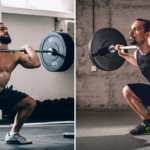
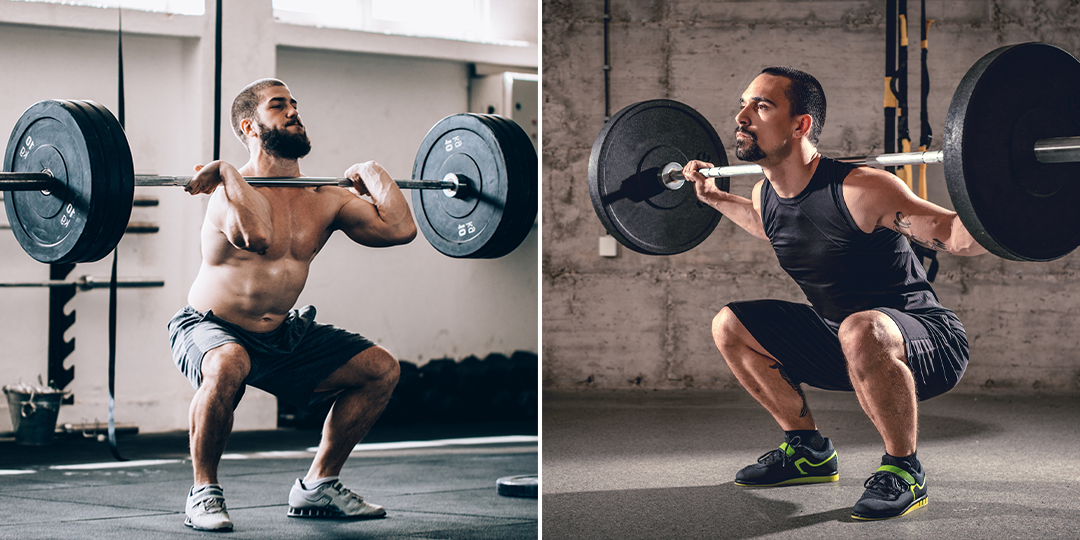
- inside front squathold the barbell in front of your shoulders (either with a full grip or with your fingertips, depending on your mobility), with your elbows facing forward so the bar rests on your front deltoid muscles.
Are front squats harder than back squats?
Most people find front squats harder than back squats because the barbell leans forward.
“This is because front squats require much more posture maintenance, and holding the bar requires you to keep it within a tighter trajectory,” says Kate Meyer, CPT, a Certified Weightlifting Level 1 Coach. Both squats work your upper body, but front squats put more stress on your core and back muscles.
Some lifters have trouble holding the barbell in a front squat, says Robert Herbst, a 19-time world champion powerlifter and member of the AAU Strength and Sports Hall of Fame.
“Front squats are more difficult to perform because most people lack the flexibility to grip the bar,” he explains. “Some people can do the clean Olympic style (elbows up and fingers under the bar), others cross their arms, but many find it uncomfortable. Back squats are easier to hold because the bar is above the traps, or further down your back, and is held in place by the mechanical force of your arms.”
Do front squats and back squats work the same muscles?
There are some differences when comparing the muscles used in front and back squats. Meyer explains:
- Front squats work the upper back muscles and mainly the quadriceps in the lower body.
- Back squats further work your glutes and hamstrings in addition to your quadriceps. It also stimulates the lower back muscles more than the front squat.
Both front and back squats test your core strength, but front squats are usually more of a challenge.
Can front squats be substituted for back squats?
According to Meyer, a balanced strength workout typically includes both front and back squats. However, you don’t need to do both, especially if you’re training for general fitness and not a specific sport.
“Depending on your body type, you may find that one is better for your joints than the other,” Meyer says. “The important thing is to incorporate squatting movements throughout your program.” If you prefer front squats, feel free to make them your default squat option.
Should you add front squats to your routine?
As mentioned earlier, there is no need to include front squats in your training plan, especially if they feel uncomfortable. But if you have any interest in sports like CrossFit or Olympic weightlifting, front squats are inevitable.
Alternatively, you can try goblet squats with dumbbells or kettlebells in front of your chest. Like the front squat, this movement requires core and back strength, but it’s easier to reduce weight and doesn’t require as much grip mobility.
How to do a front squat
Before attempting front squats, it’s a good idea to work with a personal trainer to make sure you’re learning the correct form for bodyweight squats. “Often people get injured because they squat incorrectly and then put weight on top of it,” Meyer says. As with any lift, start with light loads and work your way up over time.
- Place the barbell on the squat rack and grasp the barbell with your hands shoulder-width apart. Bend your elbows, face forward, and place your shoulders under the barbell so that the barbell is on the underside of your palms or fingers.
- Step back, lift the bar from the rack, and stand tall with your feet slightly wider than shoulder-width apart.
- Keeping your back flat, chest up, and core engaged, push your hips back, bend your knees, and lower your body until your thighs are at least parallel to the floor.
- Pause and push your feet back to a standing position.