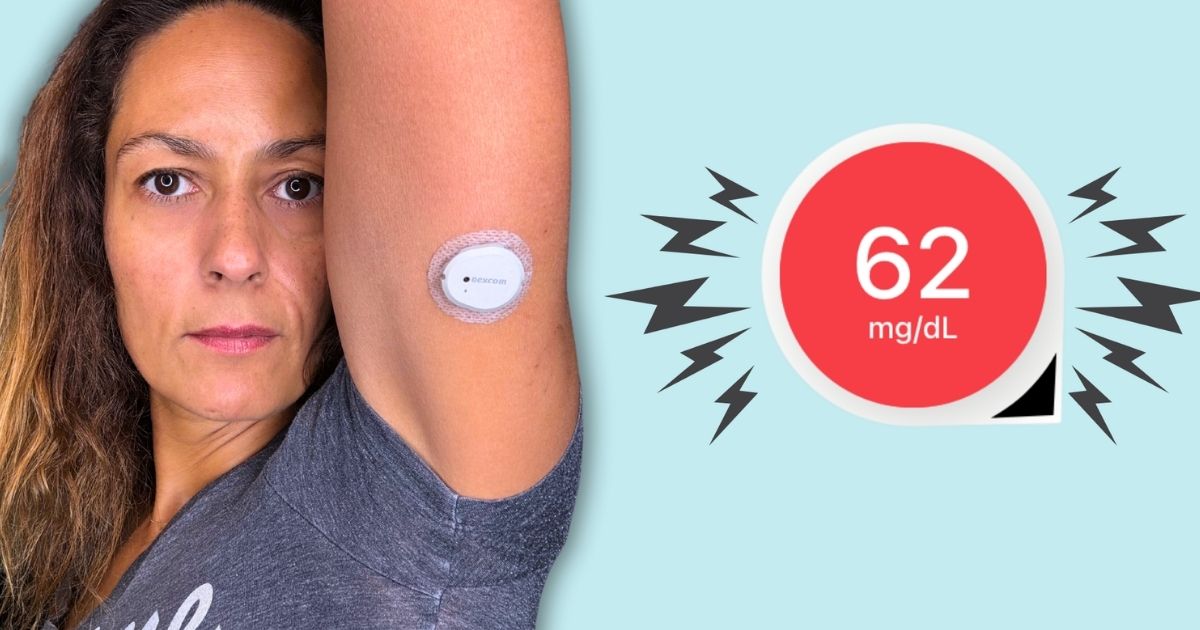
If you have diabetes and wear a continuous glucose monitor (CGM), you’ve probably experienced that mysterious 3 a.m. alarm.
It’s not 1 a.m. or 5 a.m., it’s always within three “oh somethings.” When you go to bed with beautiful and stable blood sugar levels, beepthe night suddenly changes.
So what’s really going on at that time of the night? Is it your CGM, your hormones, your last meal, or is the diabetic god simply enjoying our sleep deprivation?
Let’s break down everything that causes those 3am alerts, how to tell the difference between a real alarm and a false alarm, and what you can do to finally get uninterrupted sleep.
Watch the video or read the article below.
What’s really going on at 3am?
1. The dawn phenomenon: Hormones wake up before you do.
Between 2am and 4am, your body starts preparing for the next day. This is known as the dawn phenomenon.
During this period, hormones such as cortisol, growth hormone, and glucagon instruct the liver to release glucose so that the body has energy to wake up.
People without diabetes release insulin to balance the increased secretion of insulin, but people with diabetes often don’t time their insulin properly.
result? Blood sugar begins to rise, the CGM detects it, and the 3 a.m. concert begins.
Signs of the dawn phenomenon:
- Blood sugar levels rise gradually between 2 and 4 a.m.
- It happens consistently even on days when I eat early and don’t exercise until late.
- The rise appears to be smooth rather than sudden.
Calibration hint (for CGMs that allow it)
- Never calibrate during rapid changes in glucose.
- Always calibrate when blood sugar levels are flat and stable.
- This prevents inaccurate readings from lasting for hours.
2. Night snacks (especially high-fat foods)
Pizza, hamburgers, ice cream, potato chips, and even healthy fats like nuts and avocados are digested slowly and can delay the rise in blood sugar levels.
Even if you go to bed at 110 mg/dL, by 3 a.m. that slow-release energy has finally reached your bloodstream.
Combine this with insulin doses that were not perfectly matched and CGM has a lot to complain about.
3. Basal insulin timing and pump settings
Timing is important when using long-acting insulin (also known as basal insulin).
Many basal insulins, including Lantus and Tresiba, have mild peaks. You may experience your lowest temperatures around 3 a.m., as your body’s peak occurs at the same time as your body’s natural decline during the night.
On the other hand, if:
- Insufficient intake of insulin during dinner
- I reduced my basal dose too much.
- skipped fix
Instead, you may see a slow and steady rise.
4. Evening training
Exercise, especially resistance training or aerobic exercise near bedtime, can change nighttime blood sugar patterns.
During recovery, your muscles continue to remove glucose from your bloodstream for hours.
This can cause issues such as:
- Slow and steady decline overnight
- Increase nighttime alarms on exercise days
- Greater variability depending on intensity and timing
Here’s what I personally do on intense training days:
- Make small adjustments to long-acting insulin
- Aim to go to bed closer to 140 mg/dL than 100 mg/dL
- Track how different workouts affect your night (I use Diabetes Logbook)
Exercise is great for controlling blood sugar levels and should be part of your daily routine, but it helps to plan for nighttime effects.
5. Compression decreases: when rolling over the sensor
A very common cause of nighttime alarms, especially false lows, is compression.
When you turn over and put pressure on the CGM sensor, that pressure reduces the flow of interstitial fluid and the CGM registers that your blood sugar levels are plummeting.
If you turn over, the readings will return immediately.
No, I wasn’t about to pass out. It just hugged the CGM a little too aggressively.
How to recognize compression loss:
- Sudden drop in symptoms without symptoms
- Returns to normal with a sharp bounce when moved
- Trend arrows don’t match your feelings
Quick tips: Always check the trend graph before dealing with the lows. No more over-treating false lows.
6. Sensor quirks, lag times, and false readings
Even a perfect sensor can malfunction under certain conditions.
CGM measures glucose in interstitial fluid rather than blood. This means that readings often lag 5 to 10 minutes behind real-time changes, especially when glucose changes rapidly.
Other factors that can cause false alarms:
- temperature change
- sweating
- Rapid changes in blood sugar levels
- Older sensors (especially 10 to 14 days old)
- Loose sensor adhesive
How to treat nighttime depression without leaving your bed
If the alarm is real and your blood sugar is really low, you need a quick carb that doesn’t require a trip to the kitchen.
My three bedside points are:
My bite-free quick fix:
- fruit pouch Perfect for when you feel like chewing is impossible
- skittles It can be easily swallowed with water, so there is no need to brush your teeth.
- glucose tab It’s the fastest and most predictable option
15 15 Using rules
You may want to consider the 15-15 rule when treating hypoglycemia.
- Consume 15g of carbohydrates
- wait 15 minutes
- Reconfirmation
- If still low repeat
Bonus tip: If you curb your appetite around 5 a.m., you’ll often need less than 15 g of carbohydrates, as your morning hormones naturally begin to raise your blood sugar levels and increase insulin resistance at that time. You might see the same pattern.
Tracking what works for you can help prevent a rebound high.
How to reduce (or stop) your 3am CGM alarm
Here are the strategies that have made the most important difference for me and many others in the Diabetes Strong community.
- Carefully consider sensor placement – Avoid areas where you lie down, especially the outside of your arms.
- Adjust or customize alerts – Use overnight sleep mode or a gentler threshold if needed.
- Start a new sensor early in the day – This avoids the instability of the first day overnight.
- Pay attention to dinner timing and insulin dosage – Be especially careful with high-fat meals or late meals.
- Track pattern – Write down your blood sugar rises and falls, your meals, your workouts, your basic timing, everything. This helps identify predictable triggers.
- Keep fast-acting carbohydrates by your bedside – No more over-correcting or stumbling to the kitchen at 3am.
final thoughts
Our CGM doesn’t hate us. They are trying to protect us but sometimes they can be a little too loud at 3am
Understanding the patterns behind these alarms will increase your confidence, improve your sleep, and improve your nightly blood sugar levels.
And certainly, diabetes will eventually start to feel like it makes a little more sense.
Sweet dreams, and fewer beeps.