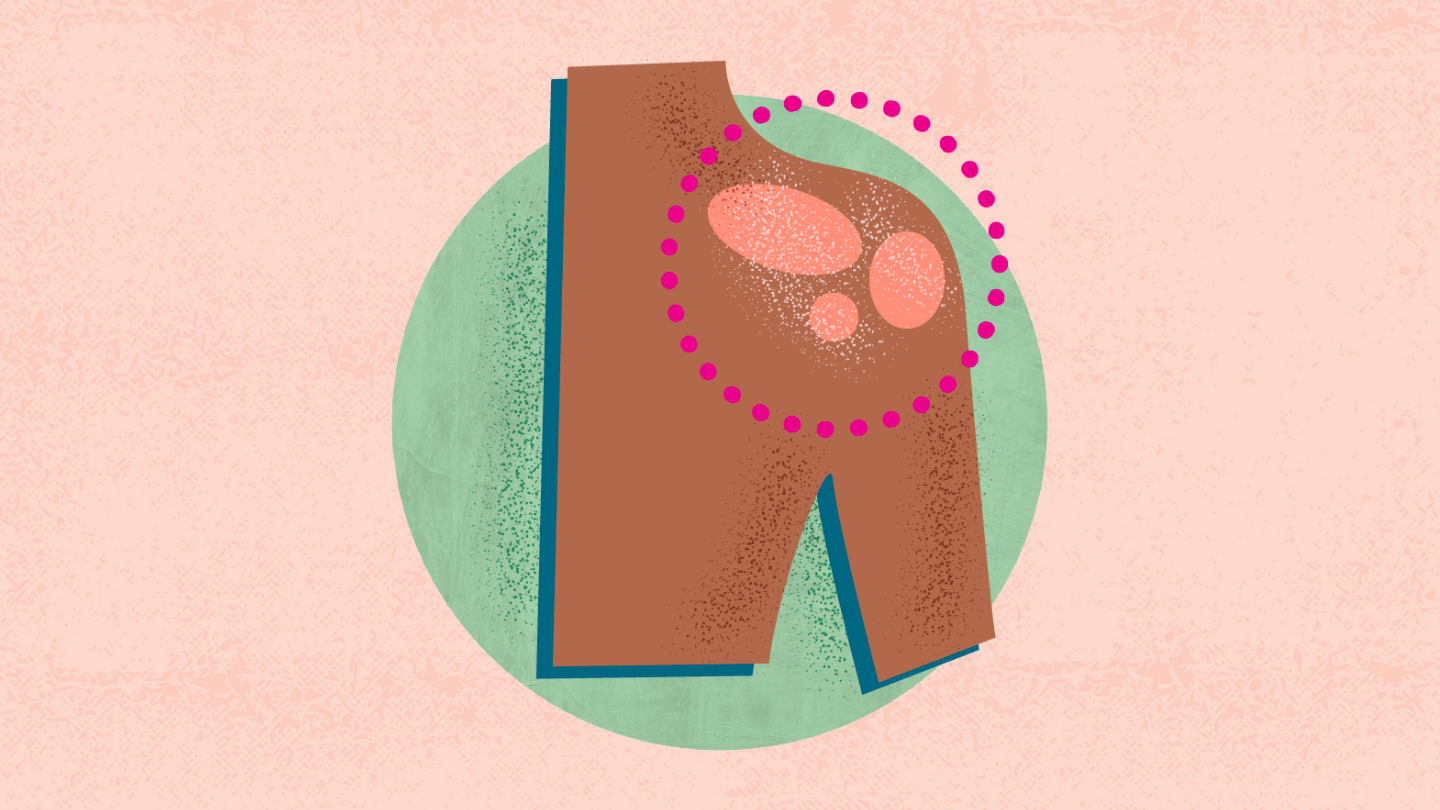
Psoriasis is an autoimmune disease that causes plaques, which are thick, dry, discolored, itchy and painful patches of skin. Although any part of the body can be affected, psoriatic plaques most often occur on the elbows, knees, scalp, back, palms, and feet. Like other autoinflammatory diseases, psoriasis occurs when the immune system, which normally attacks infectious bacteria, starts attacking healthy cells instead. Signs and Symptoms of Psoriasis Symptoms Psoriasis plaques can range from a few dandruff-like scales to a large rash that covers a large area. Symptoms and appearance of the disease vary depending on the type and severity of psoriasis. Common signs and symptoms include: discolored spots — classically red with silver scales on fair skin and purple with gray scales on dark skin — Or the skin is covered with raised plaques. Scaling A periodic rash that comes back over a period of weeks or months and then subsides Dry or cracked skin with bleeding Burning, itching, or pain near the affected area Punctured or thickened fingernails or toenails Causes and risk factors for psoriasis Causes Psoriasis is primarily genetic and passed down through families. Approximately 2 percent of people in the United States are affected. Scientists have identified certain genes that increase a person’s chance of developing psoriasis, but not everyone with these genes will develop psoriasis. Furthermore, some people who actually develop psoriasis do not have these genes. e60dc2a1-f33c-4a05-9b50-8e3e8e5976296c5f594d-c277-402e-a22e-7deec9f87b5a “Multiple genes need to be affected to develop psoriasis and can be triggered frequently by external events such as infections,” says James W. Swan, M.D., a dermatologist in Maywood, Illinois, who specializes in psoriasis. In addition to family history, certain risk factors can increase your chances of developing psoriasis. e60dc2a1-f33c-4a05-9b50-8e3e8e5976298918e40d-1edc-46ba-8cbb-2c9f67680b27 Being overweight or obese Having celiac disease Smoking Alcohol use or abuse Psoriasis epidemics can be caused by factors such as: Stress Stress is a common trigger for some people. e60dc2a1-f33c-4a05-9b50-8e3e8e59762917f6cac6-9312-4a55-9ebd-1938ddbe0407 “Psoriasis is very stress-dependent, and it flares up very easily when patients: Stress management techniques such as exercise, yoga, and meditation may help manage psoriasis symptoms. Cold Weather Cold, dry weather can draw more moisture from the skin and worsen psoriasis symptoms. e60dc2a1-f33c-4a05-9b50-8e3e8e59762917f6cac6-9312-4a55-9ebd-1938ddbe0407 However, some people’s psoriasis may improve with sun exposure, so staying indoors all winter may not be the best idea either. UVB rays in sunlight have anti-inflammatory properties, and UVB phototherapy is used to treat psoriasis. However, since prescription phototherapy is more effective than sunlight and UV radiation can have harmful health effects, talk to your doctor about the best approach for you. Overly dry skin can cause psoriasis flare-ups. Solution: Keep your skin hydrated. If you are allergic to fragrances in moisturizers, use unscented products to avoid rashes. Vaccinations Puncturing the skin during vaccinations can cause psoriasis to flare up, but it is important not to skip any necessary vaccinations. Live vaccines should not be taken if you are taking strong psoriasis medications (such as biological treatments) that suppress your immune system. Because of the medications you are taking, your body may not be able to fight off a live virus. In that case, ask your doctor for a vaccine that contains an inactivated virus. e60dc2a1-f33c-4a05-9b50-8e3e8e597629f47f5266-16e7-4dbd-aebe-178aa51a7ad6 Beta-blockers and lithium Beta-blockers to treat high blood pressure and lithium in psychiatric disorders can cause psoriasis. If you are taking beta-blockers or lithium, be sure to mention this to your dermatologist when discussing your psoriasis treatment plan. Upper respiratory tract infections Colds and other infections, especially strep throat, can activate the immune system and cause psoriasis flare-ups. Psoriasis worsens. Previous studies have shown that smokers are almost twice as likely to develop psoriasis as non-smokers. e60dc2a1-f33c-4a05-9b50-8e3e8e5976299cf316ad-fad6-4ee9-9e6a-1efa1351c823 In a small previous study of twins, heavy smokers were more than twice as likely to develop psoriasis. Psoriasis.e60dc2a1-f33c-4a05-9b50-8e3e8e5976290dedf017-0338-48a2-9765-8d485b46f91f Dietary studies have not shown any beneficial effects of taking nutritional supplements on psoriasis, but avoiding certain foods may reduce inflammation and have an effect on psoriasis. Additionally, people with psoriasis are at increased risk for celiac disease, and some have found that eating a gluten-free diet can reduce their psoriasis symptoms. However, there is no conclusive evidence that it is effective for all psoriasis patients. There is also evidence that reducing intake of vegetables from the nightshade family, such as eggplants, tomatoes, and whites, can help. Potatoes, peppers — may help. In general, if you find that a certain food worsens your psoriasis, try to avoid it. Alcohol There are many ways alcohol consumption can affect psoriasis. In general, people with psoriasis consume more alcohol on average, but drinking can cause or worsen flare-ups in some people. Inflammatory conditions such as psoriasis. It can also cause dehydration, oxidative stress, and nutritional issues, which can affect skin conditions. of psoriasis at once. e60dc2a1-f33c-4a05-9b50-8e3e8e59762997fc5f32-ab51-462e-a5b4-5883898f3150 Plaque Psoriasis Plaque psoriasis, also known as plaque psoriasis, is the most common form of the skin disease. It appears as a scaly accumulation of dead skin cells, or raised discolored plaques covered with scales. Itchy and sometimes painful plaques can crack and bleed and commonly affect the scalp, knees, elbows, back, hands, and feet. Guttate psoriasis Guttate psoriasis, which often begins in childhood or young adulthood, is the second most common type of psoriasis. Almost 10% of people with psoriasis develop guttate psoriasis. Guttate psoriasis is the type of psoriasis most closely associated with recent streptococcal infections. If you develop guttate psoriasis, you may also be tested for streptococcus. Inverse psoriasis Inverse psoriasis, also known as interstitial psoriasis, causes red or discolored lesions in the skin folds of the body and can appear smooth and shiny. Lesions may occur on the genitals or in areas near the genitals, such as the upper thighs or groin. People with inverse psoriasis usually also have another type of psoriasis elsewhere on their body. Pustular psoriasis Blisters of white pus surround red or discolored skin, often on the hands and feet. Pus is made up of white blood cells. When pus-filled bumps cover the body, the skin may become bright red, and the person may feel sick and tired, have a fever, chills, severe itching, a fast pulse, loss of appetite, and muscle weakness. Erythroderma Psoriasis This is a dangerous and rare form of skin disease characterized by widespread burning redness and other discoloration and peeling of the skin, causing severe itching and pain. Nail Psoriasis People with nail psoriasis may experience symptoms such as pitting, abnormal nail growth, and discoloration of the nails and toenails. It can cause onycholysis, where the nail separates from the nail bed and many of the nails appear whiter than normal. People with severe nail psoriasis may notice that their nails become brittle. How is psoriasis diagnosed? Diagnosis There are no special tests that can help your doctor diagnose psoriasis. Typically, a dermatologist will examine your skin and ask questions about your family history. A diagnosis may be made based on this physical examination. In some cases, your doctor will take a small sample of your skin and examine it under a microscope. This allows for a closer look at the affected area and potentially a more accurate diagnosis. e60dc2a1-f33c-4a05-9b50-8e3e8e597629e7542a45-327a-487e-a131-795b61f1cf70 Duration of Psoriasis Psoriasis is considered to be a chronic, lifelong condition. There is currently no cure, but there are treatments that can keep your skin clear or nearly clear. For some people, psoriasis can heal over months or even years at a time. This is known as remission. Some people experience psoriasis flare-ups in a cyclical pattern. For example, the disease may get better in the summer and get worse in the winter. e60dc2a1-f33c-4a05-9b50-8e3e8e59762928dbf998-4e4b-4a2d-b8d0-57fb98208f7d Psoriasis Treatment Treatments and Medication Options Although there is no cure for psoriasis, there are effective treatments. Talk to your doctor about the benefits, risks, and side effects of any treatment you are using. Medications Some medications to treat psoriasis include: e60dc2a1-f33c-4a05-9b50-8e3e8e5976294eae524e-58e4-458e-98c4-94657437 445ae60dc2a1-f33c-4a05-9b50-8e3e8e5976297481c020-1359-47b1-850b-03ba8921a1f7 Topical Medications Prescription drug treatments, such as topical steroids, and over-the-counter (OTC) treatments applied directly to the skin can help minimize the symptoms of psoriasis. Each topical contains a different active ingredient, such as salicylic acid, and comes as a lotion, cream, shampoo, gel, spray, or ointment. Topical corticosteroids are often prescribed for mild or moderate psoriasis, but the FDA recently approved two nonsteroidal creams for psoriasis, roflumilast (Zoryve) and tapinarov (Vtama). .e60dc2a1-f33c-4a05-9b50-8e3e8e59762999b90f16-2e16-4b32-b3a1-6d910fe3ac75 Biologics Biologics are a type of systemic drug that affects the whole body and changes the immune system. It is usually given as an injection, but some are also available as tablets. Biologics include etanercept (Enbrel), infliximab (Remicade), adalimumab (Humira), ustekinumab (Stelara), secukinumab (Cosentyx), ikikizumab (Taltz), brodalumab (Cirik), tildrakizumab (Ilumiya), risankizumab (Skyridi), and guselkumab. (Tremfya), declavactinib (Sotyktu), and bimekizumab (Bimzelx). Apremilast (Otezla) This drug comes as a pill and works by inhibiting enzymes involved in inflammation. Oral Retinoids This type of systemic therapy is usually used in cases of severe psoriasis that do not respond to other treatments. Methotrexate (Rheumatrex) This medication helps reduce inflammation. Cyclosporine (Gengraf or Neoral) This systemic treatment suppresses the immune system but can only be taken for a short period of time. Phototherapy Phototherapy, such as UVB phototherapy, exposes the skin to controlled amounts of natural or artificial ultraviolet light to reduce the symptoms of psoriasis. This treatment may be given alone or in combination with other drugs. e60dc2a1-f33c-4a05-9b50-8e3e8e5976297481c020-1359-47b1-850b-03ba8921a1f7 Psoriasis Prevention There is no way to prevent psoriasis, but there are things you can do to improve symptoms and reduce symptoms. Number of flare-ups you experience.e60dc2a1-f33c-4a05-9b50-8e3e8e59762932437a7d-080a-41bd-8a53-9364bdeadeff Some ways to reduce the risk of psoriasis flare-ups include:e60dc2a1-f33c-4a05-9b50-8e3e8e5976299f7715f8-c3c9-46c5-a5a6-9e987bb71fd6 Bath daily Moisturize your skin Avoid triggers if possible Avoid scratching Consult your health care provider about how much sun exposure is safe for you Eat a nutritious diet that exposes you to a small amount of sunlight each day Exercise regularly Maintain a healthy weight Limit or avoid alcohol Complications of psoriasis Complications Having psoriasis can increase your risk of developing a variety of health conditions, including: Blood pressure Obesity High cholesterol Diabetes Heart disease Liver disease Kidney disease Cancer Uveitis (eye disease) Crohn’s disease Depression “Over the past few years, we’ve seen that psoriasis may play a more important role in metabolic syndrome, a group of conditions that can lead to diabetes and heart disease,” says Erin Baugh, MD, chair and professor of dermatology at Tulane University School of Medicine in New Orleans. It is estimated that up to 30% of people with psoriasis also develop psoriatic arthritis, an autoimmune disease that affects the joints. In 72% of people with psoriatic arthritis, psoriasis occurs before joint disease. e60dc2a1-f33c-4a05-9b50-8e3e8e597629677a6805-e330-41b7-b9ac-159b856bd739 The risk of psoriasis-related complications is higher the younger the patient is at diagnosis; Severe psoriasis.e60dc2a1-f33c-4a05-9b50-8e3e8e5976290e5788ea-f405-4a7f-8c90-596337d07869 People with psoriasis should be aware that they are at risk for comorbidities and monitor their overall health accordingly. Research & Statistics: Who Has Psoriasis? Research & Statistics Approximately 8 million people in the United States have psoriasis. Although most people are white, this skin disease also affects blacks, Hispanics, Asians, and multiracial people. e60dc2a1-f33c-4a05-9b50-8e3e8e5976299528e027-8736-4e2a-ac1d-a332125a4818 This disease occurs approximately equally in men and women. It is more common in adults than children, and you are at higher risk of developing it if someone in your family has the disease. one study concluded that “interactions between specific genes, genetic and environmental factors play important roles.” e60dc2a1-f33c-4a05-9b50-8e3e8e5976293e419f84-1194-4d50-be57-ae612d1e556c Psoriasis can develop at any age, but most people usually experience their first symptoms between the ages of 20 and 30, but the onset of the disease can occur between the ages of 50 and 30. Between the ages of 60 and 60. e60dc2a1-f33c-4a05-9b50-8e3e8e597629688542dc-fca7-4809-aae1-f540d822e75c Just as your nutritional needs and exercise habits change as you get older, your skin care regimen should also evolve. Learn more about skin care for all ages from NewYork-Presbyterian dermatologist Dr. Lindsey Beaudone. Related Symptoms Related Symptoms Many symptoms are closely related to psoriasis and can be mistaken for it. Includes: Tinea dandruff Pityriasis rosea (a rash that usually begins as an oval-shaped patch on the chest, abdomen, back, or face) BIPOC and psoriasis BIPOC psoriasis is less common in BIPOC (Black, Indigenous, and people of color) populations compared to white populations, but it can be more severe and more difficult to diagnose. Research shows that psoriasis affects approximately 3.6 percent of Caucasians, as well as 2.5 percent of Asian Americans, 1.5 percent of African Americans, and 1.9 percent of Hispanics. American.e60dc2a1-f33c-4a05-9b50-8e3e8e5976299a228226-13f5-414f-a17c-3de3131a463a Psoriasis symptoms vary by race and ethnicity. Caucasian patients tend to have red or pink psoriasis with silvery-white scales, while Hispanic people are more likely to have salmon-colored psoriasis and silvery-white scales. In black Americans, psoriasis often appears purple with gray scales, but in people with very dark skin, psoriasis may be dark brown and difficult to see. Psoriasis can be more severe in people of color than in white people. One study found that Asians had the highest percentage of body surface area affected by psoriasis (41%), while Caucasians had the lowest (28%). They receive more appropriate and timely treatment than white people. One study found that Black, Asian, and Indigenous people are 40% less likely to see a dermatologist for psoriasis than non-Hispanic white Americans, regardless of health insurance or socioeconomic status. status.e60dc2a1-f33c-4a05-9b50-8e3e8e59762919f3d6ce-df9e-4fa6-9240-de879c42bcc5 One reason more people of color with psoriasis are unable to receive quality care may be systemic racism in the medical field and the health disparities it causes. An analysis of dermatology textbooks showed that the number of images of colored skin ranged from 4 to 18%, and many textbooks had zero images of colored skin with psoriasis. Psoriasis is an autoimmune disease that causes itchy, dry, and sometimes painful discolored patches of skin. There are many different types of psoriasis, which are caused by a combination of genetic and environmental factors, including an inflammatory diet, stress, infections, cold weather, and certain medications. Psoriasis is associated with an increased risk of developing other health conditions such as metabolic syndrome, diabetes, cardiovascular disease, and high blood pressure. Dietary and lifestyle changes may help reduce flare-ups, but you may need additional support from your dermatologist or primary care physician. This may include topical creams, biologics, or medications. Resources We Trust Mayo Clinic: Managing Other Health Risks When You Have Psoriasis Cleveland Clinic: Psoriasis Psoriasis and Psoriatic Arthritis Alliance: Treating Psoriasis National Psoriasis Foundation: Psoriasis or Eczema? American College of Rheumatology: Psoriasis and the Sun — Is It Helpful or Harmful?