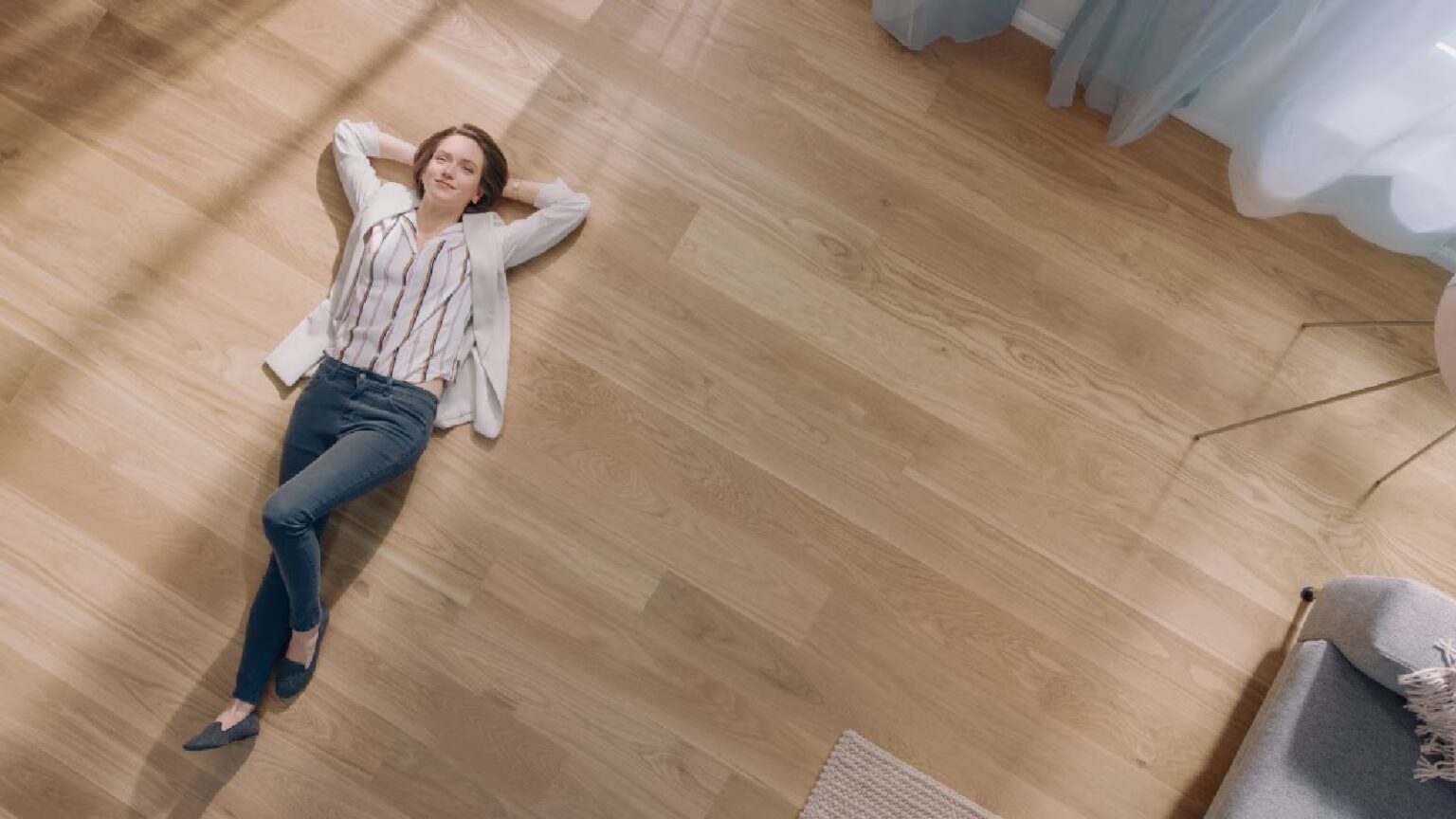
Lying on the floor can actually help reduce stress. It’s Stress Awareness Month, so consider embracing the floor time trend for your mental health.
If you practice yoga, you should always end your session in savasana or corpse pose. Just lie down on the floor, close your eyes, and stretch your arms and legs. This restorative pose is a great way to relax your body and mind. Not a fan of yoga? Don’t worry. You can reap the mental health benefits of this pose by following the floor time trend. Deep breathing isn’t necessary, but this trend can help reduce stress. So, during Stress Awareness Month, improve your mental health by lying flat on your back on carpet, hardwood, or any other type of floor.
What are the trends in floor time?
The floor time trend is a calming wellness practice that involves lying on the floor and spending a few quiet minutes. Psychiatrist Dr. Sapare Rohit says, “It helps your body feel more connected to the ground, which helps slow down your mind.” No special gym equipment or training required. A few minutes a day in a quiet corner of your home or office is enough. It can be used as a way to pause from the hustle and bustle of daily life and check in with your mood.

How can floor time trends help reduce stress?
If you care about your mental health, try to keep stress at bay. According to Harvard Health Publishing, chronic stress can contribute to high blood pressure and cause changes in the brain that can lead to anxiety and depression. That’s why you need to follow the floor time trends. Here’s how it helps:
- According to a study published in Explore, when your body is exposed to the earth’s natural charge, inflammation, pain, and stress are reduced.
- Spending time on the floor creates a sense of calm and safety, making it easier for your body to relax. “When your body is resting against the ground, your brain receives a signal that it’s time to rest. This lowers stress hormones and slows your heart rate,” says the expert.
- People tend to breathe more deeply during floor time, which supports calmness and relieves tension.
- A quiet environment free of distractions gives your mind space to slow down and reset.
“Even 5 to 10 minutes a day can make a big difference in helping your body release stress and return to a calmer state,” experts say.
In addition to reducing stress, lying quietly on the floor can help you become more aware of your thoughts and emotions. It helps quiet the distractions caused by busy work, creating space for clearer thinking.
“It also provides a sense of routine and control, especially for people who are feeling overwhelmed or experiencing burnout at work,” says Dr. Rohit. According to the American Psychological Association, experiencing burnout at work can leave you emotionally drained and emotionally distant from your work. “Over time, this simple habit will help strengthen your ability to cope with daily challenges and remain calm during times of stress,” say experts.
How can I track floor time trends?
To try the floor time trend, follow these steps:
- Choose a clean, peaceful place where you can lie comfortably on the floor.
- There is no perfect position for this floor time trend. You can lie on your back with your knees bent, or you can lie flat on the floor with your arms and legs extended. Remember, the goal is to feel grounded and relaxed.
- Start with 5-10 minutes per day and adjust your time based on how your body responds to your floor time trends.
“For many people, it’s effective to do it once or twice a day, especially in the morning or evening. The key is to do it regularly so your body and mind start to recognize it as a cue to relax and unwind,” says the expert.

Who shouldn’t try out the floor time trend?
Although this method is gentle and safe for most people, it may not be suitable for everyone. Here’s who shouldn’t try this trend:
- People who have trouble getting down and out of the floor due to joint issues or chronic pain, especially in their backs, may feel uncomfortable when trying out the floor time trend.
- Some people who feel anxious in quiet moments or who struggle with certain emotional experiences may find stillness difficult at first. “If you’re feeling emotionally overwhelmed or physically uncomfortable, it’s okay to pause and try a softer approach. Floor time should feel safe and calming, not stressful,” say experts.
The floor time trend aims to utilize the ground to improve mental health. I recommend lying on the floor for a few minutes each day to reconnect your body and mind. However, if you have any problems, you should seek advice before you start.
Related FAQ
Is floor time just for autism?
Floor time during therapy is used to support children with autism. This involves caregivers getting down to the child’s level and engaging through play and connection. This is different from the floor time trend, which focuses on relaxation and mental health for all ages.
What is the best way to reduce stress?
The most effective and quickest way to reduce stress is deep breathing. Slow, steady breathing sends calming signals to your brain, which helps your body move out of its stress response. This slows your heart rate, relaxes tense muscles, and reduces stress.