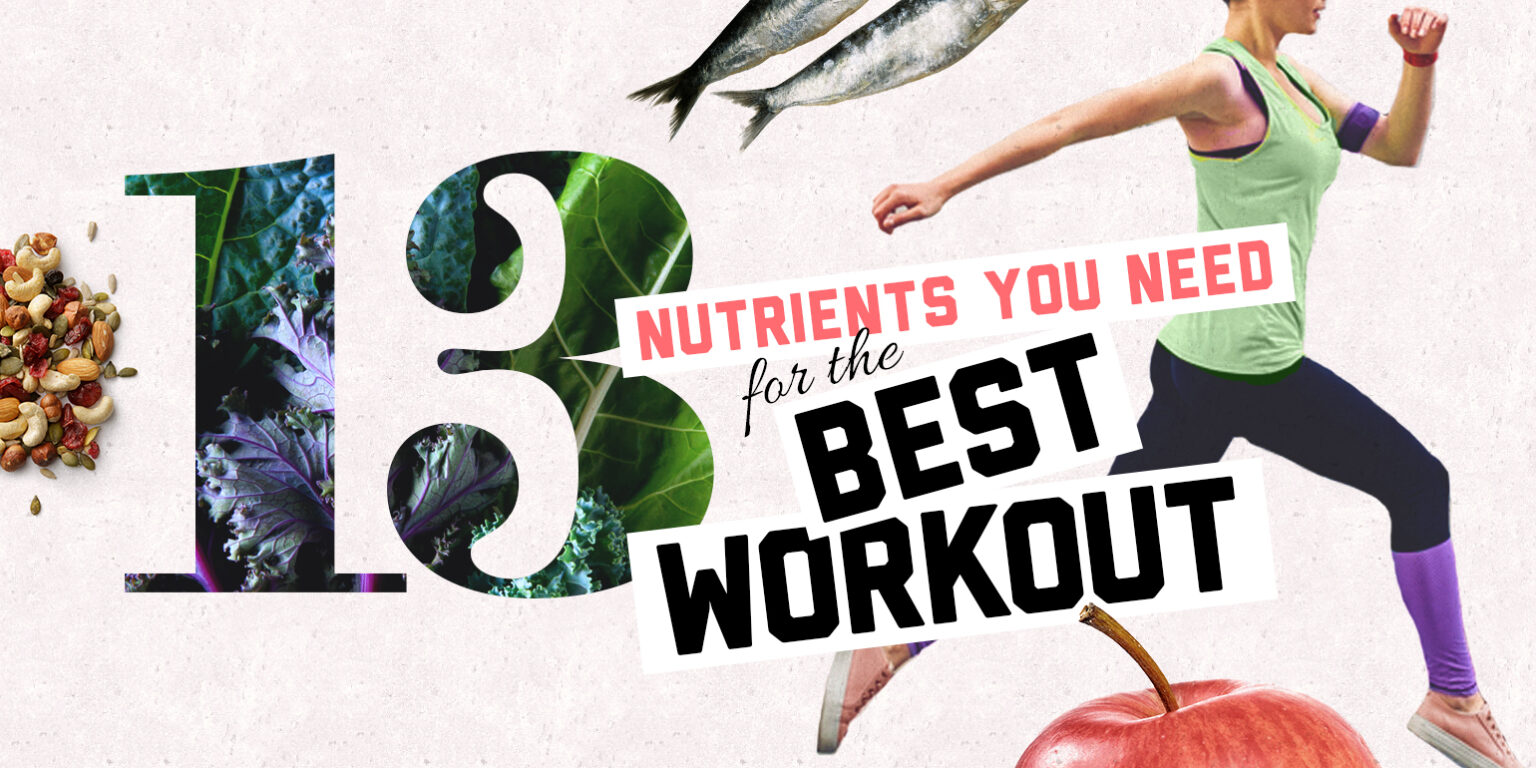
You already know about carbohydrates, proteins, and fats. These are collectively known as macronutrients and are essential for sports nutrition and getting the most out of any workout (and staying alive, of course).
In general, carbohydrates and fats provide fuel, and protein provides the building blocks needed to recover and build muscle. But nutrients also play an important role in metabolism, helping your body get energy when and where you need it, says Sonya Angelone, MS, RDN, CLT, spokesperson for the Academy of Nutrition and Dietetics.
translation? Try to incorporate a variety of nutrients into your sports nutrition plan so you can avoid energy hazards while still reaping many other benefits from exercise.
The following nutrients have particular benefits in providing a surplus of energy, speeding muscle recovery, and maintaining healthy immune function.
What in return? A strong, healthy body that looks and feels beautiful.
B vitamins and choline
What they are doing: Promotes muscle performance and recovery, increasing energy and endurance.
Vitamins B2 (also known as riboflavin), B6, and B12 help the body maintain red blood cell counts, which convert nutrients into energy, carry oxygen throughout the body, and help muscle function.
Therefore, they are essential for any serious training plan.
“Most Americans get enough of it because it’s found in meat, chicken, and turkey,” says Dr. Kathryn Mikus. “Vitamin B deficiency can cause problems, but taking more B vitamins than you need won’t do you any good. And there’s no evidence that athletes need higher B vitamins.”
Choline is found in many of the same foods as B vitamins and provides a variety of benefits.
Mikus says micronutrients are important for brain health, cell development, muscle function and endurance, and a growing body of research suggests many people don’t get enough of them.
How to get it: Meat eaters can get enough Bs from one serving (about 3 ounces) of salmon or other fatty fish, beef, or turkey.
Eggs and dairy products should be at the heart of vegetarianism, and vegetarians, like vegans, can also consume fortified cereals, soy milk, and nutritional yeast as nutritional supplements.
Other sources of vitamin B2 include walnuts, sunflower seeds, bananas, and lentils. Foods that contain B6 include fish, poultry, eggs, milk, and whole grains.
Choline comes from foods such as whole eggs, meat, and chickpeas. However, the body cannot absorb large amounts of B vitamins at once, so be careful to divide your daily intake over several meals or snacks.
Although most people get what they need from a moderately healthy diet, there’s no benefit to consuming too much B vitamins, Dr. Mix says.
antioxidant
What they are doing: Reduces inflammation and prevents cell damage
According to Julianna Hever, MS, RD, Antioxidants are important but underappreciated nutrients.
She says carotenoids, vitamins C and E, and selenium are especially ideal for post-workout recovery. Vitamin E is especially helpful for conditions such as: Blood production and protection of the body’s cells.
“Both antioxidants and phytonutrients help reduce the harsh effects of exercise, such as oxidation and inflammation,” explains Heber.
However, Dr. Mikus says more research is needed into the role of vitamin C in athletic performance and recovery, as research results have been mixed.
“As with most essential vitamins and minerals, there is not much scientific evidence to suggest that vitamin C supplementation helps athletic performance or recovery in people who are not deficient,” she says. “In fact, some studies suggest that vitamin C supplementation may interfere with good adaptation to exercise training.”
How to get it: Seeds and nuts are good sources of vitamin E, citrus fruits and peppers are rich in vitamin C, and organ meats and seafood contain healthy amounts of selenium.
phytonutrients
Phytonutrients, or phytochemicals, are the active ingredients in plants (“phyto” comes from the Greek word for plant), fruits, and vegetables that help protect them from diseases, predators, and other threats.
Some have been shown in published studies to provide health benefits and aid in athletic performance and recovery, Dr. Mikus said.
Anthocyanin (tart cherry)
What they are doing: Aids muscle recovery and improves aerobic performance
A study found that tart cherry juice blend reduced muscle weakness and muscle soreness caused by strenuous exercise. British Journal of Sports Medicine. A 2011 study suggests that tart cherry juice also improves muscle recovery after intense exercise.
Supplements may also be helpful.
According to a 2015 study published in International Journal of Sports Nutrition23 avid male strength trainers reduced post-workout muscle soreness with tart cherry supplements.
Additionally, results from a study published the following year in the same journal found that endurance runners had improved performance and reduced exercise-induced inflammation after consuming Montmorency tart cherry powder for a short period of time.
How to get it: People who exercise may benefit from taking 480 milligrams of tart cherry extract a day, or two shots of about 300 milliliters of tart cherry juice a day, or two 30 milliliters of concentrated tart cherry juice a day, Dr. Mix says.
Nitrates (beetroot)*
What they are doing: Improves aerobic and muscular performance and improves endurance.
A 2013 study found that beetroot juice, which contains inorganic nitrates, lowers blood pressure and helps runners use less oxygen to maintain moderate exercise levels.
Additionally, the runners did not reach fatigue as quickly as subjects who drank the placebo drink. A 2013 study concluded that dietary nitrate slowed fatigue in active subjects during intense training.
Another 2015 study of heart failure patients found that beet juice increased muscle strength. Although the findings of this study have not yet been applied to a larger population, the results are encouraging.
How to get it: Leafy vegetables, beet juice, and supplements
*It is important to note that nitrates, which are naturally found in foods such as green leafy vegetables, celery, and beetroot, are different from nitrates, which are commonly used as preservatives in processed meats such as bacon, hot dogs, and deli meats and are widely criticized.
curcumin
function: Reduces exercise-induced inflammation and relieves muscle pain.
Curcumin, the most active compound in the spice turmeric, has powerful anti-inflammatory properties and appears to help reduce muscle damage caused by exercise, Heber says.
In a 2014 study published in , curcumin supplementation appeared to reduce pain, muscle damage, and inflammation in participants’ limbs. International Journal of Sports Nutrition.
Additionally, a 2015 study suggests that curcumin supplementation may help reduce muscle soreness and may aid muscle recovery.
How to get it: Found in supplements and turmeric.
Quercetin
function: Improve aerobic performance
Onions and apples may not be at the top of sports nutrition, but research suggests that the phytochemical quercetin in each may reduce inflammation and oxidative stress in a 2009 study of cyclists.
Also, untrained male runners experienced “small but significant” improvements during a 12-minute treadmill time trial, a 2010 quercetin study concluded.
However, a review of studies published in 2013 shows that quercetin improves endurance exercise by 2 to 3 percent.
How to get it: Supplements like Apples and Onions, Beachbody Performance Hydrate and Energize
Ellagitannins (pomegranate)
What they are doing: Promotes muscle recovery after training and relieves muscle pain.
A 2011 study found that pomegranate juice, which is rich in antioxidants and polyphenols, can significantly improve recovery after eccentric exercise (when your muscles lengthen rather than shorten during contraction; think of your bicep curls when you’re losing weight).
Study authors wrote that supplementing with a larger amount (500 ml) of pomegranate juice reduced elbow pain after resistance training. Strength and Conditioning Research Journal.
Pomegranate extract also significantly improved muscle recovery two to three days after eccentric exercise, a study published. Medicine and Science in Sports and Exercise In 2010.
How to get it: pomegranate juice
conclusion
Angelone cautions to think of these nutrients and phytochemicals not as quick fixes, but as enhancements to an already healthy diet.
“Some of these substances can minimize the oxidation that occurs with exercise, and some can reduce inflammation,” says Angelone. “Additionally, they can play a role in performance, but only if the basic foundation of good nutrition is there.”
Beachbody Performance’s supplement line contains many of the nutrients listed above and includes formulations for pre-workout energy (Energize), training hydration (Hydrate), and post-workout recovery (Recover).
The entire product line utilizes cutting-edge science and plant-based extracts, phytonutrients and other natural ingredients to complete a complete sports nutrition plan to improve performance and recovery without the use of artificial colors, flavors, sweeteners or preservatives.