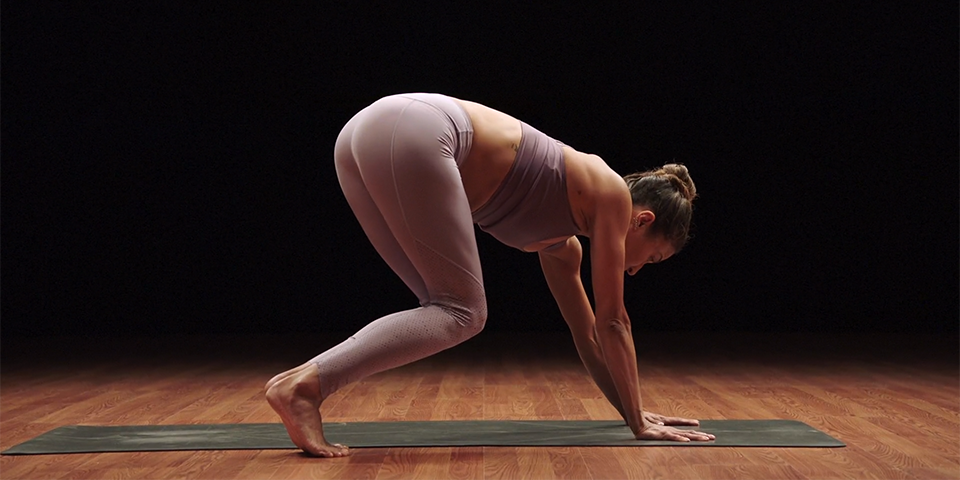
Ski abs exercises: step-by-step instructions
We’ve created a short but easy-to-follow step-by-step list on how to do this exercise.
- Start in a high plank with your shoulders stacked over your hands. Keep your shoulders, hips, and heels in a straight line.
- Push your shoulders and stretch your back. Tuck your hips down and draw your stomach in. Avoid letting your hips drop to the floor.
- Do not move your hands. Jump your feet forward, pull your knees toward your chest, and land your feet together on the floor to the right of your right hand. Bring your left knee in line with the outside of your right elbow.
- Go back and reset your plan. Then do the same on the left side.
- Exhale as you jump forward.
Which muscles does ski sit-ups affect?
Ski abs will challenge your abs, but you don’t need any equipment to do it.
This aerobic, abdominal exercise burns calories by working many muscle groups at the same time. Ski sit-ups may also increase your metabolism.
1. Rectus abdominis
To prevent your spine from overextending, your rectus abdominis muscles (six-pack abs) are activated during the high plank.
2. Abdominal transversus
While a six-pack stabilizes your spine, your transverse abdominis muscles (the deepest abdominal muscles that work around your waist) contract to protect your spine. This protection is especially important because this exercise involves jumping and twisting.
3. Oblique muscles
With each twist, your obliques begin to engage. The oblique muscles are located on the sides of your body and are responsible for rotating your torso. When you perform ski sit-ups, two sets of oblique muscles are engaged: the internal obliques and the external obliques.
4. Supporting cast
The hip flexors work to pull the knee towards the chest. Your calves will work to lift you off the floor. Your pectoral, triceps, and shoulder muscles also work to keep your upper body in a safe position during the high plank.
Benefits of ski abs
Ski sit-ups take the classic high plank and combine it with plyometrics (explosive jumping movements) and heavy rotations. Combining these movements will really tone your midsection.
Stabilizing the spine during jumps and turns is one of the core’s most important jobs. Strengthening your core means you’re less likely to get injured outside of the gym.
“The great thing about movements like this is that you’re actually building strength while focusing on controlled movements,” says Aaron Leventhal, CSCS, a former professional soccer player and owner of Minneapolis-based Fit Studio. “Challenging yourself to maintain good form with your ski sit-ups will help you focus on your core, making you more focused.”
Building Strength from Explosive Movements As with other plyometric movements, you’ll gain the most strength when you can achieve a controlled landing. A stable landing not only gives you great abs, but also helps when doing other exercises like jump squats and box jumps that enhance your athletic performance.




You don’t have to hit the slopes regularly to add ski-inspired exercises to your training routine. Ski sit-ups are an abdominal exercise that moves like a slalom racer (without snow).
When it comes to full-body workouts with tons of physical benefits, skiing ranks high on the list, so give this ski-inspired abdominal workout a try.