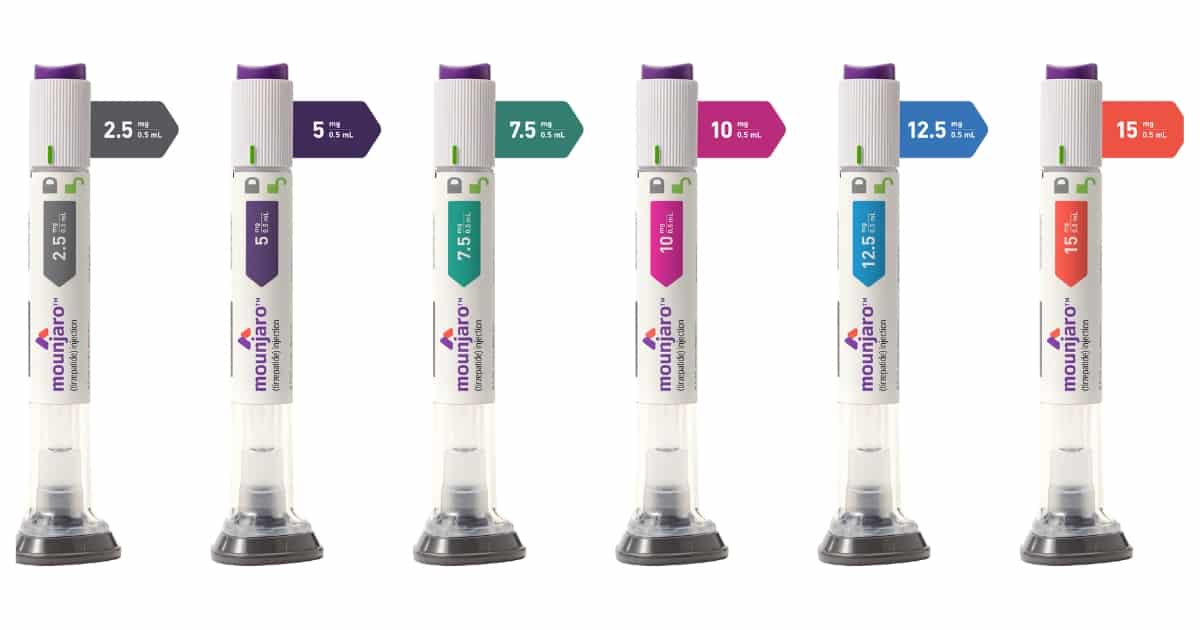
Mounjaro is a type 2 diabetes drug that lowers blood sugar levels, helps improve A1c levels (a measure of blood sugar control over the past two to three months), and helps maintain weight.
This article explains everything you need to know about this drug, including its effects, side effects, and how to use it effectively.
What is Munjaro?
Mounjaro is manufactured by Eli Lilly and is the brand name of the drug tirzepatide.
It was first approved by the U.S. Food and Drug Administration (FDA) in 2022 to help manage blood sugar levels in adults with type 2 diabetes, along with a healthy diet and exercise.
It is the first drug in a new drug class known as glucose-dependent insulinotropic polypeptide (GIP) and glucagon-like peptide-1 (GLP-1) receptor dual agonists, which activate both GLP-1 and GIP receptors.
It helps the pancreas produce more insulin, reduces the amount of sugar released by the liver, increases the body’s sensitivity to insulin, and slows down digestion, making you feel fuller longer.
It is an injection drug taken once a week to improve blood sugar levels and A1c.
What are the benefits of Munjaro?
This treatment has three main benefits for people with diabetes:
lower blood sugar levels
This drug improves blood sugar levels by increasing the amount of insulin released by the pancreas, but only if blood sugar levels are elevated.
This minimizes the risk of hypoglycemia while taking the drug. It also stops the liver from releasing sugar into the bloodstream and increases the body’s sensitivity to insulin.
Combined, they lower blood sugar and A1c levels.
Helps lose weight or maintain weight
In November 2023, Mounjaro was approved under the trade name Zepbound for chronic weight management in overweight or obese adults with at least one weight-related disease.
This medicine helps reduce food intake by decreasing appetite and slowing digestion.
In clinical trials, people who took the drug at a maximum dose of 15 milligrams (mg) per week lost the following symptoms:
- 12 pounds more than those taking the GLP-1 drug semaglutide
- 29 pounds heavier than people taking insulin degludec
- 27 pounds heavier than those taking insulin glargine
How much weight can I lose with Munjaro?
In a study of Zepbound, a reduced-weight version of Mounjaro, about 15 percent of participants who took 5 mg, 32 percent of participants who took 10 mg, and 36 percent of participants who took 15 mg lost 25 percent of their weight.
At the highest dose of 15 mg, weight loss averaged 48 pounds, according to the manufacturer.
See below for more information. Can Munjaro help you lose weight?
Reduces risk of heart disease
This drug has the power to prevent heart disease, the number one killer of diabetics.
In the study, participants who took the highest dose (15 mg per week) had the following results after 52 weeks:
- Reduced total cholesterol by approximately 5.6%
- Triglycerides decreased by 22.5%
- Lowered LDL (“bad”) cholesterol by 7.9 percent
- Reduced VLDL cholesterol by 21.8%
- HDL (“good”) cholesterol increased by 10.8 percent
Why is Munjaro prescribed?
This treatment is approved by the FDA only for patients with type 2 diabetes.
However, it is important to note that not all type 2 diabetics are prescribed Munjaro.
This is because many people can manage their blood sugar levels with diet, exercise, and sometimes other medications such as metformin or insulin.
However, it is a great way to combat insulin resistance, improve blood sugar levels, and aid weight loss if you find it difficult to achieve these goals with other methods.
Many people with type 2 diabetes and pre-existing heart disease may also be prescribed this medication to act as a protective agent and improve both diabetes and heart health.
This drug is not approved for use in people under 18 years of age.
What are the side effects of Munjaro?
The most common side effects are:
- nausea
- vomiting
- diarrhea
- bloating
- gas
- stomach pain
- constipation
- weight loss
- fast heart rate
Although rare, more serious complications may occur, including:
- Thyroid tumors including cancer
- Pancreatitis (inflammation of the pancreas)
- gallbladder disease
- Taking insulin lowers blood sugar levels
- severe allergic reaction
Some of these more severe side effects can lead to permanent health complications or death if not treated promptly.
Call your doctor or seek emergency treatment if:
- have a fever
- experience changes or worsening of vision
- Feeling tired or in pain after taking medicine
- Think you have an allergic reaction
For a more detailed overview, see below. Munjaro side effects: what you need to know.
Do I need to change my diet?
When taking Munjaro, adjusting your diet can increase the effectiveness of the drug and reduce side effects.
Avoiding foods and drinks that are high in sugar, foods that are too fatty, fried, and greasy, and consuming alcohol in moderation or not at all, depending on your personal health recommendations, can help.
Focusing on unprocessed, whole foods such as lean proteins, healthy fats, and low-glycemic vegetables can increase the effectiveness of medications in managing blood sugar levels.
Read below for further guidance. Foods to avoid in Munjaro.
Munjaro dosage
This medication comes as a solution in a prefilled, disposable pen. The drug is injected subcutaneously (under the skin) once a week.
You can take the medicine with or without food. To prevent overdose, each dose is administered in a single-dose pen.
The different dosing options available are:
- 2.5 mg/week (first 4 weeks as starting dose)
- 5mg per week
- 7.5mg per week
- 10mg per week
- 15mg per week
Maintenance doses range from 5 mg to 15 mg per week and are determined by you and your doctor.
read more: Munjaro Dosage Guide: How Much Should I Take?
How much Munjaro should I take?
This varies from person to person and depends on your health history, health goals, and lifestyle.
However, most doctors start their patients on 2.5 mg once a week. It is important to inject on the same day every week.
After 4 weeks, if there are no side effects, your doctor may increase your dose to 5 mg, given once a week.
If you have no side effects but your blood sugar levels continue to spike, your doctor may increase your dose to 7.5 mg once a week, or up to 15 mg once a week. The maximum dose is 15mg once a week.
Do not take twice in the same week.
What happens if you take too much Munjaro?
Taking too much of this drug can cause serious side effects.
These can include debilitating nausea, vomiting, diarrhea, abdominal pain, and even hypoglycemia (especially if you also use insulin), which can be fatal if not treated immediately.
Do not take twice within 3 days.
If you accidentally overdose on this medication, call your doctor or seek emergency treatment right away.
Is it okay if I forget to take Moujaro?
If you miss a dose, it is okay to take it a few days later.
However, if you miss a dose more than 4 days (96 hours) ago, skip that week’s dose and take your next regularly scheduled dose on time.
Missing a dose will not cause insulin resistance or weight gain.
However, medicines are most effective when taken consistently, so be careful not to forget to take them regularly.
Munjaro injection method
- Visually check the liquid in the pen before injecting.
- Do not use if the pen has particles or discoloration.
- Before injecting, clean the injection site with a rubbing alcohol swab.
- Change the injection site weekly to prevent damage and scar tissue development under the skin.
- Note that this medication is usually injected under the skin in the thigh, abdomen, or upper arm.
- Ask your doctor about the best place to inject and how to rotate the injection site.
- After administration, be sure to dispose of the pen needle and pen in a sharps-safe container.
Since the pens are single-dose, there is no need to store the pens after use, as you will use up four for each 30-day supply.
See below for more information. Munjaro injection: where and how to inject it.
Who should not take Munjaro?
Needless to say, do not take it without a prescription.
Not recommended for use if pregnant, planning pregnancy, or breastfeeding.
It is also not recommended for people without diabetes, prediabetes, or type 1 diabetes unless directed by a doctor.
See below for more information. Can I take Munjaro if I have type 1 diabetes?
This drug is approved by the FDA only for people 18 years of age and older.
Do not use if you or anyone in your family has had medullary thyroid cancer (MTC) or if you have multiple endocrine neoplasia syndrome type 2 (MEN 2).
Do not use it if you are allergic to tirzepatide or any other ingredients in the drug.
If you have any questions or concerns about starting this treatment, please consult your doctor.
How do I stop taking Munjaro?
There are several reasons why you might want to stop taking this medication.
For example, you may be experiencing harmful side effects, you don’t like how your medication makes you feel, or the cost of your medication is prohibitive.
Consult your doctor before discontinuing any diabetes medication, including this one.
What happens if I stop taking Munjaro?
Your doctor will probably ask you to stop taking it before you stop taking it completely. Insulin resistance, appetite, blood sugar levels, and weight may rise again when you stop taking it.
It’s a good idea to have a plan in place, including alternative medications, exercise, and diet to deal with any rebound you may experience.
If you lose weight with this medication, you may need to continue taking it indefinitely to avoid gaining the weight back.
Can Munjaro replace insulin?
No, it is not insulin or an insulin replacement. Rather, it acts as an adjunct to insulin therapy (if you are taking insulin).
If you have recently been prescribed this medication, do not stop taking your other diabetes medications unless your doctor tells you otherwise.
Although Munjaro lowers blood sugar levels over time, it does not cause acute hypoglycemia like insulin.
If you normally take insulin for meals, you should continue to do so.
If you have been taking the medication for several months, you may notice that your need for insulin gradually decreases.
However, diabetes rarely completely eliminates the need to take insulin.
Can I take Munjaro with other diabetes medicines?
This depends on other medications you are taking.
In general, Munjaro can be taken with medications such as metformin and insulin if they are prescribed at the same time.
However, it should not be used in combination with GLP-1 receptor agonists.
GLP-1 receptor agonists include:
If you are unsure about how a medication you are taking may interact with a new medication you are considering taking, be sure to consult your doctor.
For more information on the comparison between Munharo and Ozempic, please see the following article: Ozempic vs. Munjaro: Which one should you choose?
Does Munjaro need to be refrigerated?
no. The medication can be stored without refrigeration for up to 21 days as long as the temperature does not exceed 86 degrees Fahrenheit (30 degrees Celsius).
Munjaro should be stored at a temperature of 36 to 46 degrees Fahrenheit (2 to 8 degrees Celsius).
Be careful not to exceed 86 degrees Fahrenheit (30 degrees Celsius) and avoid freezing the pen.
Always store your Mounjaro pen in its original case to protect it from sunlight.
How much does Munharo cost?
Mounjaro costs vary depending on insurance coverage and specific plan details.
To determine your specific copayments or deductibles, you can use your prescription or medical card with the Mounjaro Coverage and Copay Calculator available from your insurance company.
If you have any questions about coverage or copays, please contact Mounjaro Customer Support at 1-800-545-5979.
Eli Lilly offers the Mounjaro Savings Card program, which can provide free medication for those who qualify. To learn more about this program and to see if you qualify, call Eli Lilly’s PAP toll-free at 1-800-545-6962.
How can I get a prescription for Munjaro?
If you have type 2 diabetes, talk to your doctor about prescribing this medication.
If you don’t have type 2 but have another form of diabetes and are dealing with insulin resistance, talk to your doctor about treatment options.
Also, if you don’t have diabetes but want to lose weight safely, talk to your doctor. There are FDA-approved weight loss medications that don’t have the same side effects as Mounjaro/Zepbound and may be suitable.
For example, Wegovy (semaglutide) is FDA-approved for weight loss in adults who are obese or overweight and have at least one weight-related disease (such as type 2 diabetes, high blood pressure, or high cholesterol).
Was this article helpful? Let us know by clicking Yes or No below.