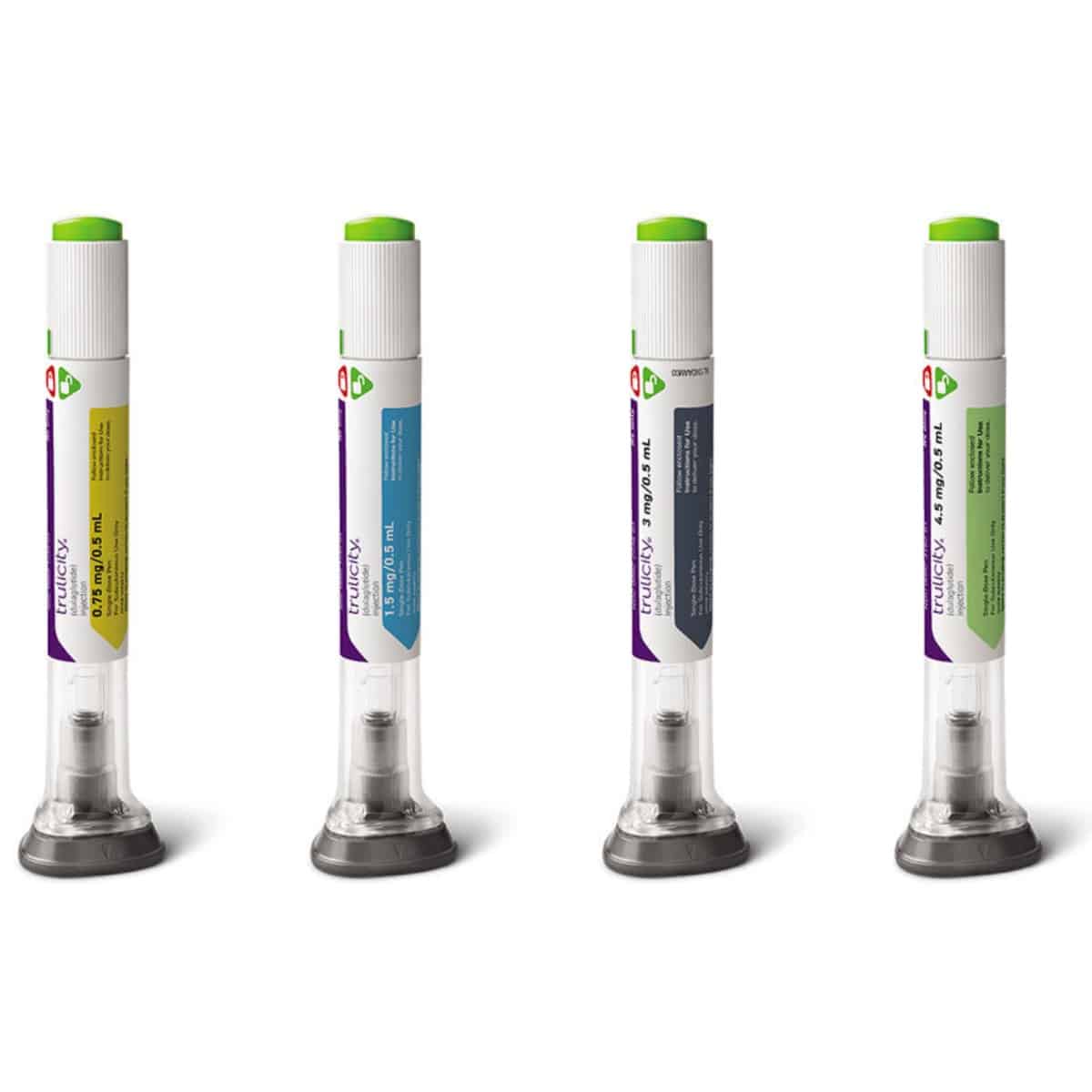
Trulicity is a once-weekly injection used to manage blood sugar levels and weight in people with type 2 diabetes.
This article explains everything you need to know about this treatment, including its effects and side effects.
What is Trulicity?
Trulicity is a name-brand prescription drug for adults and children 10 years and older with type 2 diabetes that is used to manage blood sugar levels, A1c (a measure of blood sugar control over the past two to three months), and weight.
It may also help prevent strokes, heart attacks, and premature death in people with type 2 diabetes and pre-existing heart disease.
This drug is taken by injection once a week, belongs to the glucagon-like peptide 1 receptor (GLP-1) agonist class, and has dulaglutide as the active ingredient.
It may also be used with insulin and other diabetes medications.
How does Trulicity work?
Trulicity binds to specific receptors in the pancreas, causing the release of more insulin and naturally lowering blood sugar levels.
It also reduces glucagon production in the liver (glucagon is the storage form of glucose), prevents postprandial blood sugar spikes, and improves insulin sensitivity.
Additionally, this drug slows down digestion, suppresses appetite, and promotes weight loss.
By consistently lowering blood sugar levels and A1c, you reduce your risk of heart attack, stroke, and premature death.
What are the benefits of taking Trulicity?
Trulicity offers several benefits for diabetes management, including weight loss.
In a randomized controlled trial (RCT), participants lost an average of 6.6 pounds over six months.
Another study found that the drug helped lower blood sugar levels and A1c and promoted weight loss compared to a placebo (inactive treatment).
Additionally, clinical trials found that participants with type 2 diabetes had a reduced risk of major cardiovascular events such as heart attack, stroke, and death.
This prescription is most effective when used in conjunction with a healthy diet, regular physical activity, and other prescribed diabetes medications.
Why is Trulicity prescribed?
This therapy may be prescribed if you have type 2 diabetes and have insulin resistance or difficulty managing your blood sugar levels.
It can also be prescribed to people who do not have type 2 diabetes but have insulin resistance or need help managing blood sugar with other diabetes medications.
Because of its cardiovascular benefits, this treatment is sometimes given to people who already have heart disease.
Although it is not FDA approved for weight loss, it is sometimes prescribed off-label to help with weight management.
See below for more information. Trulicity and Weight Loss: Can Trulicity Help You Lose Weight?
Trulicity should only be taken if prescribed by a health care professional.
What are the side effects?
Trulicity can cause side effects, especially when you first start taking it as your body gets used to it. Common side effects are usually mild to moderate and may include:
- nausea
- diarrhea
- vomiting
- stomach pain
- Redness at the injection site
- appetite suppression
- weight loss
- Hypoglycemia (especially when combined with insulin therapy)
Although rare, serious side effects may occur, including:
- acute pancreatitis,
- severe allergic reaction,
- Kidney function declines,
- Medullary thyroid cancer (MTC)
Avoid this drug if you have a personal or family history of MTC or multiple endocrine tumors, or if you are allergic to dulaglutide.
The FDA has issued a black box warning about the increased risk of thyroid cancer with the use of Trulicity. Tell your doctor if you have gastroparesis or chronic kidney disease (CKD), as medications can worsen these conditions.
See below for more information. Trulicity side effects: what you need to know.
What is the typical dose?
Doctors typically start patients on a low dose of 0.75 milligrams (mg) once a week to minimize side effects. This medicine can be taken at any time, with or without food. Try to stick to the same time each week to help you remember your intake.
See below for more information about this medicine and diet. Foods to avoid when taking Trulicity.
If necessary, the dose can be increased to 1.5 mg after 4 weeks. For children, the maximum dose is 1.5 mg weekly, but adults can use 1.5 mg, 3 mg, or 4.5 mg weekly.
Always consult your health care professional before adjusting your dose and increase by 1.5 mg increments only after you have been on your current dose for at least 4 weeks.
For more information, see: Trulicity Dosage: How Much Should I Take?
What is the maximum weekly dose?
The maximum weekly dose is 1.5 mg for children and 4.5 mg for adults.
Maintenance doses vary based on personal health factors such as medical history, health goals, weight, lifestyle, and insulin resistance.
Always follow the prescribed dosage and consult your doctor before making any changes.
See below for more information. Trulicity Dosage: How Much Should I Take?
What happens if you take too much Trulicity?
Maximum weekly dose is 4.5 mg.
Taking two doses within 72 hours can cause serious side effects, including nausea, vomiting, and dangerous hypoglycemia, which can be life-threatening if untreated.
Symptoms of very low blood sugar include:
- dizziness
- trembling
- confusion
- fast heart rate
- shallow breathing
- nervous
- lethargy
- fatigue
- unconsciousness or diabetic coma
If you suspect an overdose, contact your doctor or emergency services immediately.
Is it okay if I forget to take it?
If you forget to take a dose, don’t worry. Missing a dose for a week will not cause increased insulin resistance, elevated blood sugar levels, or weight gain.
However, for best results, it is important to take the medication consistently. Set a reminder on your phone to ensure you take it on the same day each week.
You can take it within 3 days of missing a dose. If more than 5 days have passed, skip the missed dose and take your next scheduled dose.
For more information, see: Trulicity Dosage: How Much Should I Take?
How to inject Trulicity?
This medication is available in pen form and is injected subcutaneously (under the skin).
Choose injection sites that have fatty tissue, such as the upper thighs, upper arms, or stomach. Rotate the injection site weekly, using different locations within the same area (such as different parts of the stomach).
To inject, first wash your hands and clean the injection site with an alcohol swab.
Pinch the skin 1 inch, insert the needle perpendicular to the skin, and press the top of the pen to release the medication.
Keep the needle in the skin for about 10 seconds to ensure the full dose is administered.
After the injection, simply discard the entire pen into a sharps container and wipe off any excess medication or blood with an alcohol swab.
Who should not take Trulicity?
This treatment should only be taken if prescribed by a medical professional.
Not recommended for those who are pregnant, planning to become pregnant, or breastfeeding.
This medication is not suitable for people who do not have diabetes or who have prediabetes or type 1 diabetes unless directed by a doctor.
Avoid this drug if you or your family has a history of MTC or multiple endocrine neoplasia syndrome type 2 (MEN 2), or if you are allergic to dulaglutide.
If you are allergic to dulaglutide but are interested in a GLP-1 agonist, consider alternatives such as Ozempic, which contains semaglutide.
For more information, see: Trulicity vs. Ozempic: Which drug is right for you?
Ask your doctor before starting Trulicity, especially if you have chronic kidney disease (CKD) or gastroparesis, as it may worsen these symptoms.
Always consult your doctor if you have any questions or concerns about taking this medication.
How do I stop taking Trulicity?
Never stop taking this or any prescription medication without talking to your doctor.
Your doctor will likely recommend tapering off your medication gradually to avoid side effects such as weight gain, rapid spikes in blood sugar, increased A1c, and worsening insulin resistance.
If you are considering stopping, talk to your doctor about appropriate next steps.
Can Trulicity replace insulin?
No, this drug or other GLP-1 agonists are not a replacement for insulin.
Trulicity reduces the need for insulin over time, but is intended to supplement insulin therapy if insulin is prescribed.
Never stop taking insulin unless directed and recommended by your doctor.
Can I take Trulicity with other diabetes medications?
Yes, but it depends on the drug. Trulicity can be safely used with insulin or metformin.
However, it should never be used in combination with other GLP-1 agonists, such as Ozempic, Victoza (liraglutide), or Munjaro (tirzepatide), as they can cause serious side effects such as hypoglycemia, nausea, vomiting, and diarrhea.
If you have concerns about possible interactions between your diabetes medications and Trulicity, please consult your healthcare provider. If there are contraindications, we can also suggest alternatives.
Does Trulicity need to be refrigerated?
Yes, store in the refrigerator at a temperature of 36°F to 46°F (2°C to 8°C). It can be used for 56 days after opening. Do not freeze or expose to extreme heat.
How much does Trulicity cost?
Your monthly costs, or out-of-pocket costs, vary depending on your specific insurance plan. To find out your out-of-pocket costs, check with your insurance company using your prescription or medical card.
Trulicity is typically covered by major health insurance plans such as Medicare and Medicaid. If you have questions about coverage or copays, please contact Lilly Cares at 1-800-LILLYRX (1-800-545-5979).
For eligible individuals, the LillyCare Foundation Patient Assistance Program may provide medications at no cost. To learn more about this program and see if you qualify, call 1-800-545-6962. The Trulicity Savings Card is also available to eligible individuals.
How do I get a prescription for Trulicity?
If you are interested in a prescription, please talk to your health care provider.
If you have type 2 diabetes and are dealing with weight management or insulin resistance, you may qualify.
For people with prediabetes or type 1 diabetes, this treatment may help improve insulin sensitivity.
If you do not have diabetes but want to lose weight, talk with your doctor about other FDA-approved weight loss drugs that may be safer and more suitable for you without the side effects associated with this drug.
Was this article helpful? Let us know by clicking Yes or No below.