Want to gain more weight, do more push-ups, improve your shoulder mobility, and look like a superhero when you take your shirt off? You might want to focus more on your serratus anterior exercises..
Serratus muscles may not get the same popularity that larger muscles like pecs, glutes, and abs receive on social media (no one posts about their one-rep max on the serratus wall slide). But this serrated muscle on the sides and back of your ribcage plays an important role when pushing, shoving, and punching. And when it is well developed, as a bonus, it looks very cool.
Here’s a primer on how the serratus anterior works and some key movements to optimally develop this secretly awesome group.
Serratus anterior anatomy and function
Every large company has several behind-the-scenes people who don’t get the recognition they deserve. The upper body has the serratus anterior muscle.
Most of the serratus muscles are hidden under the shoulder blades. widest back (back muscles on the sides of the torso), and pectoral muscle (chest muscles). The only visible serratus muscle is a two to three finger-shaped horizontal bump on the side of the rib cage, a few inches below the armpit.
serratus anterior insertion
If you look under your latissimus dorsi, pectoralis, and scapulae (shoulder blades), you’ll see that the serratus anterior muscle actually has eight (sometimes nine) fingers, each originating from a different rib.
Like a giant chest bandage, each of these parallel strips of muscle wraps around the back of the rib cage, slips under the latissimus dorsalis and scapulae, and inserts into the medial edge (inside edge) of the scapulae.
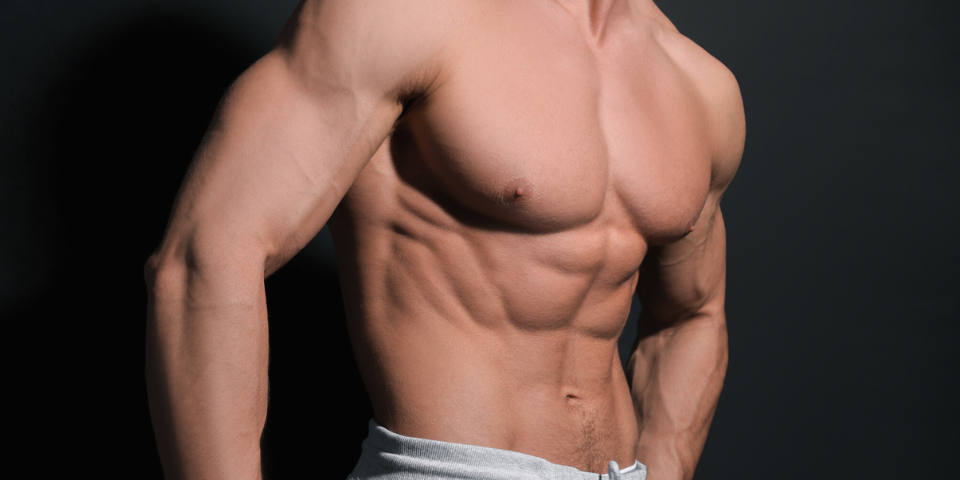
When you’re lean, especially when you widen your shoulder blades into your lats, your serratus muscles visibly pop out and wrap around the top corners of your abs like a pair of quote marks turned sideways.
Action of serratus anterior muscle
The structure of this muscle may be complex, but its function is simple. Slide the scapula forward (slide forward) and rotate it upward (flexion).
If you don’t think these are important features, try moving your arms. You’ll find that almost every movement you make with your arms also requires you to move your shoulder blades. As you reach forward, your shoulder blades will slide forward. Just reach out and lift it. Your serratus muscles are critical to achieving both.
Physical therapists sometimes refer to the serratus muscle as the “boxer’s muscle” or the “big swing” muscle, and now you know why. Without these serratus muscles to slide the scapula forward, most punches would be 6 to 8 inches short.
9 best exercises for the serratus anterior muscle
Good news: You don’t have to do serratus anterior exercises to increase serratus anterior muscle strength and definition. it is synergistic — Auxiliary Muscles — You’ll use this muscle in many of the classic movements you’re already doing for your chest, delts, back, and core, as shown below.
Do you want to emphasize activation of the serratus anterior with these movements? As much as possible, focus on the full range of motion of the scapula, i.e. moving the scapula forward, backward, side to side.
1. Push-ups
Additional muscles worked: chest, triceps
- Assume a high plank position. Place the balls of your hands and feet on the floor, tighten your core, and keep your body straight from head to heels. Hands should be slightly wider than shoulders.
- Slowly lower your chest to the floor, maintaining a stiff posture. Or lower it as close as you can without breaking form.
- Reverse the movement and push yourself back to the starting position.
Too strict? Perform this movement with your hands raised on a box or bench.
2. Serratus push ups
Additional muscles worked: shoulders, chest
- Assume a high plank position. Place the balls of your hands and feet on the floor, tighten your core, and keep your body straight from head to heels. Hands should be slightly wider than shoulders.
- With your arms straight and your body stiff, slowly retract (pull back) your shoulder blades as far as possible.
- Pause, then push back to the starting position, lengthening (spreading) your shoulder blades and rounding your upper back toward the ceiling as much as possible.
- Pause and return to starting position.
3. Spine chest press
Additional muscles worked: chest, triceps
- Lie on your back on a bench, holding a dumbbell firmly in each hand at arm’s length over your shoulders, palms facing forward.
- Slowly lower the dumbbells, fully stretching your chest muscles, until the inner plates of the dumbbells are close to or almost touching your chest.
- Pause, return to the starting position, and press the dumbbells as high as possible, lifting your shoulder blades off the bench.
- Lower and repeat.
Don’t you have dumbbells? Perform the same movement using a barbell.
4. Standing Serratus Press
Additional muscles worked: shoulders, chest
- Attach two exercise bands with handles to a squat rack at shoulder height.
- Turn away from the rack, hold the handles, and extend your arms in front of you parallel to the floor.
- Walk forward to create tension in the band.
- Get into a semi-lunge position with one leg in front of the other for stability.
- Keeping your torso upright and your entire body stable, push your arms as far forward as possible and round your upper back. This is the starting position.
- With your arms straight and your posture upright, pull your shoulder blades in as slowly as possible.
- Slowly return to the starting position. That’s one rep.
5.Pullover
Additional muscles worked: Latissimus dorsi, triceps, posterior deltoids
- Lie face up on a bench and hold two light to medium weight dumbbells firmly above your chest at arm’s length.
- Keep your arms straight, push the dumbbells toward each other, and maintain that position throughout the movement (this works best with hexagonal dumbbells).
- With your feet on the floor and your elbows slightly bent, slowly lower the dumbbells in an arc toward the floor above your head until you feel a deep stretch in your lats and ribcage.
- Pause briefly and slowly reverse the movement to return to the starting position.
6. Abrollout
Additional muscles worked: trunk, triceps
- Select the ball. Choose a larger size (up to 33 inches in diameter) if you’re just starting to learn the moves, and a smaller size (18 inches in diameter) as you practice more.
- Kneel behind the ball, bend your hips, and place your forearms on top of the ball, palms down.
- Tighten your abdomen, tuck your pelvis, and maintain that position throughout the movement. If you feel your lower back arch, stop the set.
- Put your weight on the ball and slowly extend your arms in front of you, rolling the ball as far forward as possible while keeping your hips in the same position.
- Pause in the fully extended position for 2-3 seconds.
- Reverse the movement and slowly return to the starting position.
7. Serrated wall slide
Additional muscles worked: shoulder
- Stand facing the wall.
- Place your forearms perpendicular to the wall, about shoulder width apart, palms facing each other.
- Rest your weight against the wall, widening your shoulder blades and rounding your back. This is the starting position.
- While maintaining the same rounded back position, slowly slide your forearms up and down the wall as much as possible.
8. Bear crawling
Additional muscles worked: Core, chest, triceps
- Get on all fours with your hands directly under your shoulders, fingers spread wide, and knees bent 90 degrees below your hips.
- Tuck your toes and lift your knees slightly off the floor. This is the starting position.
- Keeping your back flat and core engaged, move forward in a “cross-scroll” pattern, simultaneously moving opposite hands and feet together (left hand and right foot, right hand and left foot).
- Continue to move the opposite arm and foot forward for the specified number of steps at the same time, then reverse the movement and return.
9. Standing spinning punch
Additional muscles worked: core, shoulder
- Stand with your feet slightly wider than shoulder-width apart and hold a light to medium dumbbell at chest or shoulder height, palms facing each other.
- Rotate your torso 90 degrees to the left, pivot your right foot, and stick your right hand straight out from your shoulder, rotating your fist until your palm is facing down.
- Smoothly return to the starting position and repeat the movement to the opposite side, rotating with your left foot and punching to the right with your left hand.
- Smoothly move both sides alternately.
Benefits of serratus anterior exercises
Although the serratus anterior muscle is most evident in the ribs, the serratus anterior muscle is critical to shoulder health. Strengthening them will help you with a variety of scapulothoracic tasks.
1. Improved shoulder mobility
When the serratus muscles aren’t working properly, the shoulder blades can become difficult to glide across your back, limiting your range of motion and causing pain when you extend your arms forward or overhead. Strong serratus muscles help increase range of motion, which also benefits downstream rotator cuff function.
2. Improved upper body performance
Almost all arm movements involve the scapula, and almost all scapular movements involve the serratus anterior. Pressing, punching, and throwing all benefit from the powerful serratus anterior muscle. The same goes for putting away dishes in the upper cabinets.
3. Muscle balance
Over time, repetitive overhead movements can create an imbalance between the serratus and trapezius muscles, the kite-like muscles that connect your neck, back, and shoulders. Exercises that target the serratus muscles can help restore order.
4. Decreased wings of the scapula
A weak serratus anterior muscle can also cause a protrusion of the scapula called scapula arata or scapular wing. Strengthening your serratus muscles will help align your shoulder blades.