There are many great stretches for a dynamic warm-up to get you ready for a workout, but only one holds the title of “World’s Best Stretch.” That’s because this particular movement affects multiple muscle groups and improves range of motion, which plays an underrated role in athletic performance and injury prevention.
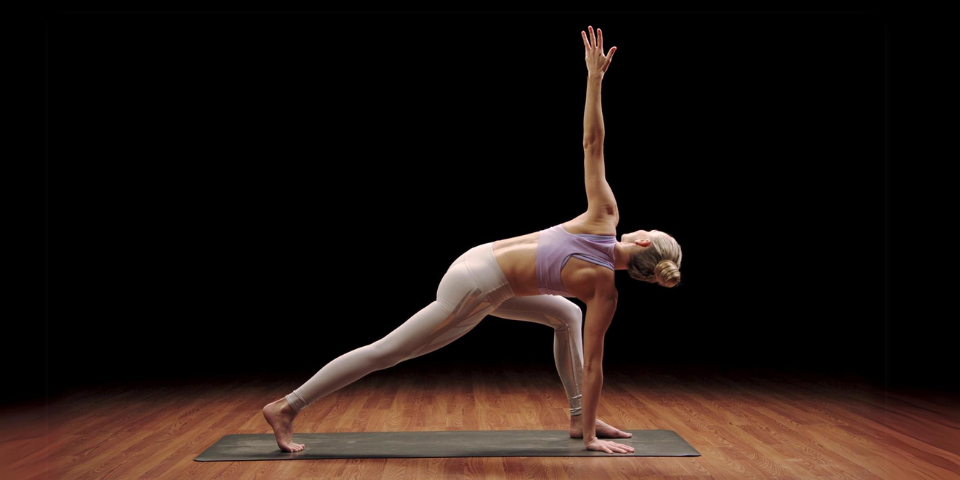
This stretch combines a lunge with a twist of the torso toward a bent front knee, with one arm on the floor and the other in the air, to improve strength, balance, and release muscle tension.
Why is it called the world’s largest stretch?
CSCS strength and conditioning coach Reda Elmaldi explains that the world’s best stretches earned their name by working so many muscles at the same time.
“The world’s largest stretch is praised for its comprehensive approach within a single stream,” Elmaldi says. “Its distinguishing feature is its efficiency in targeting multiple muscle groups as it addresses several key muscle groups essential for overall mobility and flexibility.”
These key areas include your hamstrings, hip flexors, glutes, core, and shoulders. During a lunge, the person in the back will be in a raised heel position, which will also stretch the legs and lengthen the leg muscles.
Not only does it help improve your mobility, but it’s also a great dynamic warm-up. Dynamic stretching before your workout prepares your body for specific movements and protects your muscles by activating the right muscles during intense workouts.
For example, a 2018 study found that Exercise Rehabilitation Journal Dynamic stretching has been shown to increase joint range of motion and reduce the risk of muscle and tendon injury.
The World’s Best Stretch: Step-by-Step Instructions
- Stand on your mat with your feet about hip-width apart. Bend your knees slightly, bend forward at your hips and place your palms next to your feet.
- Step your right leg back until you are in a runner’s lunge position, then bring your left knee forward and bend it to a 90-degree angle.
- Keeping your right hand on your mat (or yoga block), twist your torso to the left, open your chest toward your left leg, and extend your left arm toward the ceiling with your palm facing left.
The world’s best stretching tips
The approach to this stretch depends on whether you use it as a dynamic or static stretch.
For dynamic stretching
According to Elmaldi, when performing the world’s best stretches as part of a dynamic warm-up, you don’t need to hold each position for long.
“Instead, move each part of the stretch smoothly, taking about 3 to 5 seconds per position, and focus on fluid movements rather than static holds,” he says. “This approach increases blood flow, warms up your muscles, and helps prepare your body for the upcoming workout.”
For static stretching
He added that focusing on improving flexibility and cooling down after a workout will help you hold each position in the world’s best stretches for longer. This means that each position can take between 15 and 30 seconds.
“This allows your muscles to relax and stretch deeper, speeding recovery and improving overall flexibility,” Elmaldi says. “Keep in mind that the ideal hold time also depends on your individual flexibility and comfort level. Adjust as needed to ensure the stretch feels beneficial rather than painful.”
The world’s greatest stretching benefits
Because so many muscles are used at once, this stretch is beneficial for active muscle recruitment and strength development, but there’s more to it than that, Elmaldi says. He says this stretch has even more benefits.
1. Increased flexibility
Targeting multiple joints and muscle groups can improve overall flexibility and range of motion, which can contribute to improved performance in physical activities and reduced risk of injury, he says.
2. Promote functional movement
The World’s Greatest Stretch includes elements that mimic real-life movements like lunges and twists, promoting functional flexibility that can be applied to everyday activities.
3. Increase blood flow
The dynamic nature of stretching increases blood flow to the muscles, aiding muscle recovery and reducing pain.
4. Helps the body adjust
The complexity of the movements requires concentration and coordination, moving not only the body but also the mind, helping to increase awareness throughout the body.
Mistakes to avoid during the world’s biggest stretch
Stretching may seem simple and straightforward, but Elmaldi suggests focusing on form with every step. Here are some common mistakes to avoid.
- Rush the movement: Given their dynamic nature, moving too quickly can lead to improper form and reduce the effectiveness of the stretch.
- Improper alignment: In the lunge position, make sure your front knee is directly above your ankle and does not extend past your toes. This will help you avoid putting too much stress on your knees. Also, try to keep your hips square to the front. This will help you maintain balance and ensure you are stretching the targeted muscles.
- Not involved in the core: If you don’t engage your core throughout the stretch, you can put stress on your lower back, especially during the twists and reaches. In addition to aiding stability, a strong, engaged core supports your spine.
- Excessive stretching during twisting: Be careful when doing the twist part, as you can rotate too much and put strain on your lower back. Twists should be done from the thoracic spine (upper and mid back), not the lower back.
- skip breathing: If you are not breathing properly, your muscles will become tense and will not be able to stretch. Deep, controlled breathing can help deepen your stretch and increase relaxation.
- Pushing yourself too much: “Above all, listen to your body, especially if you’re in pain,” Elmaldi says. “Pain that goes beyond mild discomfort is a sign that something may be wrong, and pushing through the pain can lead to injury. If this is happening, adjust your stretches or seek professional advice if anything feels off.”
How to do the world’s best stretches even easier
If this is your first time performing the World’s Greatest Stretch, you may want to consider modifying it to gradually work your way up to the full pose. Elmardi suggests the following as a starting point:
- Lower your back knee. During the lunge portion of the stretch, placing your back knee on the ground will reduce the intensity and help you maintain balance. This is especially helpful if you have difficulty balancing or are experiencing discomfort in your back legs.
- Use props. Incorporating props like yoga blocks or chairs can provide support and stability. For example, if you have trouble reaching the ground with forward bends or twists, place your hands on a block or a sturdy chair to reduce the intensity of the stretch and help you maintain balance.
- Reduce range of motion: There’s no need to go that deep into each part of the stretch. Adjust the depth of the lunge and twist to a level that is comfortable and manageable for you.
- Omit the twist. If the twisting part of the stretch is too difficult or uncomfortable, especially for people with lower back problems, it’s okay to skip it at first. Focus on lunges and hamstring stretch elements to gradually increase flexibility and strength.
- Place your hands on your hips and twist. If reaching your arms overhead while twisting is too much, you can place your hands on your hips instead. This modification facilitates thoracic (upper back) rotation without the added challenge of extending the arms.