Bridges have high EMG activity, so they should teach you to work your glutes when performing a squat. Why doesn’t this happen?
Glute bridges and hip thrusts are supplementary exercises often used to strengthen the glutes during squats. They are also utilized in the world of “inactive” hip rehabilitation.
The purpose of this article is to analyze the functional mechanics of the bridge compared to the squat. And we’ll explain how it’s possible to train the bridge and still not be able to recruit the glutes during the squat.
(From now on, we will refer to the use of both glute bridges and hip thrusts as “bridges”).
muscle structure
Before we analyze squats and bridges, we need to start with principles that will allow us to understand how muscles work in a single exercise, such as a bridge, and in a compound exercise, such as a squat.
“The bridge has high EMG activity, which should teach the glutes to work when performing a more functional compound squat. So why isn’t this happening?”
Much of exercise science is concerned with strengthening muscles in individualized ways. This unique method is based on concentric muscle contractions that shorten and create movement. In a bridge, the hips contract concentrically to create hip extension.
In the article Science of hip thrust and buttocksBret Contreras discussed the science of maximizing glute recruitment, including research on the optimal amount of hip and knee flexion needed to maximize electromyogram readings. The purpose of this article is not to question his methods. Because they are correct for the function and purpose for which they are used: maximal glute muscle contraction for maximal muscle hypertrophy. Instead, in this article, we will explain how the bridge is incorrect in order to improve glute function in the squat, which is our goal.
The gluteus bridge is thought to have been further developed by using a band around the knee to push it out (hip abduction) and rotate the toes (external rotation). The theory is that performing all three concentric movements of the glutes (extension, abduction, and external rotation) simultaneously will ensure maximum EMG activity of the glutes.
“While conscious muscle contractions occur from isolated movements, it is impossible to direct all muscles to work during functional (multi-joint) movements.”
High electromyogram readings are thought to be very important in terms of how well exercise strengthens your muscles. Bridges have high EMG activity. Therefore, you need to teach your glutes to work when performing more functional compound squats.
So why doesn’t this happen?
body structure
In bridges, instead of teaching your glutes to squat, you just teach your hips to extend. The bridge works while you are lying on your back, and your nervous system is in the same state as sleeping. Let’s relate this to long-term bed rest. People become weaker as their muscles atrophy as they lose the fight against gravity. Gravity is what stimulates low-grade, continuous muscle activation.
When we lie down, we no longer fight gravity. This means that the nervous system throughout the body has little or no activation. Therefore, when the hip joint is driven upwards, only neurological drive is transmitted to the buttock, which results in higher pons EMG measurements.
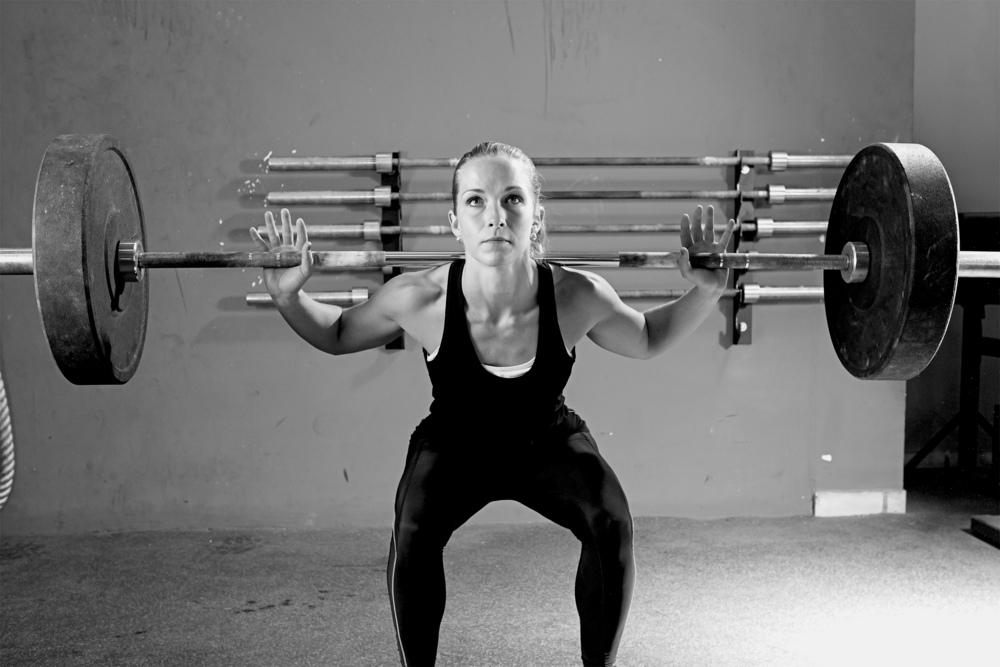
When standing with a load ready to squat, the amount of pressure the entire nervous system experiences is greater than the pressure on the pons. As you begin your descent and your hips move towards the floor, there is neural activity in every muscle in your body.. When you squat, the muscles in your hip joints all shorten and lengthen at different times, and you learn how to work as a team to overcome both gravity and momentum-transferred loads.
This is one of the key factors as to why you need a glute bridge. I don’t Move into squats. The body functions as one complete system, with vast neurological conversations between muscles to complete tasks. When you do the glute bridge, your glutes learn to work on their own, and there’s little conversation with your muscular friend next to you. As a result, when we stand up and perform a squat, the glutes no longer know when they need to contract compared to other muscles worked during a compound squat movement.
“When you do glute bridges, your glutes learn to work on their own, and there’s little conversation with your muscular friend next to you.”
The nervous system works unconsciously and controls all human movements. Conscious muscle contractions occur from isolated movements, but during functional (multi-joint) movements it is impossible to direct all muscles to work. Because multiple muscles are working, you cannot choose the order of muscle firing patterns.. It is impossible to consciously control the complexity of that sequence. Even if you can control the order, you’ll probably miss the lift because you’ll be too distracted by the task at hand.
How the mechanism works
Muscle order is not the only contrasting factor; the mechanisms are also different. In a bridge, the glutes start at a point of inactivity and shorten. There is energy stored in the glutes, but there is no cycle of lengthening and shortening like in a squat.
During the down phase of the squat, your hips move through hip flexion, adduction (starting in a relatively abducted position but continuing to move inwards as you squat), and internal rotation. These are the natural mechanisms of squat descent.
Since the knee mechanism is flexion and internal rotation, internal rotation of the femur occurs during the eccentric phase of the squat.. Note that I’m not saying that knees kiss each other. If the knee traces over the foot, this is internal rotation of the hip.
During the down phase, the hips extend in all three planes of movement: hip flexion in the sagittal plane, hip adduction in the frontal plane, and internal rotation in the transverse plane. This lengthening process creates an elastic load that allows the gluteal muscles to explosively concentrically extend, abduct, and externally rotate the hip joint, allowing you to stand.
“Limited range of motion means your glutes haven’t learned what to do in the bottom hole of the squat, and this is when you really need their help.”
The joint movements described above are not reproduced during the bridge because extension shortening does not occur due to the limited range of motion in which the bridge is performed. One of the effects of the bridge is gluteal tension. This means your glutes can only contract through a shortened range of motion, rather than a large range of motion like in a squat. This limited range of motion means your glutes aren’t learning what to do inside the hole at the bottom of the squat. This is when you really need the help of your glutes.
Get into a lunge
The closest exercise to squats to truly help activate your glutes is lunges.. The motion of the hip joint is much the same, with hip flexion, internal rotation, and adduction during the descent of the movement allowing the gluteal muscles to work in a cycle of lengthening and shortening. However, there are small differences between squats and lunges. In a lunge, ground reaction forces occur when the foot hits the floor, so the mechanics are not completely identical since the loading pattern in a squat is top-down.
But in a lunge, your glutes are learning how to work with all the other muscles in your hip joint in a series of coordinated, synchronized movements. The joint angles are similar to those of a squat (front leg), and importantly, the ankles, knees, and spine also learn how to move with the hip joints through that movement.. Because only the hips are moving and extending in a bridge, and the ankles and spine are in a completely different position and under different stress than in a squat, the correct movement pattern and muscle ordering is not learned.
“In a bridge, only the hips are moving and extending, and the ankles and spine are in a completely different position and under different stress than in a squat.”
Lunges also make each leg work independently, making it stronger on its own.. I haven’t rated the balanced squat 100% yet. We all have stronger legs, which are preferred when squatting. We must try to balance the system.
So step forward and charge! However, performing 30 lunges alone is not enough to bring about the desired changes in the recruitment of movement patterns. Part 2 of this article details the programming required to make significant changes to the motor pattern.
The following articles may also be of interest:
References:
1. Contreras, B. “Hip Thrust and the Science of the Buttocks.” Groot Guy. Last updated on April 6, 2013.
2. Worrell TW, et al. “Effect of joint position on electromyography and torque production during maximal voluntary isometric contractions of the hamstrings and gluteus maximus.” J Orthop Sports Phys Ther. 2001 December;31(12):730-40.
Photo 1 courtesy of Shutterstock.
Photos 2, 3, and 4 courtesy of CrossFit Empirical.