Fight fatigue, discomfort, and lethargy during flight with these moves.
Travel season is here. For many people, that means spending time at the airport. Besides the expected overpriced bottled water, poor chain restaurant food, and long lines for that much-needed coffee, airport travel can also lead to fatigue, bloating, and aches that come with lack of exercise. This is not the best combination for getting into the “holiday mood” or “vacation mode.”
To combat these negative effects, here’s a complete workout you can do right at the airport. Complete with targeted mobility work, blood-pumping strength training, mood-boosting cardio, restorative stretches, and more, you can do this entire workout right on your device.
jetsetter airport training
Why work out at the airport?
It’s simple. You are choosing to spend some of your downtime during your flight to counteract some of the potential downsides of your trip. Traveling tends to confine us to small spaces, cutting us off from our normal travel habits. Fortunately, exercise has a powerful effect on our bodies and minds. It can keep us moving and feeling good.
A single bout of resistance training has been shown to increase the concentration of anti-inflammatory protein messengers in and around the knee joint. (1) Moreover, this effect lasted for more than 3 hours. Sitting for long periods of time usually puts strain on joints such as the knees, so it makes sense to prevent them from getting bogged down with exercise.
On the psychological side, just one session of resistance or cardiovascular training can improve your mood and sense of well-being. (2) If you exercise regularly, you may be used to the uplifting effects of exercise. Conversely, you may also notice its absence. If you can maintain the good mood that comes with exercise during the travel season, there’s no reason not to.
An underrated benefit of exercise is that it can boost your immune system. Immediate and sustained increases in immune cell activity occur after submaximal resistance training and cardiovascular exercise. (3) Ultimately, non-fatiguing training may stimulate the immune system to mobilize its resources.
Although these rapid changes in your immune system aren’t directly linked to your risk of common illnesses, it seems safe to say that if you’re about to be cooped up on a plane with dozens of strangers, activating your immune system might be a good idea.
dynamic mobility
The dynamic movement portion of this workout serves two purposes. First, it’s a great warm-up. Second, start addressing some of the “problem areas” that may become stiff or sore during long trips. Settle into a controlled pace of movement, especially during this part of the workout. Find a quiet area of floor space and forget about the hustle and bustle of the airport before getting to work.
From plank to pike, alternately stretching your toes
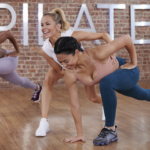
- manner: Begin in a high plank position. This is similar to the top of a push-up, with your body straight and supported by your palms and front legs. Move your hips back and up, forming an inverted V shape to move your body into a pike position. Then extend one hand to the opposite leg. Return to pike position and repeat the action with your other hand and opposite foot. Lower your hips back to a high plank position to complete this repetition. Repeat the entire sequence.
- Number of sets and reps: 3×10
- Break time: Rest only long enough to move on to the next exercise.
From plank with rotation to deep lunge
- manner: From a high plank position with both hands and feet on the ground, put one foot in front of the other. Place your feet on the outside of your hands, or as close as your flexibility allows. Raise your front hand and reach toward the ceiling. Rotate your core and follow your hands with your eyes. Return your hands to the floor and return your legs to a high plank position. Repeat on the other side to complete one repetition.
- set and manager: 3×10 per side
- Break time: Rest only long enough to move on to the next exercise.
side plank with rotation
- manner: Get into a side plank position, supporting yourself with one forearm and both legs. Place the foot of your top leg slightly in front of the foot of your bottom leg for added stability. Reach your upper arm hand under your rib cage, near the ground, and toward the wall behind you. Rotate your body on your supporting shoulder and keep your eyes focused on your moving hand. Reverse the movement and extend your moving arm toward the ceiling.
- set and manager: 3×10 per side.
- Break time: Rest only long enough to move on to the next exercise.
dead bug
- manner: Lie on your back with your arms straight up and your legs bent at about 90 degrees. Rotate your pelvis back to bring your lower back into contact with the floor (think “tuck your tail” or “tuck your belt buckle closer to your chin”). Keep your lower back in contact with the ground throughout the exercise. At the same time, place one arm on the ground above your head and lower the opposite leg to the ground. Return to starting position. Repeat the motion with the other arm and leg to complete one repetition. This may require some coordination, so move slowly and focus on controlling your movements.
- set and manager: 3×10 per side.
- Break time: Rest only long enough to transition into your first exercise.
upper and lower body training
The main course (or concourse) of airport training is full-body resistance training. The first two exercises use your body weight as resistance, and the last three use your carry-on bag as resistance.
Each of these exercises uses a strengthening technique called “elevator reps” to increase the training stimulus with limited resistance. Each repetition consists of one repetition of the full range of motion, followed by one repetition of approximately 50% range of motion, and one repetition of approximately 75% range of motion. The number of elevator repetitions is structured based on the resistance curve of the exercise. Each repetition requires you to spend extra time on the most difficult part of the range of motion. The specific method is shown and explained below.
If you find it too difficult to complete the elevator reps in your target rep range, try performing the basic exercise without any strengthening techniques or reduce the total reps per set.
Push-ups with elevator reps
- manner: Start in the top push-up position. Extend your elbows, tighten your core, and support yourself with your palms and front of your feet. Lower your body to the lowest push-up position so your chest is just above the floor. This is where the “elevator charge” begins. Press halfway and return to the top position, then immediately reverse the movement and return to the bottom position. Push three-quarters of the way to the top position and immediately return to the bottom position. Finally, push it all the way to the top position. That’s one rep.
- set and manager:3×10
- Break time: Take 90-120 seconds of rest between sets.
Back leg raise split squat with elevator reps
- manner: Stand in a staggered position with the tops of your hind legs supported by a stable load (definitely not anything with wheels) or a bench or chair. Shift your weight primarily to your front legs and lower your body toward the ground, keeping your torso upright. In the lowest position, the knee of the back leg should lightly touch the floor or be just above it. It’s “elevator person” time. Push halfway to the top position, then return to the bottom position. Then push it three-quarters of the way to the top position, then return to the bottom position. Repeat once and press all the way to the top to complete the repeat.
- set and manager: 3 x 10 per leg.
- Break time: There is no rest between the legs. Take 90-120 seconds of rest between sets.
Row of suitcases with elevator attendant
- manner: Hinge forward at your hips and hold the load down with your arms extended. Keep your legs slightly bent. Pull your shoulders and upper arms up and back, rowing the load towards your stomach. To repeat the elevator, lower the bag halfway to the lowest position, then row it back up to your abdomen. Then lower the bag three-quarters of the way to the lowest position and paddle again. Complete the repetition by lowering the bag to the lowest position.
- set and manager:3×10
- Break time: Take 90-120 seconds of rest between sets.
Good morning to the person in charge of the suitcase elevator
- manner: Stand up straight and hold your bag tightly to your chest. Unlock your knees and bend forward at your hips until you feel a deep stretch in your hamstrings. This is the lowest position. To perform an elevator rep, return halfway to the top position, then lower to the bottom position. Then go back three-quarters of the way to the top position and return to the bottom position. Finally, stand up to finish the repetition.
- set and manager:3×10
- Break time: Take 90-120 seconds of rest between sets.
Suitcase row with elevator attendant
- manner: Hold your bag in front of your feet and stand with your elbows extended. Pull your elbows up and out as you pull the load along the front of your body. In the top position, your hands should be at neck or sternum level. Lower the bag halfway to the lowest position, then row upright to the highest position. Lower the bag about three-quarters of the way to the lowest position, stand upright and row back to the highest position, then lower the bag to the lowest position and repeat once.
- set and manager:3×10
- Break time: Take 90-120 seconds of rest between sets.
cardiovascular conditioning
In addition to duty-free shops, fast food, and the occasional shoe shine station, airports tend to offer large indoor spaces. Avoiding escalators and moving walkways makes airports the perfect environment for a cardio workout.
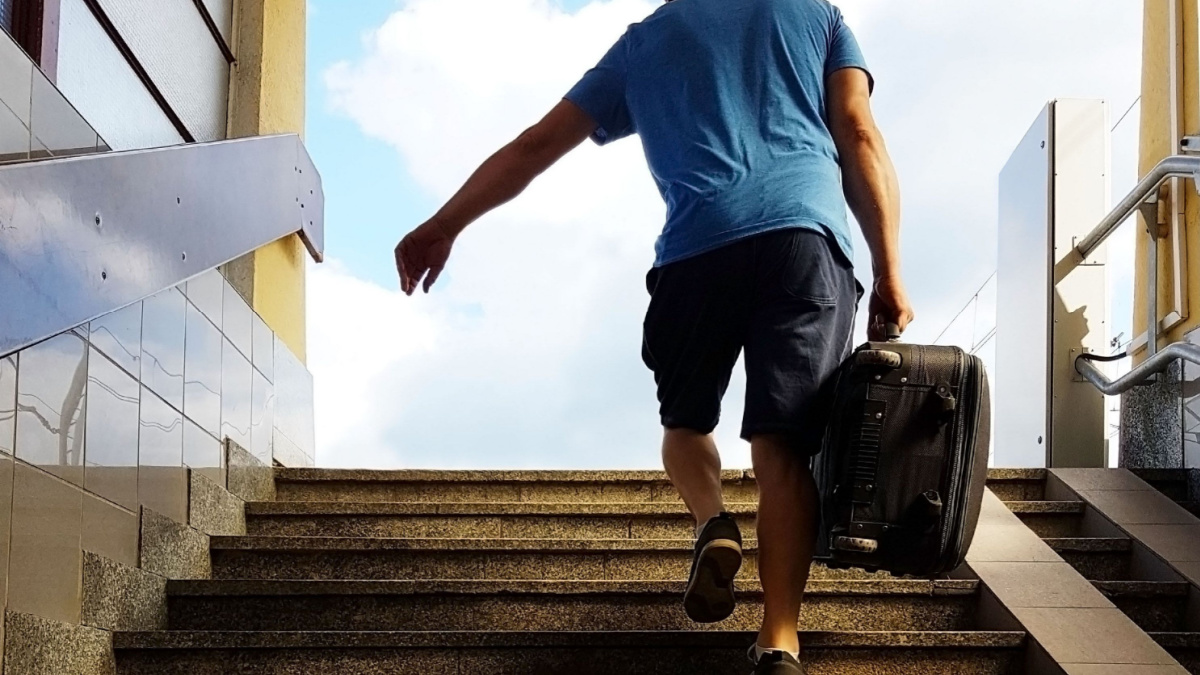
After finding your gate and taking inventory of how much time you need to consume, go for a fitness walk. Since you cannot leave your luggage unattended, it is even more convenient to walk with your luggage loaded.
- manner: Walking at a fast pace or climbing stairs with the most effort allows you to breathe primarily through your nose. This may provide a more efficient cardiorespiratory training stimulus compared to open-mouth breathing. (4) To further strengthen your grip and core strength, try literally carrying a suitcase. Instead of carrying your luggage or slinging it over your shoulder, hold it under your arm with one hand. Switch sides just before the grip fails.
- Set and period: 2-3 times, 5 minutes apart.
- Break time: Rest 2 minutes between each interval.
targeted stretching
Stretching serves as a good cool down. At this stage, your muscles are warm and ready to relax and stretch. Each of these stretches targets multiple muscle groups to help you finish your workout efficiently. As with the dynamic mobility warm-up, special attention is paid to those parts of the body that become stiff or cranky after prolonged sitting and movement.
Half-kneeling hip flexor stretch with side bends
- manner: Kneel with your front hip and knee bent at 90 degrees, and place your back knee on the floor below you. Rotate your pelvis down (again, think of “tucking your tailbone” or “tilting your belt buckle toward your chin”). You should feel a stretch in the front of your trail leg thigh. To maintain this stretch, tighten your glutes. Extend the arm of your kneeling leg over your head and bend it slightly to the side to intensify the stretch. Hold this position before switching sides.
- Set and period: Hold 3 times for 15-30 seconds per side.
- Break time: Rest only long enough to move on to the next stretch.
pretzel stretch
- manner: Lie on your side with your legs bent in a “zigzag” position. Keep the thigh of your lower leg in line with your torso, and the other thigh facing straight ahead. Reach your top arm back and grab the foot of your bottom leg. Use luggage straps, belts, and shoelaces as needed. Bend your upper hip and knee and use your opposite arm to push your knee toward the floor as far as is comfortable, encouraging core rotation. Make sure to lie on your back and place your head and shoulders on the floor. Hold this stretched position for a period of time before switching sides.
- Set and period: Hold 3 times for 15-30 seconds per side.
- Break time: Rest only long enough to move on to the next stretch.
thoracic spine extension stretch
- manner: Kneel in front of the load and place your glutes over your heels. Place your elbows on top of your luggage and interlace your fingers behind your head. Move your sternum up and forward and feel a stretch in your mid-back, lats, and triceps. If your luggage has soft or collapsible sides (such as a duffel bag), use a bench or chair instead.
- Set and period: Hold for 15-30 seconds 3 times.
- Break time: Rest only long enough to move on to the next stretch.
thoracic spine flexion stretch
- manner: Stand with your arms straight and your fingers clasped in front of your stomach. Lower your chin to your chest and reach your hands forward to press your mid-back back. Think about maximizing the distance between your sternum and your hands, and concentrate on feeling a stretch in your mid-back.
- Set and period: Hold for 15-30 seconds 3 times.
- Break time: Rest only long enough to transition into your first stretch.
But what do other travelers think?
If you undertake this airport training, you’re likely to be met with curious (and perhaps even critical) eyes. Forget about the lurkers. Your lifestyle is determined only by you. Only you can put up with the effects of prolonged sitting at the airport, and only you can experience the benefits of completing a light workout during your next layover or while waiting at the airport gate.
If you want to arrive at your destination feeling fresh, why not take a few steps to ensure that result? Doing some light exercise at the airport can help. Speaking of freshening up, if you’ve been sweating, be sure to stop by the bathroom to freshen up before boarding the plane. Mobilized, energized, clean, and ready for takeoff.
Add a workout to your itinerary
Let’s be honest: Air travel is hard on the body. Fortunately, a workout that promotes ease of movement and a healthy pump may be the best non-pharmaceutical tonic against air travel ailments. Until more airports start building in-gate gyms, weight transfers and luggage lifts may be your best option. Bookmark this airport workout to accompany you on your next flight.
References
- Hellmark, IC, et al. (2010). Exercise increases both intra-articular and perisynovial interleukin-10 levels in patients with knee osteoarthritis: a randomized controlled trial. Arthritis research and treatment, 12(4), 1-11.
- Rocheleau, CA et al. (2004). Moderators of the relationship between exercise and mood changes: gender, exercise level, and exercise duration. psychology and health, 19(4), 491-506.
- Schlagheck, M.L., et al. (2020). Cellular immune responses to acute exercise: A comparison of endurance and resistance exercise. European Journal of Hematology, 105(1), 75-84.
- Durham, George & Keyes, Bethany. (2020). Effects of nasal versus mouth breathing and oronasal breathing during exercise: A review. Journal of Sports Research. 7. 10.18488/journal.90.2020.71.1.10.
Featured image: Xato / Shutterstock