Hypoglycemia is one of the most difficult parts of living with insulin-treated diabetes.
If you’ve ever experienced low blood pressure, you know how intense it can be: sweating, shaking, brain fog, and an overwhelming urge to eat. all Insight.
After managing type 1 diabetes for 28 years, I’ve learned that to effectively treat diabetes, it’s not just about eating whatever’s available, it’s about choosing the right foods that work. fast,in appropriate amountand avoid anything that could actually make the situation worse.
The video below details the 10 best ways to raise your blood sugar levels quickly (ranked from “okay” to most effective) and what you shouldn’t eat during hypoglycemia. We’ll also explain how much you should eat, when to stop, and why the old 15/15 rule still matters.
What happens during hypoglycemia?
When your blood sugar drops below 70 mg/dL, your brain is starved of fuel. This triggers a hormonal cascade including the hunger hormone ghrelin, which makes you want to eat right away. However, not all foods raise blood sugar levels quickly or effectively.
Let’s take a look at the top 10 methods for treating hypoglycemia, ranked by how quickly and reliably they work.
Top 10 ways to treat hypoglycemia
#10: Cake
Cake may sound like the ultimate comfort food when you’re feeling down, but it’s not the best idea. It’s loaded with sugar, but its high fat content slows down digestion. This means that glucose is absorbed more slowly. do not have Perfect if you need a quick fix.
- Glycemic index: ~42~60
- Carbohydrate intake: ~15g carbs per 1/2 slice
- verdict: Not fast enough for serious low levels
#9: Ripe banana
Bananas are natural and portable, but their medium glycemic index makes them a good choice during mild blood sugar drops or as a follow-up snack.
- Glycemic index: ~51
- Carbohydrate intake: half a large banana
- verdict: Only mild bass. Not ideal for crashes
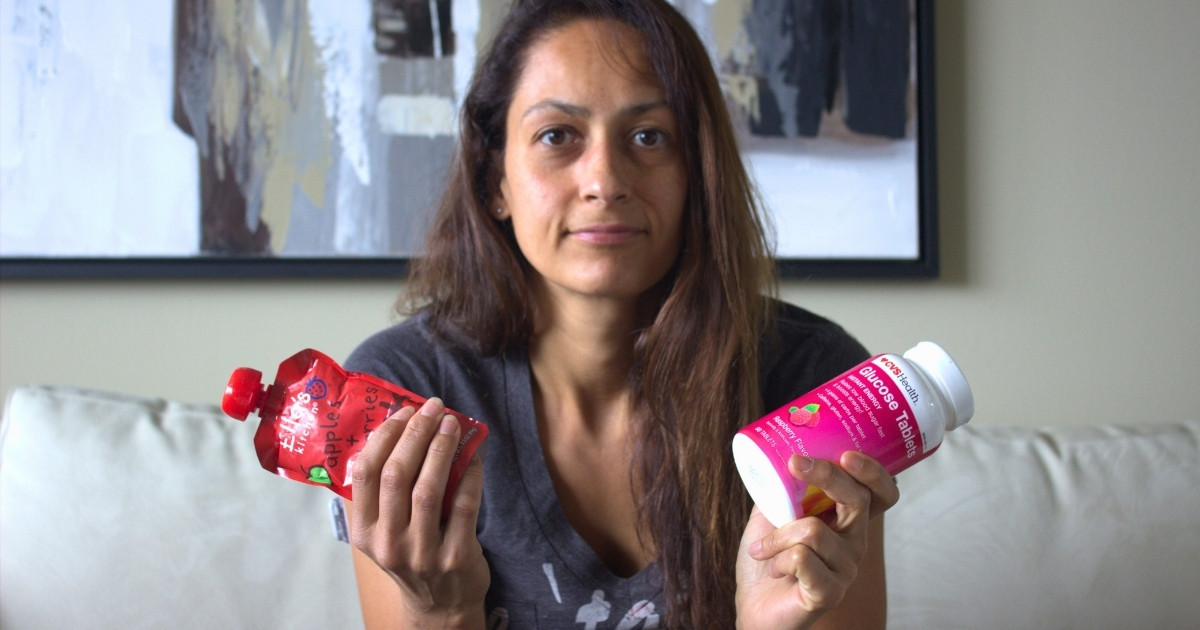
#8: Fruit pouch
Especially perfect at night. Fruit pouches are clutter-free and easy to keep by your bed. Most products contain around 15g of carbohydrates, but check the label. Some have added fiber, which can slow absorption.
- Glycemic index: ~40~60
- Carbohydrate intake: 1 bag
- verdict: Easy and mild option with reasonable speed
#7: Raisins
Small but mighty, raisins are an effective snack that’s easy to carry. Each mini box contains approximately 15g of carbohydrates for immediate benefits. Just be careful not to eat too much.
- Glycemic index: ~66
- Carbohydrate intake: 2 tablespoons or 1 mini box
- verdict: Ideal for on-the-go treatment
#6: Table sugar
If you need something quick in a cafe or at home, regular sugar works well. It is absorbed faster, especially when mixed with water.
- Glycemic index: ~65
- Carbohydrate intake: 1 tablespoon
- verdict: Fast and reliable, but not the fastest
#5: Honey
Honey is popular among those who prefer “natural” options. It acts very quickly and can even be absorbed under the tongue in emergencies.
- Glycemic index: ~58
- Carbohydrate intake: 1 tablespoon = about 15g carbohydrates
- verdict: Great intermediate option
#4: Candy (Life Saver)
Hard candies like Lifesavers (not the sugar-free variety!) have a high glycemic index, which means they can quickly raise blood sugar levels. However, be careful with the portion size. Sugar is sugar, so it’s easy to consume too much of it.
- Glycemic index: ~80
- Carbohydrate intake: 4 candies
- verdict: It’s quick and delicious, but portion control is important.
#3: Orange juice
There’s a reason OJ is a classic treatment. It’s quick, effective, and easy to take when you’re too shaken to chew. Where am I going? Convenient child-sized juice box. You can measure the amount in advance.
- Glycemic index: ~66
- Carbohydrate intake: 4 ounces (1/2 cup)
- verdict: Great for medium to deep bass
#2: Regular soda
Drinking a small glass of sugary soda like Coke or Sprite can cause your blood sugar levels to spike. Make sure it’s not a diet! As with juice, it’s best to measure or adjust portions ahead of time.
- Glycemic index: ~63
- Carbohydrate intake: 4 ounces (1/2 cup)
- verdict: Quick and effective in a pinch
#1: Glucose tablets
There’s a reason these are the gold standard. Glucose tabs are pure glucose (GI 100), portable and easy to administer. You’ll always know what you’re getting so you can avoid overtreatment.
- Glycemic index: 100
- Carbohydrate intake: 3-4 tablets
- verdict: most effective, most predictable
What not to eat: Dark chocolate
Dark chocolate may seem like a snack, but it’s a poor choice when you’re not feeling well. High fat content slows down digestion and delays glucose reaching the bloodstream.
- Carbohydrate intake: ~1.5oz
- verdict: If you’re feeling low, don’t eat it and save it for dessert.
How much should I eat?
In most guidelines, 15-15 rules:
eat 15 grams of fast-acting carbohydrateshang on 15 minutesand Please retest your blood sugar level.
If it’s still low, repeat. However, remember the following: 15 grams is not necessarily the right amount for everyone. Just 4 grams (1 tablet of glucose) may be enough for morning hypoglycemia. The key is to track your reactions and know what works you.
Don’t rely solely on CGM for lower prices
Continuous glucose monitors (CGMs) are very helpful, but can have a delay of up to 10 minutes when blood sugar levels are low. I always check with my fingers before and after low-concentration treatments, especially when determining if I need to increase my carbohydrates more.
Was this article helpful? Let us know by clicking Yes or No below.