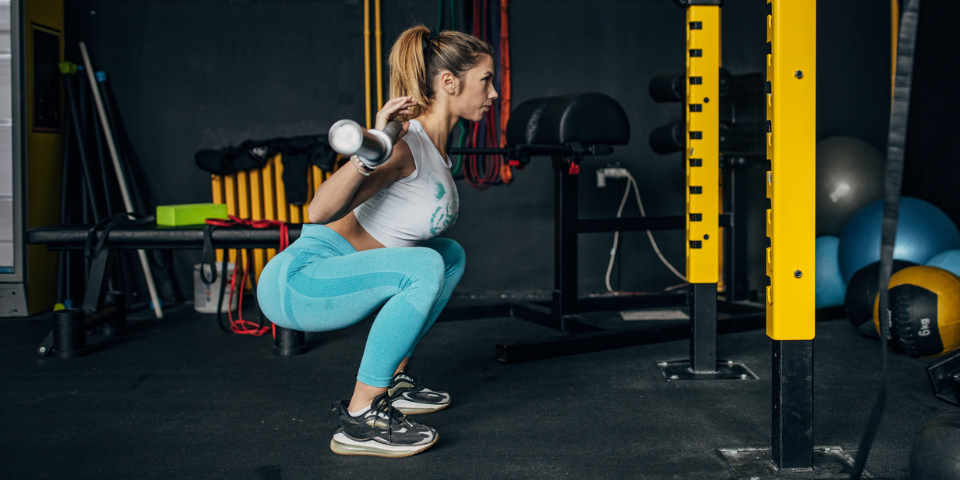
Whether you’re carrying a barbell on your back, slinging a kettlebell over your shoulders, or warming up with bodyweight squats, questions always remain. The question is, what is the proper squat depth?
Carol Mack, DPT, CSCS, a physical therapist and strength and conditioning coach, says squat depth should be high on your form checklist because how low you go is just as important to performance, safety, and results as how much weight you push. Keep reading to find out why.
How high should you squat?
Unless you’re a competitive powerlifter whose goal is to squat as much weight as possible, Mack recommends squatting as deep as you comfortably can without sacrificing form. Deeper squats activate your muscles more efficiently and help you build strength with a wider range of motion. This is important when training for something beyond aesthetics, such as athletic performance or daily living.
However, the depth of your squats depends on several personal factors, including “whether you have pain in your knees, hips, or ankles, and whether you have enough mobility to go deeper,” Mack says.
What if your knees flow past your toes?
One of the persistent myths about how deep to squat is that your knees should never go past your toes. While this cue can also indicate other form errors, such as not hinging at the hips, especially in activities like powerlifting, Mack says, it’s more likely that your knees will go over your toes when you try to go deep into a squat.
“You don’t have to worry about your knees going forward when you go past 90 degrees,” she says. “Of course, if you feel pain or pressure, don’t go too deep. But if you’re comfortable going deeper and listening to your body, it’s okay to go deeper.”
One tip to help with alignment is to look down and make sure your knees aren’t splayed out and that your knees are in line with your two middle fingers, she added. (Always apply this tip during warm-ups, not during PR attempts, etc.)
How can I improve my squatting depth?
If you struggle with squat depth, here are some strategies to lower your squat depth.
1. Focus on your lower back
Mack says focusing on the hips can be a game-changer, since squat depth isn’t just about your quads and glutes.
Instead of lowering your butt straight down, try to move your hips back slightly (known as a hinge) as you get into a squat position. This promotes hip flexion (bringing the knees closer to the chest) and improves depth.
It’s also important to stay close to the bottom of the squat and avoid letting your knees sink in when you stand up.
“To improve your squat, you may need to add hip mobility or strengthening to your daily routine,” Mack points out. Hip mobility exercises don’t just help with squat depth. It reduces the strain on your body caused by sitting too much, increases your overall flexibility, and increases your range of motion.
2. Increase ankle mobility
Mack added that increasing ankle mobility is also important. This aspect of the squat is sometimes ignored, but it plays a huge role in gaining depth. If you feel your ankles lifting off the ground while squatting, that’s a sign you need to improve your mobility.
Ankle strengthening exercises improve your mobility and stability, which can support your squats no matter how deep they are.
3. Strengthen your core
Finally, remember that squats involve your spine, says Mack.
“Some people have difficulty keeping their core upright when going deep into a squat,” she says. “This can lead to misalignment throughout the squat movement. This can happen for a variety of reasons, including mobility, but core strength is a big culprit.”
If you tend to round your back when going into a squat, or feel your upper body collapse when you try to stand up, that usually means you need to incorporate more core training into your routine, she suggests.
Fortunately, there are plenty of options for doing so, and like other mobility and strengthening options here, you can reduce your risk of injury and improve your form for a wide range of movements, including the squat.