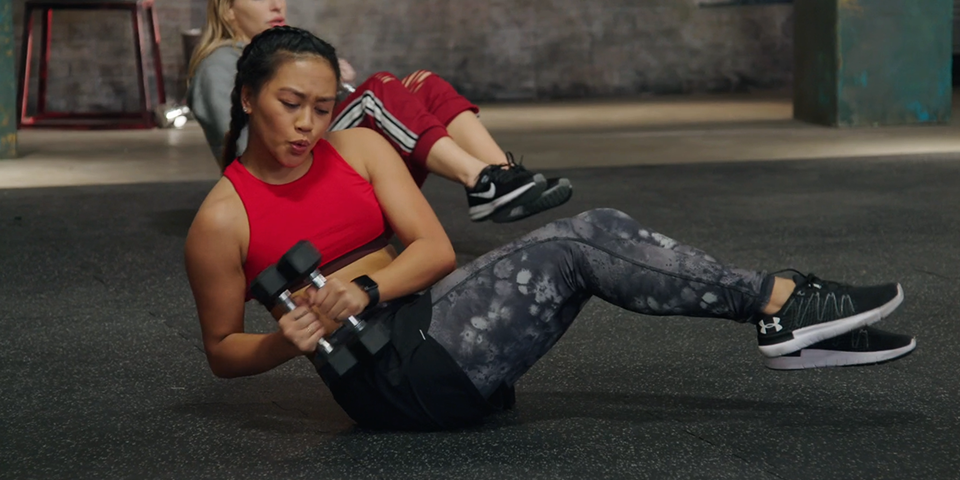
If your core workout is just bending over for crunches or holding that position for planks, try adding a Russian twist to your routine.
“In life, we make many movements that involve all aspects of movement, and one of them is rotation,” says Cody Brown, CSCS. Explain that rotation is one of the least trained movement patterns in the human body. And if you slack off, you’re exposing yourself to major strength and functional deficiencies.
Whether you’re changing direction on the soccer field or reaching into the back seat of your car, you need a strong, stable core that can support you as you rotate from side to side and protect your spine, Brown says.
Additionally, if you want to create a chiseled core from every angle, you should do oblique twist exercises like the Russian twist.
Precautions before doing the Russian Twist
Form is the most important thing when doing any exercise. However, as soon as the form collapses when arranged in the Russian style, intention Perhaps feel it in your lower back.
To properly train your core muscles and avoid stressing your lower back, it’s important to focus on squeezing your core as much as possible throughout the exercise, as if you were being punched in the gut. This will help keep your torso firmly in the correct position.
If you feel like your lower back arches are exaggerated during the Russian Twist, try a variation of the movement (see below) or cut your set there, rest, and then start again.
Russian twist: step-by-step instructions
program: rough around the edge
Good result: total body killer core
- Sit on the floor, hold dumbbells in front of your chest, and balance on your butt with your knees bent and feet a few inches off the floor.
- Keeping your back flat and core engaged, rotate your torso to the right and lower the weight toward the floor outside your right hip.
- Return to starting position and repeat to the left. Alternate sides and repeat the same number of times on each side.
Russian Twist: Muscles Trained
- Obliques: These muscles, which include both the deep internal obliques and the shallower external obliques, are located along the sides of the torso and are the primary driving force for both rotation and lateral flexion.
- Transversus abdominis: The transversus abdominis, abbreviated as TVA, is responsible for stabilizing your spine and acts like an internal corset that keeps everything nice and tight.
- Rectus abdominis: These coveted six-pack muscles work to flex your lumbar spine, helping to keep your torso elevated (crunch style) throughout your workout.
How to make Russian Twist easier
If the Russian twist is too difficult or you feel discomfort in your back, try performing it using only your body weight or with your feet on the floor.
“When you put your feet on the ground, the contact points give you more stability,” Brown says. This reduces the amount of work your core has to do to maintain support, reducing stress on your lower back.
Alternatives to Russian Twist
And whether you do Russian twists or not, there are plenty of other rotational core exercises you can add to your routine that will minimize strain on your back. Try these basic movements and stick with what feels good to you.
1. Bicycle crunch
- Lie on your back with your legs straight, interlace your fingers behind your head, and gently rest your head on them. Keep your elbows to your sides and relax your neck.
- Press your hips into the ground, engage your core to lift your shoulder blades off the ground, and rotate your torso to bring your left elbow toward your right knee while bringing your right knee toward your chest. Keep your left leg straight.
- Conversely, extend your right leg while bending your left leg toward your chest, then rotate your torso to bring your right elbow toward your left knee.
- Once you’ve done the reps and learned proper form, switch legs and rotate faster to introduce an aerobic element. Your lower back should remain on the floor throughout the movement.
2.Standing band rotation
- Secure the resistance band to a sturdy object at belly button level.
- Stand next to your anchor point with your feet hip-width apart and your knees slightly bent.
- Hold the handles with both hands, extend your arms fully in front of your chest, and rotate your torso to face the station.
- Keeping your core tight and arms extended in front of your chest, rotate your torso to face away from the station.
- Pause, then slowly reverse the movement to return to the starting position.
3. Low to high dumbbell chop
- Grasp a dumbbell in each hand (one on each end) and lower into a quarter squat position.
- Hold a dumbbell on the outside of your right knee, with your arm fully extended and at an angle from your body. The torso must face the weight.
- With arms fully extended and torso facing the weight, tighten your abdominal muscles, rotate to the left and release your right heel as you rotate your hips and raise the dumbbell across your body until it is over your left shoulder.
- Pause, then slowly reverse the movement to return to the starting position. Repeat on the other side.
4. plank cross tap
- Start in a high plank with arms straight, hands in line with (but slightly wider than) shoulders, feet together, and body straight from head to heels.
- Keeping your back flat, raise your right leg and bring your right knee toward your left elbow.
- Return to starting position. Repeat the same number of times on both sides.