There’s a reason squats are popular. Whichever variation you choose, you’ll not only strengthen your lower body, but if done correctly, you’ll also strengthen your core and increase your range of motion.
Jumping Jacks also deserve the high praise they’ve had since, well, forever, when it comes to fitness. Build stamina, burn calories, and increase cardiorespiratory endurance.
What could be more powerful than these movements? Combine them. Welcome to Squat Jack.
Squat jacks: step-by-step instructions
- Stand with your feet together and your arms at your sides.
- Keeping your back straight and core engaged, push your hips back, bend your knees, and lower your body deeply into a squat. Touch the side of your ankle. This is the starting position.
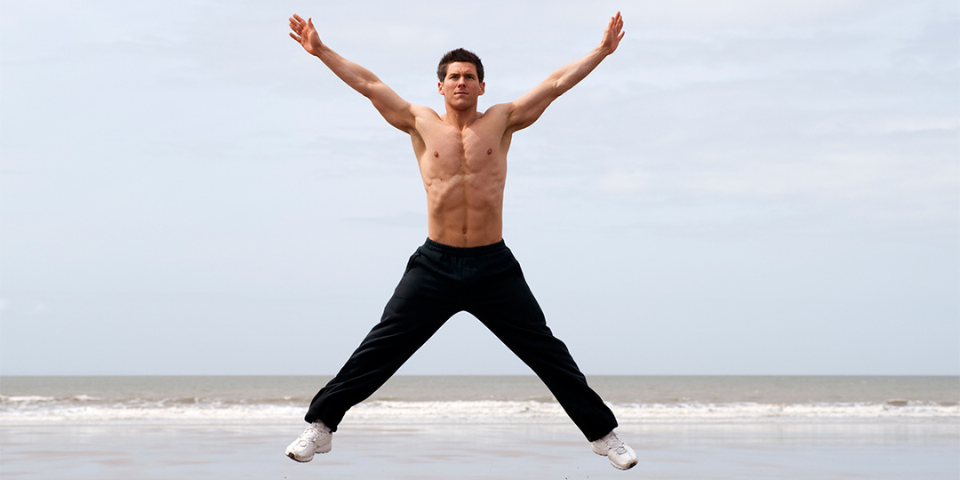
- Raise your hands above your head and pop your legs out to the sides to explode upward. Your body should form an “X” at the top of the movement.
- Jump back to the starting position in a smooth motion.
Note: If you have a joint problem or injury that is aggravated by jumping, avoid plyometric movements like this until it is resolved.
Advantages of squat jacks
“Squat jacks are a great way to make classic jumping jacks more challenging and can help build muscle endurance and explosive power, especially in the legs,” says Trevor Thiem, CSCS.
Which muscles do squat jacks work?
Due to the wide range of motion required, squat jacks work three major muscle groups.
Quad: When you explosively rise from a squat, your thigh muscles fire to propel you into the air.
Gluteus maximus: The same goes for your butt. Every time you stretch your legs, your buttock muscles will be strengthened.
core: The rectus abdominis, transverse abdominis, and other core muscles help maintain stability, allowing you to generate more power.
Top tips for squat jacks
To master proper squat jack form, heed this advice from Thiem.
- Keep your feet together at the end of the movement.
- Touch the sides of your ankles each time you get into a squat position. If you find that difficult, slow down.
- Make sure to keep your back flat during the exercise. Rolling up increases the risk of injury and back pain.
- Try to raise your arms as high as possible. We often “cheat” the movement by raising our arms halfway. This not only reduces the intensity of the exercise, but also reduces the range of motion and limits the benefits of the exercise for shoulder mobility.
You can also make squat jacks more difficult by increasing your speed or adding 180 degrees of rotation with each jump.