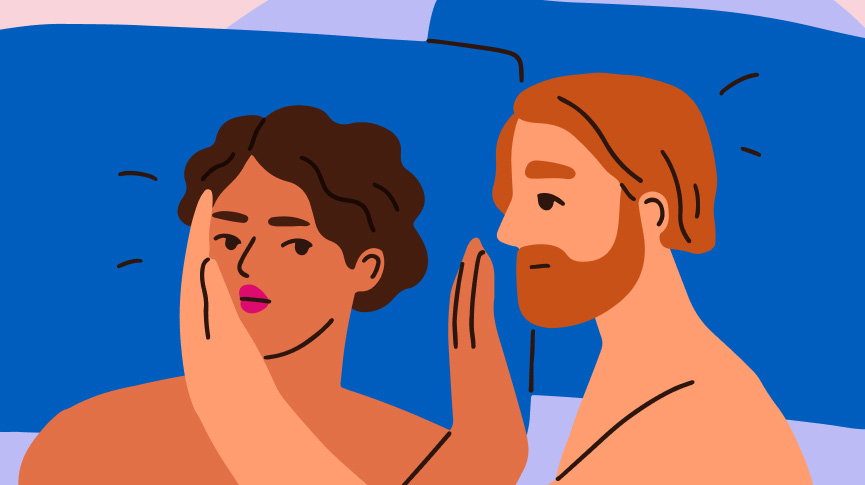
All couples evolve, and with them, their sexual relationships evolve. It’s normal for sexual desire to wax and wane, and it depends on a myriad of factors unique to each person (biological, psychological, emotional) and life changes that affect the couple (responsibilities, children, financial issues, etc.).
However, if low sex drive affects your relationships, you need to identify the cause and address it to prevent irreparable damage. In this article, we will explore their causes and important strategies to deal with them.
3 years of crisis
When we fall in love, our desire for the other person is washed away like a drug, in part due to the novelty of it and a cocktail of hormones flooding our brains, especially serotonin (a neurotransmitter that regulates sexual desire).
The rapid increase in serotonin levels causes a feeling of happiness or euphoria similar to the high caused by drugs such as ecstasy or LSD, leading to a type of addiction.
Serotonin is also associated with other neurotransmitters and hormones such as dopamine, norepinephrine, phenylethylamine, oxytocin (the “love hormone”), and testosterone. Testosterone is a substance that influences emotions such as trust, kindness, admiration, euphoria, and joy. This explains why couples often cannot tolerate being apart (or out of bed) at the beginning of a relationship.
However, this hormonal high has a shelf life of about three years. Around this time, many couples face their first crisis and wonder if they are no longer in love and that a decline in desire signals the end of the relationship. But this doesn’t have to be the case unless their bond is based solely on sexual pleasure and fun.
With a solid foundation of desire, affection, tenderness, friendship, complicity, and admiration (in other words, love), the relationship continues to evolve at a deeper level, and desire manifests itself in different intensities and in different ways.
What type of lack of desire are you experiencing?
If your relationship is well established and one or both of you has a very low sex drive and it is affecting your relationship, The first question to ask is whether this lack of desire is common or just between the two of you.
When desire diminishes, commonyou may have also experienced female sexual interest disorder or Male hyposexual desire disorder. These dysfunctions are characterized by decreased (or lack of) interest in sexual activity, erotic thoughts, or fantasies, and lack of response to sexual stimulation (such as lack of lubrication or erection problems) or mental/emotional, causing pain, dissatisfaction, and frustration.
Men and women experience these disorders differently because: physiological, psychological, emotionalor a combination of the three with strong hormonal ingredients.
- For womenvariation estrogen levels (the main female hormone) affects not only physical arousal (elasticity and lubricity) but also mental arousal. Estrogen is associated with the “happiness neurotransmitters” (endorphins, oxytocin, and serotonin), and the higher their levels, the greater the sexual desire, and vice versa.
- For menthe most significant causes of loss or lack of sexual desire are: low testosterone levels – The main male hormone involved in regulating arousal and sexual desire.
Therefore, hormonal fluctuations can affect sexual interest and arousal temporarily or over time.
What causes these hormonal changes?
- natural life stages: Male menopause, menopause, pregnancy.
- disease and dysfunction: Blood vessel, heart, nervous system diseases, diabetes, endometriosis, pelvic floor dysfunction, vaginismus, hypogonadism, vaginal dryness, genital surgery (e.g. episiotomy), fatigue, anxiety, depression, etc.
- medicine: antidepressants, anticonvulsants, blood pressure medications, opioids, chemotherapy.
- harmful habits: Especially drinking, smoking, and poor eating habits.
If you have no sexual desire, commonit is important to see a doctor to determine the underlying cause and receive appropriate treatment.
However, if a medical condition or medication is not the cause, or if the lack of desire occurs; only in a relationshipother factors may be at play.
communication problems
The most common complaints in couples therapy are: lack of communication and the psychological, emotional, and sexual problems it causes – frustration, resentment, low self-esteem, anxiety, emotional distance, decreased sexual desire, etc.
one of The main cause of loss of desire in relationships is anger and resentment Neglecting your partner’s needs, being overly critical, demanding, controlling, passive, or indifferent. If left unresolved, it can eventually lead to a breakup.
A painful ending that could have been avoided assertive communication – Expressing yourself in a direct, balanced, honest and respectful way, without judging, criticizing, assuming or accusing others. Instead, assertive communication involves respecting and empathizing with your partner’s thoughts, feelings, and needs.
therefore, first step Preventing and resolving interpersonal conflicts is Express your thoughts, feelings, and desires (including sexual ones) openly (and allow your partner to express them) In search of mutually beneficial solutions.
Stereotypes and sex education
The result of pornography and restrictive or non-existent sex education harmful stereotypes These fill us with trauma, fear, and unrealistic expectations that need to be removed.
- woman We are bombarded with negative messages about sexuality, our right to enjoy it, and the “appropriate” age to do so.
- male They are taught to associate their masculinity and identity with sexual performance, penetration, and orgasm, and are under intense pressure to become “sex machines” who guarantee their partner’s pleasure.
This causes common problems such as:
- For menthe fear of “not working as expected” contributes to decreased desire and erectile dysfunction.
- For womenguilt over feeling sexual desire and body anxiety (thinking too much about how you look during sex) contribute to decreased desire and difficulty reaching orgasm.
What is important for men is Redefining “sexual performance” – It’s not about imitating porn scenes. Similarly, women must let go of their guilt and stop thinking of themselves as “weird” or “disturbed” by embracing their natural sexuality.
to live healthy and fulfilled sex life, we must Replace negative conditioning with messages that normalize and celebrate sexuality as natural and enriching..
Apathy and lack of eroticism
Over time, many people lose interest in eroticism and sexual play. They become less imaginative and proactive, stop daydreaming, and lose excitement about things that once excited them.
One reason is that lack of sexual stimulation – If you focus too much on other things, you will not notice the things that are supposed to stimulate your desire. This results in vicious circle: When the sexual stimulation given to the brain decreases, the brain’s receptivity decreases and sexual apathy increases.
To break this cycle, you need to: inspire our hearts – Erotic literature and movies, flirty conversations, touching, kissing, sexual exploration, alone or with a partner.
stress, fatigue, daily life
Work, financial struggles, childcare, housework… living in a fast-paced and demanding society can leave us feeling drained, weak, and even sick. Stress, anxiety, fatigue, and lack of sleep can negatively impact our health, make it difficult to enjoy life, and even affect sexual desire and arousal.
To counter this, prioritize urgent tasks, representative responsibility, and Make time for neglected aspects of life Essential for emotional balance.
A must-see for couples too create space for their relationship – Separation from work, family, and social obligations. Strengthen your intimacy and enrich your sex life not just through sex, but through love, laughter, tenderness, and connection.
Simple actions can help – plan a romantic getaway, participate in an activity together, cook a special dinner, cuddle while watching a show… Nurture relationships to avoid monotony.
final thoughts
it is usually Sexual desire fluctuates, but if it’s a problem, it’s important to identify the cause and address it. communication, respect, love. In some cases, professional help (medical or therapeutic) may be required. your love is worth it.