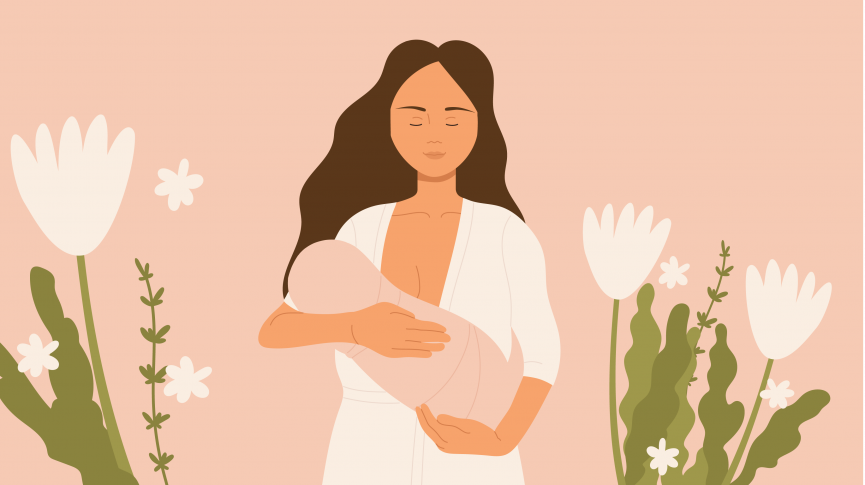
Breastfeeding is often seen as a part of motherhood, but it can also be misunderstood. This process itself is a magic of nature. Even though your body produces all the nutrients your baby needs, it’s still a tiring and painful process that never feels positive.
The most important thing to remember is that everyone’s body is different and everyone’s breastfeeding journey is different (whether you choose to do so or not), so dispelling shame with information is essential.
Below we explain some common misconceptions about breastfeeding.
Let’s clear up common misconceptions
Fact: Breastfeeding strengthens your bond with your baby.
Breastfeeding strengthens your bond with your body in two main ways: hormones your body produces and skin-to-skin contact. When you breastfeed, your body produces hormones called prolactin and oxytocin. Oxytocin, also known as the “love hormone” promotes trust Deepens the bond and increases the sense of love and attachment between mother and child. It also allows nursing mothers to relax and concentrate on their child while breastfeeding.
Extended time due to the need to hold the baby while breastfeeding skin to skin contact Help your baby learn and recognize your specific scent. The vocal bond you formed while your baby was still in your womb can also be strengthened by speaking to your baby in a gentle manner. For mothers who cannot breastfeed, they can still stimulate these benefits by holding and talking to their baby regularly.
Fiction: The bigger your breasts, the more milk you will produce.
chest size is no correlation Depending on the amount of milk produced. Breast size is determined by the amount of adipose tissue within the breast, but adipose tissue is not involved in milk production. Milk production is determined as follows: glandular tissueincreases during pregnancy and lactation.
How much your breasts grow during pregnancy indicates how developed your glandular tissue is and is a better indicator of how much milk you can produce than your pre-pregnancy breast size.
Fact: Breastfeeding helps you sleep.
New mothers are often concerned about how much sleep they’ll get while breastfeeding. It may be difficult to sleep if your baby is crying, but breastfeeding mothers can actually get more sleep On average, this may be due to the relaxing hormones produced by breastfeeding.
BExpressing and scheduling ahead of time means you won’t have to run to the kitchen in the middle of the night to prepare bottles.
Fiction: Smokers cannot breastfeed.
Smoking is very harmful to your health and your baby’s health during pregnancy, but smoking does not pass into breast milk any worse than formula. smoker’s breast milk The immune benefits are passed on to the baby.
The best thing to do is to quit smoking completely, but if you smoke, you can still breastfeed as long as you don’t smoke near your baby or before breastfeeding.
Fact: You can breastfeed even when you’re sick.
You may be surprised, but you can continue breastfeeding even if you have certain illnesses, such as the flu or stomach problems. Bacteria in your body that causes disease do not pass through your breast milk, but antibodies your body produces to fight disease do.
In fact, breastfeeding when sick is like this: natural vaccine – Babies strengthen their immune systems with antibodies in breast milk. However, you should consult your doctor before taking any medication or continuing to breastfeed.
Fiction: It’s either the breast or the bottle.
If for some reason you decide to add formula to your baby’s diet, it doesn’t mean you need to stop breastfeeding completely. Breastfeeding may be affected because your body’s production may change, but you can still get the benefits of breastfeeding even if your baby needs to use formula from time to time.
If you choose this method, you should introduce formula gradually to allow your body and baby to adapt. Consult your professional health care provider to determine how much formula and breast milk your baby will need during the first year of life.
Fact: Breastfeeding reduces the risk of breast cancer.
the study Mothers who breastfeed for at least six months have been shown to have a lower risk of developing breast cancer around menopause. This is because hormonal changes during breastfeeding reduce a woman’s total exposure to hormones such as estrogen, which increase the likelihood of breast cancer cell growth.
Additionally, breast tissue sheds during pregnancy and breastfeeding, helping to remove cells that can cause DNA damage. Just as it reduces estrogen production, breastfeeding also reduces the risk of ovarian cancer by preventing ovulation.
The statistics are even more positive for women who breastfeed for more than six months. Researchers found a reduced risk of breast cancer. 4.3% every 12 months Women who are breastfeeding and one study Researchers showed that women who breastfed for 13 months or more were 63% less likely to develop ovarian cancer than women who breastfed for less than seven months.