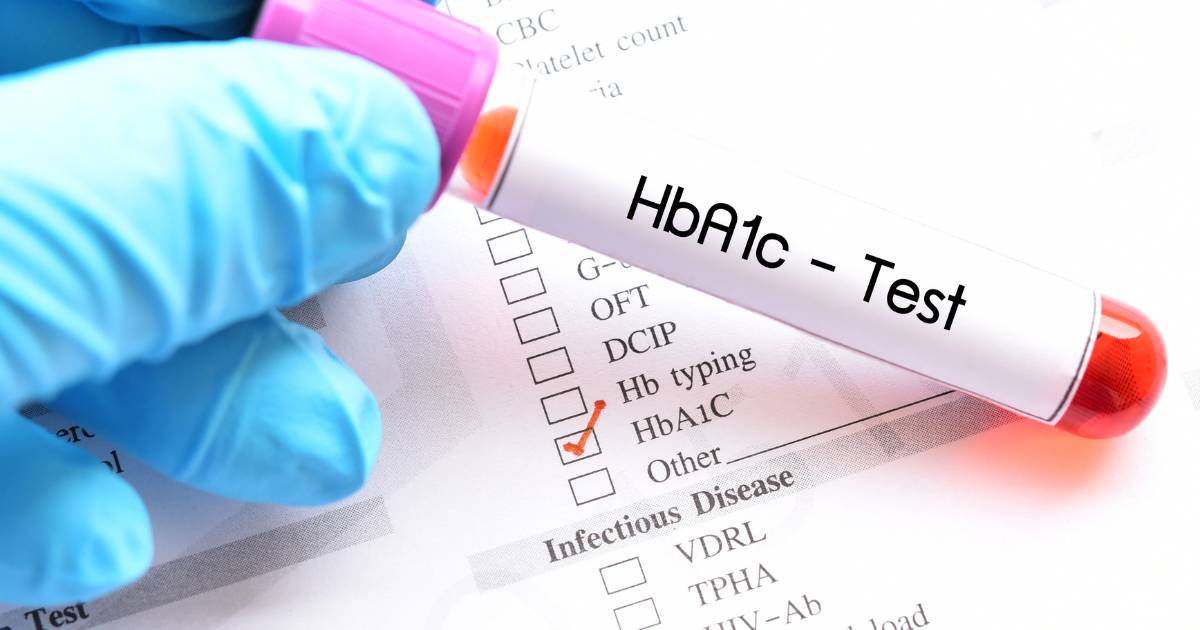
The glycated hemoglobin A1c test (HbA1c) measures your average blood sugar level over the past two to three months.
So what is a dangerous level of A1c? In this article, we explore A1c levels that are considered too low or too high, and discuss strategies to improve them if they are considered dangerous.
What is the difference between A1c levels?
The American Diabetes Association classifies A1c levels to identify diabetes management status:
- Normal (non-diabetic): A1c less than 5.7 percent
- Prediabetes: A1c between 5.7 percent and 6.4 percent
- Diabetes: A1c 6.5% or higher
Your personal A1c goal will depend on your personal health. For example, a higher A1c may be recommended for people who live alone or who have difficulty detecting low blood sugar levels (a condition known as silent hypoglycemia).
The ADA recommends that adults maintain an A1c below 7% to prevent complications associated with diabetes, while children should aim for an A1c below 7.5%.
What is a dangerous A1c level?
Managing A1c levels is important as both high and low levels carry significant health risks. It’s essential to work with your doctor to determine your ideal A1c target, which will vary depending on your lifestyle, health goals, and life stage.
A1c less than 5%
Although it is rare and commendable for a diabetic to have an A1c below 5%, levels below 5% may indicate frequent hypoglycemia.
This situation is especially concerning for older people, people who live alone, or when low blood sugar levels are difficult to detect.
In these scenarios, the consequences of hypoglycemia can be more dangerous and can lead to severe outcomes such as diabetic coma and death.
If you experience frequent hypoglycemia, it is important to discuss with your doctor the possibility of adjusting your insulin dosage to keep your A1c at a safer level without frequent hypoglycemia.
It is important to note that people with newly diagnosed type 1 diabetes may temporarily exhibit very low A1c levels during a period known as the “honeymoon period.” This period occurs while the pancreas is still producing some insulin.
A1c greater than 7%
The ADA recommends that most adults aim to keep their A1c below 7% to prevent diabetes-related complications. For children, the goal is usually set at less than 7 to 7.5 percent, depending on the individual’s circumstances, reflecting the need to balance glycemic control with the risk of hypoglycemia.
However, effectively managing diabetes can be difficult due to a variety of lifestyle factors. An A1c of 7 percent to 8 percent is above the ideal goal, but does not immediately cause complications.
Nevertheless, it is important to aim for lower levels to reduce the long-term risk of diabetes-related health problems.
A1c greater than 9%
Above 9%, the risk of severe diabetes complications such as heart disease, nerve damage, and kidney failure increases significantly. As the A1c percentage increases, the risk continues to increase.
How to make A1c safer
If you’re approaching dangerous levels, it’s important to adjust your A1c, whether by increasing it or decreasing it. Here’s how to manage your A1c safely.
If your A1c is too low:
- Please consult your health care provider. Discuss the possibility of reducing your medication or insulin dosage to avoid frequent hypoglycemia.
- Get some exercise. If physical activity causes hypoglycemia, consider reducing the intensity or duration of your training.
- Adjust your diet. Increasing your protein and fat intake can help stabilize your blood sugar levels, especially at night.
- use. Continuous Glucose Monitor (CGM)): Using CGM, hypoglycemia can be detected before it becomes critical, allowing for timely intervention.
- Optimize your insulin pump settings. If you use an insulin pump, temporarily adjust your basal insulin dose for activities that lower blood sugar levels, such as exercise, to prevent hypoglycemia.
These strategies help maintain blood sugar levels at safe levels and minimize the risk of both high and low blood sugar levels.
If A1c is too high
- Please consult your doctor. Work with your health care provider to adjust your medication and insulin doses to better manage your blood sugar levels.
- Increase physical activity: Incorporate more physical activity into your daily life to lower your blood sugar levels.
- Eat a balanced diet: Focus on a low-carbohydrate diet and include plenty of fiber-rich whole foods. Avoid processed foods and those with added sugar.
- Track your carbohydrates. If you have trouble counting carbs, keep a food diary and seek guidance from a registered dietitian (RD/RDN) on meal planning.
- Monitor blood sugar levels. Check your blood sugar levels multiple times a day or use a CGM to detect high blood sugar levels early.
- Optimize your insulin pump settings. If you use an insulin pump, adjust your basal rate throughout the day and night to prevent prolonged hyperglycemia.
- prioritize sleep: To improve insulin sensitivity, aim for 7 to 9 hours of sleep each night.
- management stress: Practice stress-reducing activities like yoga, meditation, and deep breathing exercises to reduce insulin resistance.
home A1c test
A1c test kits are available for home use and can be purchased at local pharmacies or online for convenient monitoring.
For more information on how to lower your A1c, watch this video by Christel Oerum, founder of Diabetes Strong. In the video, she explains how she successfully lowered her A1c to 5.7 percent in 30 days by following five simple steps.