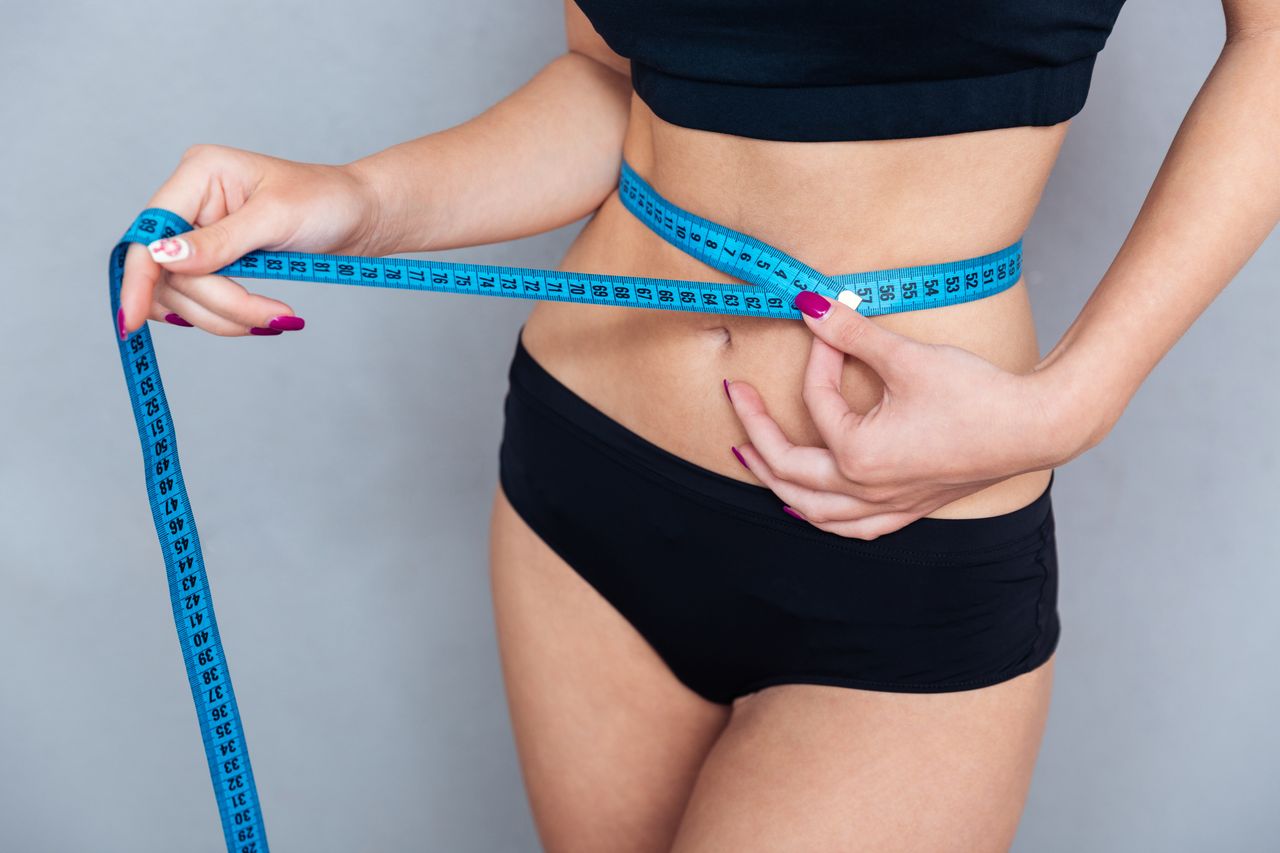
Waist-to-hip ratio is one of the most widely discussed topics in fashion and healthcare. Since the early Victorian era, women and men have consciously tried to keep their waist-to-hip ratio as low as possible.
At that time, some people wore corsets to suppress their stomachs. However, this continued trend raises questions about why waist-to-hip ratio is so important and how it affects our health.
Aesthetics aside, your waist-to-hip ratio tells you more about the distribution of fat in your body than measuring your BMI. Even people with a healthy BMI can be at increased risk of developing health problems if they accumulate too much fat around their abdomen.
Considering this risk, it becomes essential to accurately measure the waist-to-hip ratio. Next, you should take early preventive measures and implement the necessary dietary and lifestyle modifications.
Measuring your waist-to-hip ratio is incredibly easy and anyone can do it at home with just a tape measure. Research shows that a waist-to-hip ratio of 0.7 and 0.85 is ideal for women and men.
These ideal proportions are suitable for aesthetic purposes and health indicators. However, to ensure a low risk of developing a health condition, a range of ± 0.1 can be considered ideal. People whose waist-to-hip ratio is higher than the prescribed ideal range should consult a nutritionist to make the necessary changes in their daily life.
Waist to hip ratio – formula
To determine your waist-to-hip ratio, you need to follow just two basic steps.
- First, you need to measure the circumference of your waist at its narrowest part (in inches or centimeters).
- Next, you need to measure your hip circumference at its widest point (in inches or centimeters).
- Waist-hip ratio (WHR) = waist circumference/hip circumference (cm/cm or inch/inch).
The measuring tape should not be too tight or too loose around the body as this will give the wrong proportions. Before taking the measurement, take a deep breath and exhale. Please make sure your waist and hip measurements are in the same unit.
Waist-to-hip ratio: waist circumference/hip circumference
Stand straight with your legs closed and your arms at your sides, distributing your weight evenly. Measure immediately after exhaling. A previous study by Nature Journal determined how to classify waist-to-hip ratios in men and women.
Women’s health risks
- Women are at low risk if their waist-to-hip ratio is 0.80 or less
- If your ratio is between 0.81 and 0.85, you are at moderate risk.
- More than 0.86 means high risk
men’s health risks
- Women are at low risk if their waist-to-hip ratio is 0.95 or less
- If your ratio is between 0.96 and 1.00, you are at moderate risk.
- More than 1.00 means high risk
Here are some examples to better understand waist-hip ratio
If a woman’s waist circumference is 30 inches, the waist-to-hip ratio according to her hip circumference is:
- If your hips are 34 inches, the ratio is 30/34 = 0.88, indicating a high health risk.
- If your hips are 36 inches, the ratio is 30/36 = 0.83, indicating a moderate health risk.
- If your hips are 38 inches, the ratio is 30/38 = 0.78, indicating a low health risk.
If a man’s waist circumference is 34 inches, the waist-to-hip ratio according to his hip circumference is:
- If your hips are 30 inches, the ratio is 34/30 = 1.13, indicating a high health risk.
- If your hips are 35 inches, the ratio is 34/35 = 0.97, indicating a moderate health risk.
- If your hips are 37 inches, the ratio is 34/37 = 0.91, indicating a low health risk.
Note that in these examples, men’s and women’s waist ratios fall within the recommended ranges of less than 40 inches and less than 35 inches, respectively. People whose waist circumference is larger than the recommended range should consult a doctor or nutritionist to develop an ideal diet and lifestyle plan. This plan will help you reduce your waist measurement and reduce the risk of negative effects on your health.
Waist-to-hip ratio – how does it affect your health?
Waist-to-hip ratio is a simple measure of fat distribution around your abdomen. Healthy people with a normal BMI may also have a high waist-to-hip ratio, based on how their body stores fat.
Conversely, people who carry weight around their midsection have a greater risk of developing health conditions in the long term.
fertility
Since ancient times, society has believed that a small waist and large hips are a sign of a woman’s fertility, and recent research supports this fact. Regardless of BMI, women with waist-to-hip ratios above 0.80 have lower pregnancy rates than women with lower waist-to-hip ratios.
This is because the increase in estrogen found in women with a lower ratio ensures a balanced fat distribution across the waist. As a result, the hip joint guarantees a higher birth rate.
diabetes
People with a high waist-to-hip ratio store a large amount of fat in their abdomen, which contains many important organs such as the liver and pancreas.
As studies have shown, it is due to excess fat accumulated in the area that can negatively affect the functioning of these organs. It must be remembered that this situation plays an important role in insulin secretion and can increase the risk of developing type 2 diabetes.
heart health
People with high visceral fat and abdominal obesity are more likely to develop cardiovascular disease. Research shows that waist-to-hip ratio is a more effective measure of heart health than BMI.
Abdominal obesity indicates an excess accumulation of dangerous fats in the body, which can lead to problems such as high blood pressure and high cholesterol, ultimately leading to chronic heart disease.
Weight and waist-hip ratio
A person’s BMI and waist-to-hip ratio are closely related. BMI determines whether an individual is at their ideal weight. Research shows that losing weight generally lowers your waist-to-hip ratio, which lowers your risk of developing health problems.
Additionally, gaining weight increases your BMI level, increasing your risk of developing cardiovascular disease and type 2 diabetes.
How to reduce waist to hip ratio
Reducing the waist-to-hip ratio is usually associated with losing weight or focusing on burning belly fat. Both can be easily achieved by making a few changes in your daily life. Therefore, it’s no surprise that exercising regularly is an important step to burning belly fat.
You should exercise for at least 30 minutes every day and focus on exercises that target your abdominals and strengthen your core. Additionally, you need to ensure a healthy diet.
I cannot stress enough the importance of avoiding excess junk food, fried foods, sweet and salty foods, and preserved foods. You should also keep in mind that a healthy diet alone is not enough to reliably reduce your waist-to-hip ratio.
You should also track the amount of food you eat and the approximate calories you burn each day. We recommend that you consult your doctor or nutritionist/nutritionist before making any major changes to your diet or lifestyle.
Impact of demographics on WHR
Research shows how differences in age, gender, obesity, and lifestyle patterns affect body fat distribution. In addition, changes in weight over time and differences in the circumference of different parts of the body become noticeable. Important points to note are:
- Differences in hip circumference cannot be categorized demographically.
- With age, men’s waist circumference increases at a greater rate than women, thus influencing WHR.
- Increases in age for men and women are directly proportional to increases in WHR.
- Typically, changes in a woman’s waist and hip circumference over time are proportional and do not significantly influence changes in WHR.
- Although it is possible to control WHR to some extent, there is not enough data to suggest that it positively impacts cardiovascular risk factors.
Weight loss and WHR
Research shows that weight loss has a significant impact on a person’s WHR, which varies depending on the individual’s gender. The difference was that men had a greater decrease in waist circumference and women had a smaller decrease.
Furthermore, the reduction in hip circumference was smaller in men and slightly larger in women. Due to these changes, men showed better improvement in overall WHR ratio than women during weight loss.
The self-monitoring system is suitable for beginners who want to lose weight. Whether it’s for cosmetic or medical purposes, it’s much better to maintain a healthy waist-to-hip ratio. With advances in science and technology, there are many things you can do at home to control your weight and maintain healthy proportions.
conclusion
Waist-to-hip ratio is one of the easiest ways to measure abdominal fat levels. This is even more useful than measuring your BMI because it tells you how fat is distributed throughout your body.
People whose fat is mostly stored in the midsection, as seen in the apple-shaped body shape, are often at a much higher risk of developing chronic health problems and postural imbalances than those with a lower waist-to-hip ratio.
A pear-shaped or hourglass body shape with a low waist-to-hip ratio is associated with improved cardiovascular and reproductive health. These are also universally the most desirable measurements.
Simple lifestyle modifications and healthy eating habits are all you need to reduce excess belly fat and maintain a proper waist-to-hip ratio to prevent health problems.
WHR ratio can be directly linked to weight gain or weight loss. While it’s not practical to completely change your body shape, it’s a good idea to keep your WHR ratio low.
The purpose is not only beauty, but also medicine. Even if you decide to measure and track your ratios at home, be sure to consult a professional before making any major lifestyle changes. Our sleep cycles, eating patterns, exercise habits, and other demographic factors come into play.
Frequently asked questions (FAQ)
Q. What is the ideal waist to hip ratio?
A. There is no specific ideal waist-to-hip ratio, but according to research from the World Health Organization, the ideal waist-to-hip ratio for women is 0.80 or less. For men, it is less than 0.90. Exceeding that increases the risk of health problems.
Q. Is a waist-to-hip ratio of 0.75 appropriate?
A. A waist-to-hip ratio of 0.75 is suitable for men and women. This indicates that fat is evenly distributed between the waist and hips, suggesting a lower risk of health problems. However, in order to live a healthy life, it is essential to keep a close eye on your lifestyle and diet.
Q. What waist-to-hip ratio is too low?
A. The ideal waist-to-hip ratio for women is 0.6 to 0.8. A ratio between 0.65 and 0.75 is below average, while a ratio below 0.55 is dangerously low. Corsets and waist trainers often reduce the waist-to-hip ratio to 0.3, which is very dangerous for your health. Such a low waist-to-hip ratio hinders the proper functioning of vital organs in our body, leading to serious health problems.
Q. What waist-to-hip ratio is considered an hourglass?
A. A ratio of 0.68 to 0.7 is considered hourglass proportions, and many women cite this as their “ideal” proportions. However, whether a person has an hourglass shape depends not only on their WHR but also on their waist-to-chest ratio.
Q. What hip size is considered curvy?
A. Generally, a hip size of 36 or 37 inches or more is considered curvy, and a hip size of 34 inches or less is considered a slim silhouette. Additionally, curvy people often have a waist-to-hip ratio in the range of 0.7 to 0.8.
Q.What is the golden ratio of the female body?
A. Mathematically, the golden ratio is set at 1:1.618. This means that a woman’s hip circumference is almost 60% larger than her waist circumference, which is almost impossible. Therefore, the golden ratio has not been set as the golden ratio for measuring the waist-to-hip ratio. Rather, a ratio of 0.68 – 0.7 is most desirable.
Q. What is the most attractive hip size?
A. There is no particular hip size that is most attractive. Instead, a hip size around 1.4 to 1.5 times your waist size is considered the most attractive. For example, for someone with a waist circumference of 24 to 28 inches, a hip size of 36 inches may be considered the most flattering.
Q.What is the ideal waist size?
A. The ideal waist size varies from person to person depending on bone structure, height, age, gender, etc. However, research shows that the ideal waist size for women is less than 35 inches, and the ideal waist size for men is less than 40 inches. Staying within this range reduces your risk of developing obesity-related health problems.
Q. Is the waist-to-hip ratio important?
A. BMI does not often provide a clear picture of the amount of abdominal fat a person has. Even people with a healthy BMI may have excess fat stored in their abdominal regions. Therefore, the waist-to-hip ratio is very important because it allows us to know more accurately the amount of abdominal fat or visceral fat in the body. The higher your waist-to-hip ratio, the more likely you are to develop obesity and related health problems.
Q. What is the waist circumference of obesity?
A. A waist circumference of more than 35 inches for women and more than 40 inches for men is considered obese. This correlates with a BMI of 30.0 or higher for both men and women.
Q. What is the correct BMI for my age?
A. Open to individuals 18 years of age or older. A BMI of 18.5 to 24.9 is considered ideal and healthy. Anything above 30.0 is considered obese, and anything below 18.5 is considered underweight.