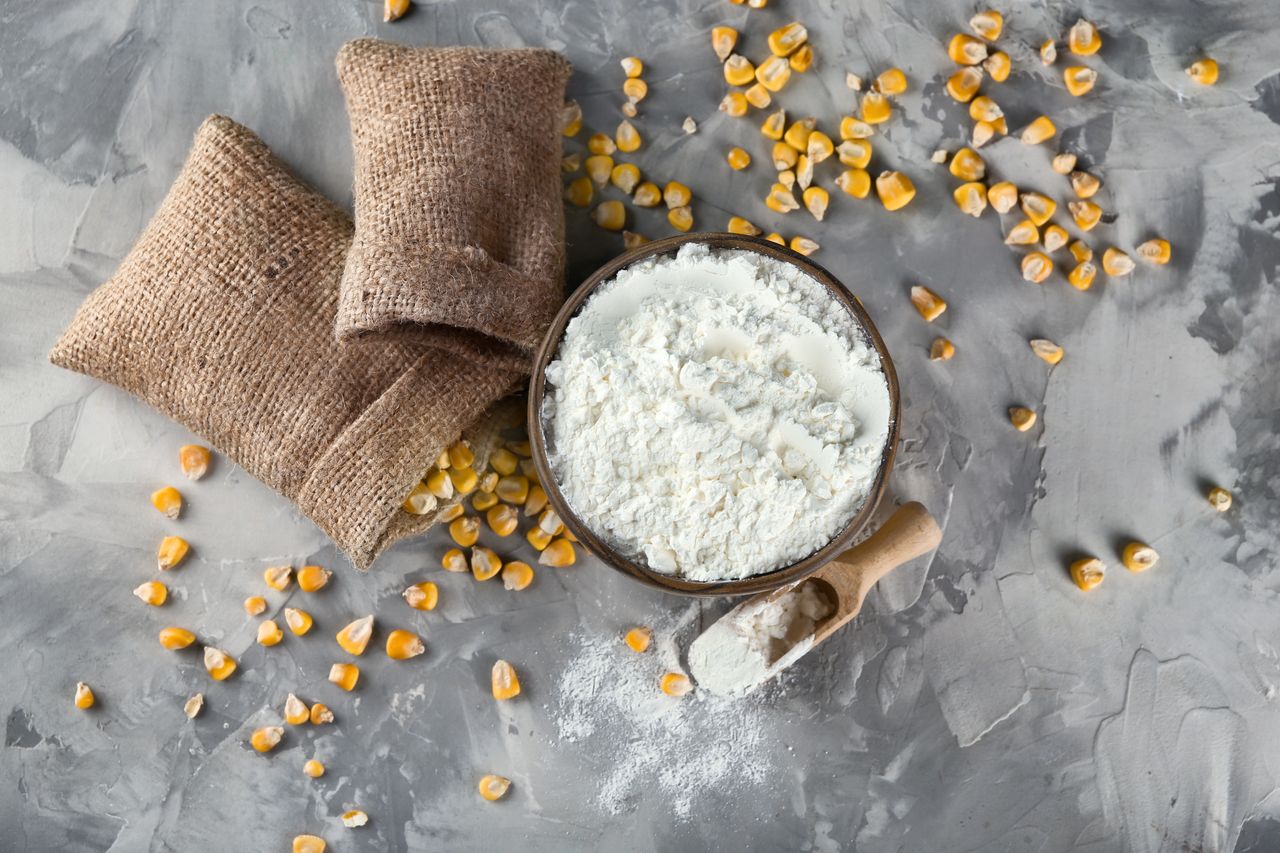
Corn starch, often called corn starch or corn flour, is a type of carbohydrate extracted from the endosperm of dried corn grains. It is a white powdery substance that is used in a variety of kitchen, household, and industrial applications. Cornstarch is obtained only from the endosperm, so it contains no protein. However, pure cornstarch does not contain gluten, even though it is made from corn.
Invented in New Jersey in 1844 by factory worker Thomas Kinsford, cornstarch is now widely available in corn-producing countries such as the United States, China, Brazil, and India. Cornstarch has a bland, flour-like taste and is used as a thickening agent rather than for flavor. Helps thicken marinades, sauces, gravies, glazes, soups, casseroles, pies and other sweets. Additionally, cornstarch’s clear, tasteless nature means it won’t alter the flavor balance or make your dishes look cloudy.
Cornstarch nutritional profile
According to the USDA, 100 grams of cornstarch contains the following nutrients:
- Calories: 381kcal
- Carbohydrate: 91.3g
- Fat: 0.05g
- Protein: 0.26g
- Dietary fiber: 0.9g
- Phosphorus: 13mg
- Calcium: 2mg
- Sodium: 9mg
Nutritional information display
Cornstarch has about 30 calories per tablespoon, most of which are carbohydrates. Starch is the carbohydrate source for cornstarch.
Despite its high starch content, raw or uncooked cornstarch is a low-glycemic meal. Research shows that it is slowly absorbed by the digestive system. However, prepared meals containing cornstarch (such as stews and puddings) have a high glycemic index. Unfortunately, studies on the glycemic index and carbohydrates of cornstarch are sparse, and the data that are accessible are often short and limited in scope.
healthy notes
Cornstarch does not contain large amounts of vitamins and minerals. Therefore, moderate intake does not provide important micronutrients. However, it is high in calories and sugar.
cornstarch vs wheat flour
Flour is obtained from wheat, while cornstarch is obtained from corn. Cornstarch is a great gluten-free option as a flour thickener in gravy and sauce recipes. Additionally, the resulting gel is transparent rather than opaque, so it is often used as a thickening agent in place of flour. Compared to that, the taste is milder and the thickening power is almost twice as strong.
For frying dough, you can use flour as well as cornstarch. However, you cannot use the same amount of cornstarch as flour. Cornstarch is a stronger thickener than flour, so less is needed. For example, you may only need half as much cornstarch as flour called for in a recipe. Cornstarch is a nearly tasteless powder, while the flavor of flour varies depending on the type of grain used. It generally has a stronger, sweeter, earthier flavor.
Potential benefits of cornstarch
Helping people with swallowing disorders swallow safely
For people with dysphagia (difficulty swallowing), cornstarch may thicken the drink to make it easier to swallow. Thick liquids also help prevent aspiration, making swallowing safer. Cornstarch is a thickening agent that thickens drinks for patients with swallowing disorders.
Research has shown that foods textured using cornstarch provide a safe swallowing experience for people with swallowing disorders. Additionally, although gum-based thickeners have become more popular in recent years, some have concerns about their safety, especially for newborns.
Unfortunately, thickening agents like cornstarch can make your drink less palatable. Additionally, these thick drinks can increase satiety, which can lead to loss of appetite.
gluten-free alternatives
Cornstarch can be used in place of flour in recipes for people with wheat allergies, celiac disease, non-celiac gluten intolerance, or those maintaining an allergenic diet for other reasons. Corn is naturally gluten-free because no other ingredients are added during manufacturing. However, many of the companies that make cornstarch also make flour, so most of what is packaged is susceptible to cross-contamination.
Therefore, if cornstarch and gluten-containing grains are manufactured and processed on the same equipment, the cornstarch may not be gluten-free. However, it’s important to choose your cornstarch wisely and look for one that says gluten-free on the label.
Treatment of skin yeast infections
Studies have shown that cornstarch does not promote yeast growth on human skin. As a result, it can be used to minimize or prevent friction damage.
This is how yeast progresses C. albicans In human skin, it occurs when sufficient moisture is present. Cornstarch is a natural drying agent that prevents skin yeast infections. It also dries water and sweat to prevent yeast growth. Cornstarch and tea tree oil can be combined and applied as a soothing balm to relieve inflammation and itching.
Reduces mild nocturnal hypoglycemia
Nocturnal hypoglycemia is when blood sugar levels drop below 70 mg/dl during a night’s sleep. One study shows that taking uncooked cornstarch supplements at bedtime can reduce the number of hypoglycemic episodes.
It acts as a carbohydrate supplement at bedtime, preventing nighttime hypoglycemia without altering metabolic control in patients with type 1 diabetes.
Potential side effects of cornstarch
Cornstarch is safe for most people when consumed with caution and in moderation. When using cornstarch slurry as a thickening agent, it typically requires a 1:2 ratio of cornstarch to water. Or 1 tablespoon cornstarch and 2 tablespoons water. To be safe, take 8 to 16 grams or 1 to 2 tablespoons at a time. However, exceeding that limit can have negative health effects.
Potential side effects of cornstarch include:
allergy
People with corn allergies should avoid cornstarch. Allergy symptoms can range from moderate to severe. Possible symptoms include vomiting, stomach problems, wheezing or difficulty breathing, weak pulse, skin changes such as hives, swelling of the lips or tongue, disorientation, and confusion. Anaphylaxis can occur in extreme situations.
raise blood sugar levels
Cornstarch is low in fiber but contains a high glycemic index and carbohydrates. Because of this, it is digested very quickly in the body. The rapid digestion of cornstarch slows the assimilation of sugar into the bloodstream, raising blood sugar levels. Therefore, type 2 diabetics must strictly avoid cornstarch.
affects heart health
Eating too much cornstarch does not guarantee additional nutritional value. Instead, it only provides more refined carbohydrates and calories. Additionally, cornstarch is a processed food from the endosperm of corn and contains refined carbohydrates, which can increase your risk of coronary heart disease. Additionally, studies have shown that ingesting uncooked cornstarch can cause severe cardiomyopathy.
Cornstarch Alternatives
rice flour
Rice flour, made from ground rice, has half the thickening power of cornstarch. Therefore, you need to double the amount you add. In some cases, you may need to use 3 tablespoons of rice flour to 1 tablespoon of cornstarch. Popular in Asian cuisine.
arrowroot powder
Arrowroot powder is a gluten-free flour. An equivalent alternative to cornstarch. Since the thickening power is the same, there is no need to adjust the amount added.
potato starch
Potato starch extracted from potatoes has almost no calories. Therefore, it is a perfect alternative to cornstarch if you want to make low-fat dishes. Like arrowroot starch, potato starch has the same thickening power as cornstarch. However, if you overcook potato starch, it may lose its consistency.
tapioca starch
Tapioca starch is obtained by extracting starch from cassava roots by soaking, washing, and pulping. However, tapioca starch only has half the thickening power, so you should use 2 tablespoons for every 1 tablespoon cornstarch. Additionally, it has a lower glycemic index than cornstarch.
healthy notes
Cornstarch does not provide sufficient nutrients, essential minerals, and vitamins, so it has no significant health benefits. Rather, it can cause various side effects and cause harm. Therefore, to consume healthy food every day, it is best to choose healthy alternatives.
Cornstarch storage and cooking tips
Cornstarch absorbs moisture easily and should be stored in an airtight container. Store away from ambient moisture and extreme heat. To keep cornstarch fresh for longer, store it in a cool, dry, dark cupboard or pantry. Cornstarch does not require low temperatures. Therefore, avoid freezing cornstarch. Additionally, the humidity in the refrigerator is not ideal for cornstarch.
Cornstarch forms clumps during cooking, so don’t add it directly to the hot mixture. Instead, mix cornstarch with a little cold liquid to form a slurry, then stir it into the hot liquid. When added in the form of a slurry, the cornstarch molecules are evenly distributed and prevent the formation of lumps.
If cornstarch lacks proper gelatinization, it will release water and become thin as it cools. Therefore, foods containing cornstarch should be boiled completely and then cooled. Additionally, don’t freeze sauces or other mixtures thickened with cornstarch. Freezing can degrade the gelatinized cornstarch matrix.
conclusion
Corn flour is a popular thickening ingredient obtained from the endosperm of corn. It is mainly added to sauces, gravies, marinades, and soups. Cornstarch is gluten-free but contains refined carbohydrates and no protein. Therefore, it lacks beneficial nutritional properties such as vitamins, minerals, fiber, and protein. Cornstarch is a non-food material because it does not have many health benefits and has poor nutritional content.
If you are intolerant to gluten, cornstarch is a good alternative. If stored properly, cornstarch can be stored indefinitely. Also, avoid adding it directly to liquids. However, eating cornstarch also comes with negative effects. People with type 2 diabetes and corn allergies should strictly avoid cornstarch.
Frequently asked questions (FAQ)
Q. Is cornstarch good for dieting?
A. You can add cornstarch to your diet. However, you cannot make it a regular element of your diet. Cornstarch contains primarily refined carbohydrates and calories, and is low in protein, fiber, and essential vitamins. Cornstarch is fine when eaten carefully and in moderation, but it’s not very nutritious for your diet.
Q. Is cornstarch healthier than wheat flour?
A. One ounce of cornstarch has 107 calories, one ounce of white flour has 102 calories, and one ounce of whole wheat flour has 95 calories. Therefore, they are almost the same in terms of calories. However, cornstarch provides about twice the thickening power and is also relatively tasteless in comparison. However, both are deficient in healthy nutrients.
Q. How many carbohydrates are in 1 tb of cornstarch?
A. Cornstarch (1 tablespoon) contains a total of 7 grams of carbohydrates. However, these refined carbohydrates do not contain valuable dietary fiber. Therefore, cornstarch is a high carbohydrate thickener.
Q. What are the benefits of cornstarch?
A. Cornstarch has no special health benefits. However, it can be used as a soothing agent for skin yeast infections. Cornstarch is a better thickener than flour. Research is underway to use cornstarch as a supplement to reduce nocturnal hypoglycemia.
Q. Will eating cornstarch make me fat?
A. Adding a moderate amount of cornstarch to your diet will not make you fat. Additionally, it is low in fat and cholesterol. However, eating too much raw cornstarch can rapidly increase your calorie intake, which can lead to weight gain.
Q. Does cornstarch cause belly fat?
A. Cornstarch does not contain a lot of fat. However, it can be your only source of calories and refined carbohydrates. But cornstarch isn’t the only thing that causes belly fat. Nevertheless, you may want to avoid cornstarch while on a weight loss diet to reduce belly fat.
Q. Why is cornstarch bad for your health?
A. Cornstarch is high in carbohydrates and calories, but lacking in nutrients. More calories in the body can lead to weight gain and excessive blood sugar and cholesterol levels. Refined carbohydrates found in cornstarch may also increase your risk of coronary heart disease.
Q. Does cornstarch cause irritation?
A. Eating large amounts of cornstarch can cause irritation. For example, cornstarch raises blood sugar levels and causes excess diabetes, an inflammatory disease.
Q. Is cornstarch keto?
A. Cornstarch is made from corn, a green vegetable that is not keto-tolerant. Additionally, it contains a lot of carbohydrates. 100 grams of cornstarch provides approximately 91.3 grams of carbohydrates. Therefore, it is not a keto food.
Q. Does cornstarch contain glucose?
A. Yes, cornstarch contains chains of glucose molecules. Additionally, a spoonful of glucose is chemically equivalent to a spoonful of cornstarch. Therefore, cornstarch may not be the best choice for diabetics.
Q. Can people with type 2 diabetes consume cornstarch?
A. No, cornstarch is not a suitable addition to a type 2 diabetic’s diet. It is a fast-digesting item that can raise blood sugar levels. Additionally, cornstarch has a high glycemic index and carbohydrate content.
Q. Is cornstarch a complex carbohydrate?
A. In its uncooked state, cornstarch is a complex carbohydrate that contains little fat and protein. However, despite being a complex carbohydrate, cornstarch is not a healthy carbohydrate source.
Q. Does cornstarch raise blood sugar levels?
A. Cornstarch has a glycemic index of 97, which is considered high. Cornstarch’s high GI score and carbohydrate content affect blood sugar levels. That suggests that eating large amounts of cornstarch can cause blood sugar levels to spike to unhealthy levels.