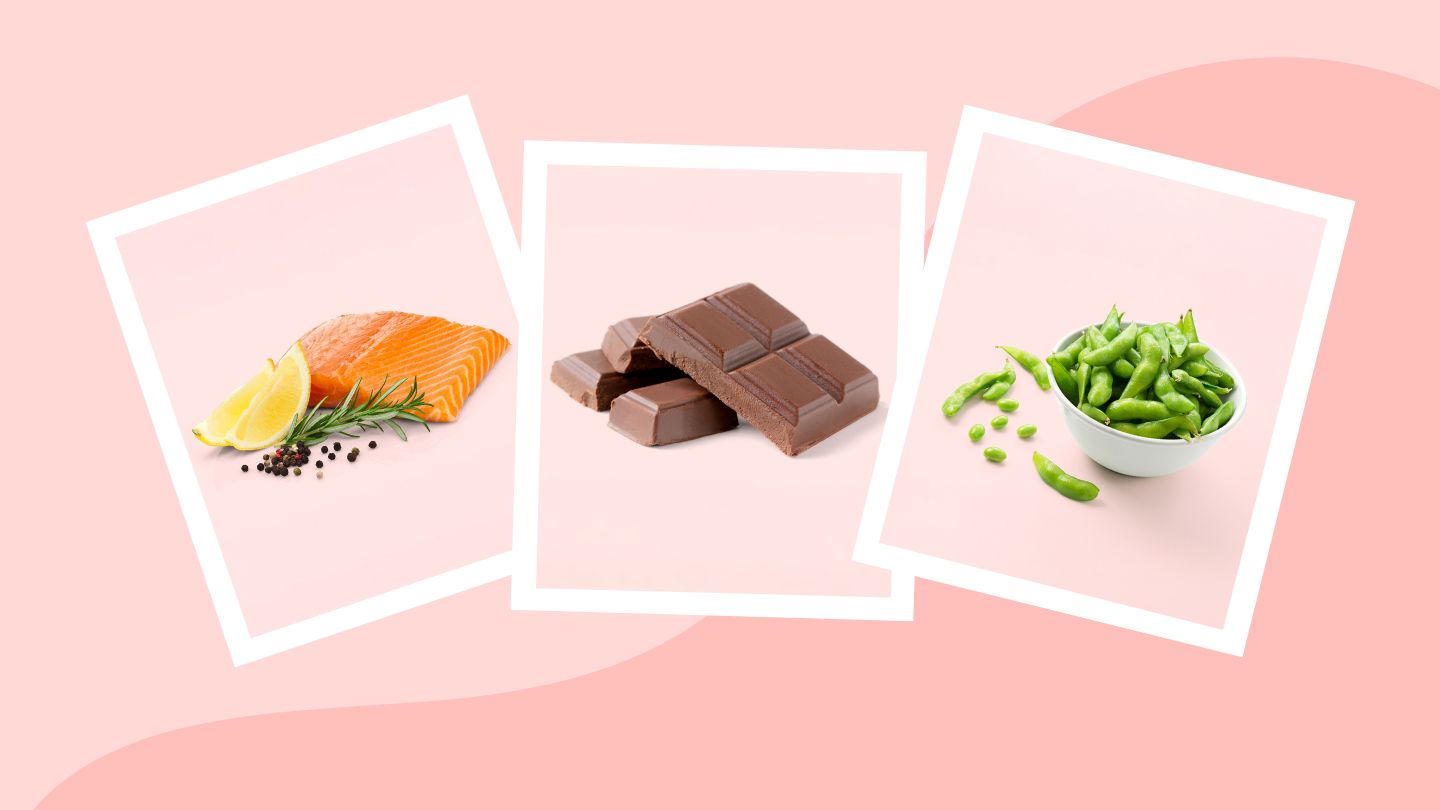
Menopause can bring many changes to your daily life, many of which aren’t all that enjoyable. The whole transition between hot flashes, night sweats, mood swings, and sexual dysfunction can take a serious toll on your life. One easy and natural way to alleviate some of these menopause symptoms is to add these eight foods to your diet. “Managing menopause can feel like an emotional roller coaster ride, but a few simple dietary changes can make the ride a little easier,” says Bonnie Taubdix, RDN, author of Read It Before You Eat It — Take You From Label to Table and New York resident. Read about the best foods to relieve menopausal symptoms, backed by research. DEFAULT Eating the right nutrients can help manage menopause. Soy foods such as soy milk, soybeans, edamame, miso, tofu, and tempeh may help relieve hot flashes. A small study looked at postmenopausal women who had two or more hot flashes a day. e60dc2a1-f33c-4a05-9b50-8e3e8e59762977eb25f2-d5aa-4d10-bb02-187a1ce528e8 38 women were divided into two groups. One group received a soy-rich, low-fat vegan diet. This includes 1/2 cup of cooked soybeans daily. The other wasn’t. The results showed that the total amount of hot flashes decreased by 79% and the proportion of moderate to severe hot flashes decreased by 84% in the soy food group, compared to 49% and 42%, respectively, in the control group. The study concluded that 59% of participants in the soy group said they no longer experienced moderate or severe hot flashes. Whole grains: Whole grains such as steel-cut oats, barley, whole wheat, brown rice, bulgur, popcorn, and millet are rich in nutrients such as B vitamins and vitamin B complexes, according to the Harvard T.H. Chan School of Public Health. Fiber.e60dc2a1-f33c-4a05-9b50-8e3e8e5976297c5cdbf2-55dc-4a82-ae5d-3222459355ad Vitamin B is important for the nervous system and mood, and fiber helps keep you regular. Additionally, consuming whole grains instead of refined grains can lower your risk of cardiovascular disease. “Read food labels. Choose products that have 100 percent whole grain or 100 percent whole wheat as the first ingredient on the label,” says Taubdix. Mild Spices and Seasonings Hot flashes can be caused by things like eating spicy foods, notes the Cleveland Clinic. Bland food. If you want to add flavor, use mild spices and seasonings like basil, bay leaves, cardamom, Chinese five-spice blend, cinnamon, coriander, lemon balm, mint, oregano, rosemary, sage, thyme, and parsley. “All of these add nice flavor without causing hot flashes,” explains Taubdix. Chocolate Now, before you start eating candy bars for dinner, know that there are some parameters to this guidance. A small study found that eating concentrated amounts of milk chocolate in the morning or evening (100 grams of chocolate daily) did not lead to weight gain among 19 postmenopausal women, and that consuming large amounts of chocolate in the morning helped burn fat and lower blood sugar levels. levels.e60dc2a1-f33c-4a05-9b50-8e3e8e5976299b4990e3-3257-4816-ac64-f9136114a938 “Our findings highlight that not only ‘what’ we eat, but also ‘when’ we eat can influence the physiological mechanisms involved in regulating body weight,” corresponding author Frank AJL Scheer, Ph.D., professor of medicine at Harvard Medical School, said in the study’s press release. e60dc2a1-f33c-4a05-9b50-8e3e8e597629595b174c-894c-449d-8310-e135753a6ac8 Another research review claims that eating any type of chocolate at least once a week reduces the risk of cardiovascular disease by 8 percent. e60dc2a1-f33c-4a05-9b50-8e3e8e597629198578d4-9c66-42ca-90a7-ae89008a43c1 If you have a choice, choose dark chocolate. It contains heart-healthy flavanols, which can help lower blood pressure, according to the Harvard T.H. Chan School of Public Health. Other studies have shown a link between consuming 6 grams of dark chocolate per day and a lower risk of heart disease. It improves the appearance of the skin and reduces swelling by moving fibers. Signs of dehydration include thirst, muscle cramps, dry skin, fatigue, and confusion. “There’s no one-size-fits-all recommendation for how much water to drink per day. The best guide is to check your urine. If you’re properly hydrated, your urine will be pale yellow. If it’s dark yellow, you should start drinking more water,” says Taubdix. Don’t you think it’s impossible to drink water all at once? You can get the fluids you need from water-rich foods like watermelon, strawberries, and soups. Avoid alcohol, which can cause dehydration, according to the Mayo Clinic. e60dc2a1-f33c-4a05-9b50-8e3e8e597629829009d4-40b1-42ea-b596-84971be995a0 Experiment with different flavors: add lemon wedges, a pinch of mint, or cucumber slices. You can enjoy it at various temperatures. Finally, make it easy on yourself by always keeping a full bottle of water nearby. Fruits and Vegetables Many women struggle with weight gain during menopause. According to the Mayo Clinic, fruits and vegetables that not only have a high water content but also are rich in fiber can help you feel full while reducing your calorie intake. “Put wealth on your plate, not only at meals, but also at snacks,” says Taub-Dix. Another condition, wrinkles, may be improved by eating mangoes, according to one small study (this study is fully disclosed and supported by the Mango Committee). Consuming 1/3 cup of Ataulfo mango four times a week reduced deep wrinkles by 23% after two months. (However, those who ate about 1 cup had more wrinkles.) Eating prunes daily improves risk factors for cardiovascular disease, including increasing antioxidant capacity and reducing inflammation in healthy postmenopausal people, according to a study (funded in part by the California Prune Commission). women.e60dc2a1-f33c-4a05-9b50-8e3e8e5976299d5389e7-dc5e-43bd-a877-569d6d81915e Omega-3 Fatty Acids Essential fatty acids, especially omega-3s, found in fatty fish have been shown to help promote heart health, notes the American Heart Association. (AHA).e60dc2a1-f33c-4a05-9b50-8e3e8e5976293384e9c0-58d4-4a2d-9a4b-ede427154ed5 “These healthy fats are very important for women, especially as the incidence of heart disease increases as we age,” notes Taubdix. Omega-3s can also help reduce mood disorders, according to Harvard Health Publishing. Get omega-3s by eating chia seeds, flaxseed powder, hemp seeds, walnuts, or vegetable (rapeseed) oil. Supplements are another option for relieving menopausal symptoms. Check out our list of the 7 best menopause supplements recommended by experts. Foods Rich in Calcium Due to hormonal changes, women experience significant bone loss during menopause, which in some cases can lead to postmenopausal osteoporosis. Research shows that one in two postmenopausal women will experience an osteoporosis-related fracture in their lifetime. Low-fat yogurt, milk, cheese, and leafy vegetables. According to the Mayo Clinic, women between the ages of 19 and 50 should aim for 1,000 milligrams (mg) per day, and women 51 and older should consume 1,200 milligrams (mg) per day. day.e60dc2a1-f33c-4a05-9b50-8e3e8e597629ac3f7cd8-5ac7-4bd4-b6a0-61635e3cf7ad Your body needs vitamin D to absorb calcium, National Institutes of Health (NIH) Sources of vitamin D include fatty fish such as salmon, egg yolks, and limited sunlight exposure, according to Notes.e60dc2a1-f33c-4a05-9b50-8e3e8e59762969699b60-6fda-4e1c-8ba9-b88b0721fc98. NIH.e60dc2a1-f33c-4a05-9b50-8e3e8e597629b6d495a7-0b68-4dec-9118-53cb09b551d3 It can be difficult to get enough vitamin D from diet and sunlight alone. If you have symptoms of menopause, ask your doctor to test your vitamin D levels at your next checkup. He or she may recommend supplements. Bottom Line An easy and natural way to reduce certain menopausal symptoms is to focus on adding certain food components to your diet. Soybeans, whole grains, mild spices and seasonings, chocolate, water, fruits, vegetables, omega-3 fatty acids, and calcium-rich foods are all foods supported by evidence that they can alleviate certain symptoms of menopause.