If you were the MVP of your elementary school’s “crab soccer” team, you’re in luck. Crab walking exercise is back. Dust off your crab-walking skills and see how this old-school exercise can give you a great full-body workout.
Crab walking: step-by-step instructions
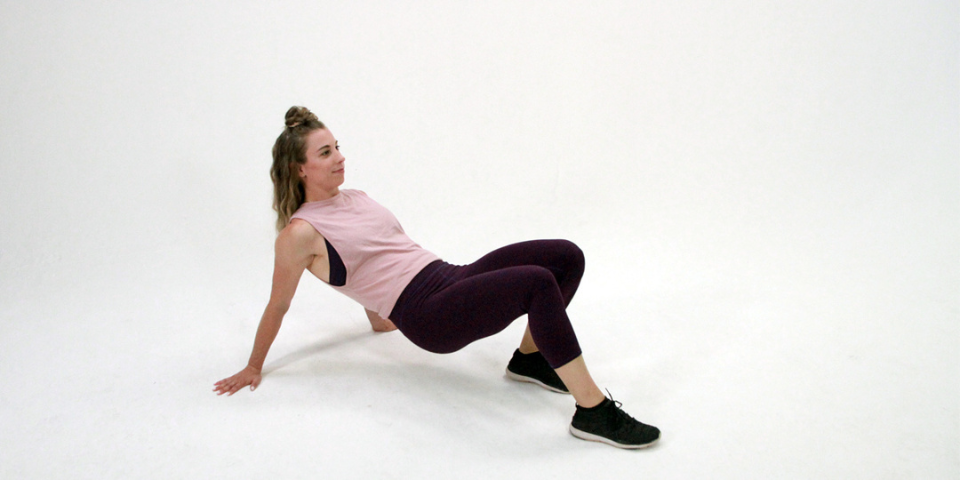
- Sit on the ground and bend your knees so that the soles of your feet are pressed into the ground. Your feet should be about hip-width apart.
- Reach your hands behind your hips and press your palms into the ground with your fingers pointing forward or to the sides.
- Use your glutes and core muscles to lift your hips, creating a “table top” position with your torso and thighs. Make sure that only your palms and soles of your feet touch the floor.
- Keeping your hips up, step forward with your right foot and left hand, then your left foot and right hand. “The key to performing the crab walk correctly is to use a ‘cross-scroll’ movement pattern,” says Trevor Thieme, CSCS
- Continue moving forward for the specified number of steps with the opposite hand and foot, then reverse the movement and return to the starting position.
Benefits of club walk exercise
Club Walk exercise not only brings back fond memories of playgrounds, but it also offers a host of fitness-related benefits.
1. Effective for the whole body
“The crab walk works your arms, shoulders, core, glutes, hamstrings, and quadriceps,” Thiem says. This move works nearly every muscle from your shoulders to your toes, so you don’t need to do as many exercises to work your entire body.
Full-body movements also generate more oxygen demand than isolated movements, which means they burn more calories per minute. This kind of efficiency is important for people who are pressed for time (and for all of us, by the way).
2. Upper body burner
If your goal is to increase the strength of your biceps and triceps, it’s a good idea to add club walk exercises to your training routine. While most aerobic exercises focus on the lower body, crab walking exercises improve upper body endurance. Your arms will shake much earlier than the rest of your body (in a good way).
3. No weights required
If you want to build strength but don’t have easy access to weights (or just aren’t interested in strength training), animal-inspired movements like crab walking exercises that use your body weight as resistance are a great option.
What muscles does crab walking work on?
Crab walking exercise is a full-body workout, but it puts stress on your upper arms, thighs, and core. Crab walking exercise mainly trains the following muscles:
- Triceps: The triceps muscle is made up of three heads and is located on the back of the upper arm. The triceps extend the arm at the elbow and rotate the arm outward.
- Rectus abdominis: The rectus abdominis muscle extends throughout the abdomen and is also known as the six pack. The rectus abdominis flexes the torso and works with other core muscles to generate intra-abdominal pressure.
- Gluteus maximus: The muscles of the buttocks, gluteus maximus, gluteus medius, and gluteus minimus, stabilize the pelvis, extend the hip joint, rotate the leg, and lift the leg to the side.
- Quadriceps: The quadriceps femoris, also known as the quadriceps femoris, is located in the upper front of the leg. The four muscles that make up the quadriceps, rectus femoris, vastus lateralis, vastus medialis, and vastus intermedius, work together to extend the knee.
- Hamstrings: The hamstrings are located at the top of the back of your leg, below your glutes. In addition to bending the knee, the hamstring muscles extend the hip and rotate the leg.
- calf: Crabwalks work your soleus muscle, which points your toes when your knees are bent 90 degrees.
- Pectoral muscles, front shoulders, latissimus dorsi: These muscles work together to stabilize the shoulder during this exercise. A final note. Your shoulders won’t be happy with the crab-walking position. If you try this move and find yourself in a bad mood, switch to a bear crawl. It’s not the same move, but you get many of the same benefits.