I’ve never been the type of person who likes exercise. High-intensity workouts like boot camp, kickboxing, and running left me so tired and sore that I couldn’t finish them by the end of two or three sessions.
Then I tried Pilates. I had seen some of my favorite celebrities rave about it and this seemed like the perfect fit. This means you can get results while still getting a gentler workout.
That was 7 years ago and I still practice Pilates several times a week.
Want to know if Pilates is the right workout for you? Here’s what you need to know.
Is Pilates okay for beginners?
yes! “Many people think Pilates is just for girls and dancers, but it’s actually something everyone can do,” says beginner Pilates trainer Lisa Hubbard.
“You’ll feel less tense in your back and shoulders, and your entire body will feel toned.”
Pilates was literally designed for every skill level. Founder Joseph Pilates developed his methodology while being interned during World War I to help his fellow prisoners stay healthy and strengthen their minds and bodies.
(In fact, the Cadillac, an elaborate Pilates machine still in use today, was inspired by a makeshift resistance machine he built from a hospital bed, straps, and springs.)
Pilates improves posture, increases overall muscle strength, and aids in weight loss efforts.
Pilates has come a long way since its humble beginnings, but one thing remains the same. That said, Pilates is still a great workout for beginners.
How often should I do Pilates?
Is it okay to do Pilates every day? yes! “That’s the beauty of Pilates,” says Andrea Rogers, founder of Xtend Barre and XB Pilates.
“You can do it in some way every day, whether it’s on a mat or on equipment like the Pilates Reformer.”
that’s not what you’re saying have Do Pilates every day to get results. One study found that just 1 hour of Pilates workouts twice a week was enough to improve core strength and posture.
4 great Pilates moves for beginners
So you decide to try Pilates. wonderful! These beginner moves will help you get started.
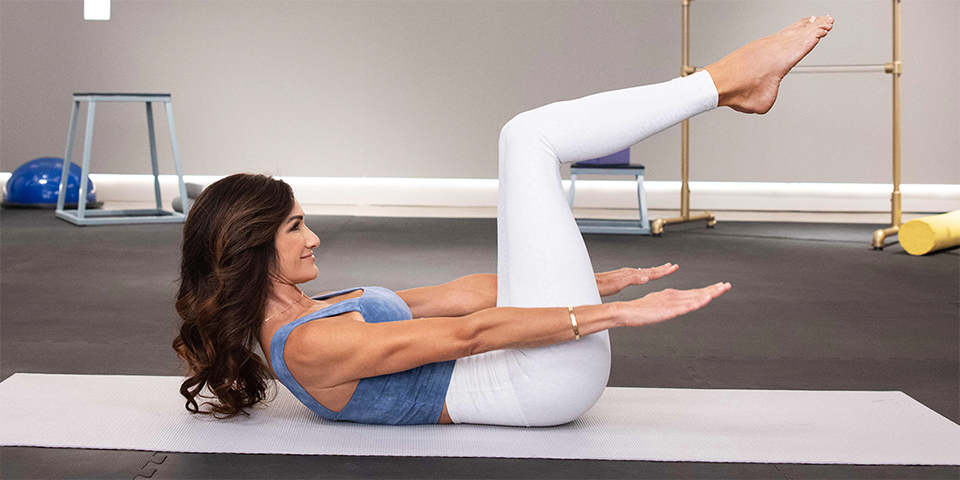
1. Pilates Hundred
“The purpose of this movement is to warm up your body and increase blood circulation,” says Rogers. “The Hundred coordinates your breathing with your movement and abdominal muscle work.”
- Lie on your back and center your body on the mat.
- Pull your knees to your chest and hug them with your hands.
- Raise your head and look at your abdomen.
- Extend your arms slightly above waist height.
- Raise your legs to tabletop level, thighs perpendicular to the floor, knees bent at a 90-degree angle, and shins parallel to the floor. (Alternatively, you can perform this movement with your legs extended at a 45-degree angle if you prefer.)
- Keep your arms straight and move your arms up and down vigorously. (This should be a small, quick movement; your hands should only move up and down a few inches.) Relax your neck and shoulders and focus on using your abdominal muscles.
- To run the pump, inhale “pump” three times and exhale “pump” three times. Repeat until you have done 100 pumps.
2. Abdominal roll ups
“Roll-ups stretch your spine and strengthen your core,” says Rogers. “The goal is to maintain an overall C-curve and articulate the spine one vertebra at a time.”
- Start in a sitting position flat on the floor with your legs bent. Gently grab the back of your thighs and sit with your back straight.
- Round your spine and lean back slightly. Gently roll down, one vertebra at a time, until it is flat on the floor.
- Pause, tense your core and exhale as you slowly straighten your spine. repeat.
3. One leg circle
Want to improve your shoulder and lower back stability? Add this move to your Pilates routine. “This is a deep stretch and an exercise that requires strong coordination skills,” says Rogers.
- Lie on your back and stretch your arms out to the sides of your body.
- Extend your right leg straight toward the ceiling and point your toes. (If you feel like you’re stretching too much, soften your knees.)
- Keep your hips stable, legs straight, and back flat on the floor, then fold your right leg to the left side of your body. Draw a circle in the air with your toes as you lower your right leg toward your left leg, then out to your right side and return to the starting position.
- Next, stretch by pulling your right knee toward your chest.
- Repeat 8 times, then reverse.
4. Scissor kick
- Lie on your back with your arms at your sides, knees bent and feet flat on the floor.
- Bring your knees close to your chest and extend your legs straight toward the ceiling while lifting your shoulders off the floor.
- Keeping your core tight and legs straight, slowly lower your left leg to the floor while bringing your right leg closer to your body, making two pulses.
- Repeat on the other side, lowering your right leg to the floor while bringing your left leg closer to your body.
- Continue alternating until all repetitions are completed. Start with 10 to 15 repetitions.