In new movements, improvement is rarely achieved through better coaching. So how does this relationship work?
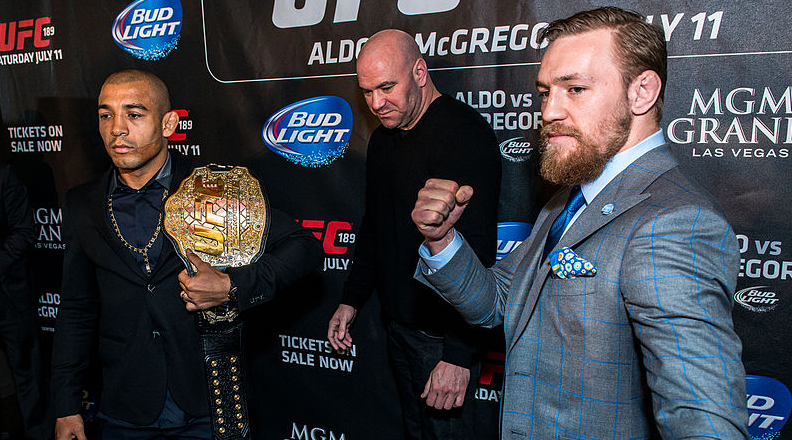
Recently, footage of UFC fighter Conor McGregor training on Ido Portal was reposted a lot on Facebook. These posts draw attention to free movement as a training. The post linked above contains the important line “If you don’t have a base level of joint health, don’t just run away and start doing all this.”This point must not be glossed over.
Poor joint conditions impede the ability to sense external and internal forces. From the ground, the wind, the enemy or our own inertia. The ability to accept everything that occurs in wrestling, grappling, combat situations, or any situation with a direct opponent is measured as output in sports.
The essence of an athlete is the ability to process internal and external sensory stimuli (input) into gross or fine patterns (output).
The essence of an athlete is their ability to process input stimuli into output patterns.
Just because the movement is bad doesn’t mean the coaching is bad.
If an individual’s movement is poor (that is, the pattern output is poor), it can often be attributed to the way the movement is taught. It’s as if coaching injects something to improve how the central nervous system works to create movement.
But if an athlete’s joints and tissues don’t have the ability to get into the right position, it doesn’t matter what the coach says. This is also known as the joint-by-joint approach. If your joints tend to become stiff, you may be unable to move before you reach your goal. This means that another joint has to give up some of its stability in order to continue moving.
What makes Ido Portal so great is that it maintains a level of joint health that allows you to get into positions and apply movement skills.. His approach provides many opportunities for processing the central and peripheral nervous systems.
How can you start moving better?
In new movements, improvement is rarely achieved through better coaching. There are three coaches I admire from whom I drew this insight.
- Bill Sweetenham is an Australian swimming coach who has coached multiple Olympic gold medalists. Like Ido Portal, he seems to know how to coach athletes to move properly and often. I co-presented with him at the Higher, Stronger, Faster roadshow in northern Australia in early 2014. In one of his talks he said:Athletes in training won’t listen to you. ”
- ?Frances Bosch, Dutch Olympic jump and sprint coach, professor of motor learning, running coach for the Welsh Rugby Union, consultant coach for the British Sport Association, and world-renowned lecturer on running biomechanics, says something similar. “An athlete’s body literally doesn’t pay attention to what you say.”
- Renowned strength coach and physical therapist Gray Cooke joked in much the same way: “Instead of coaching change, we facilitate change.”
So how can we start moving better? Fortunately, improvement begins with a healthier set of peripheral inputs. These can be improved by all amateur athletes, coaches, and clinicians using foam rollers, massage sticks, trigger point devices, stretching, or professional therapy.
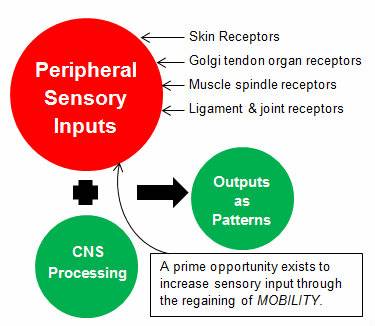
Improvement starts with having a healthier set of peripheral inputs.
Any effort to regain mobility will improve your ability to detect subtle and not-so-subtle movements. Once the athlete regains this movement, the cues to improve the skill become more effective due to the increased sensory input.
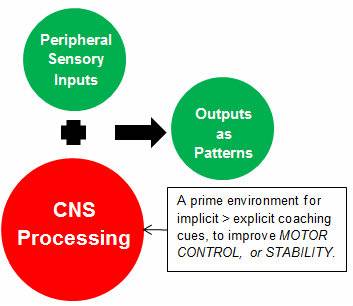
As athletes regain mobility, sensory input increases, making cues to improve skills more effective.
How Ido Portal helps Conor McGregor
Ido Portal and Conor McGregor both look as if they have good mobility in key areas (ankles, hips, thoracic spine, shoulders). This means you benefit from free movement and training in a natural environment.
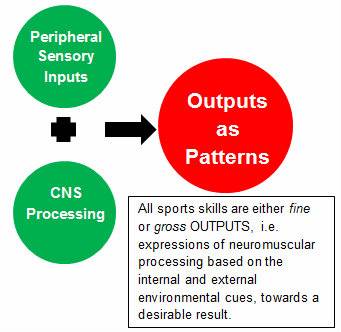
Following this sequence will improve your readiness to display fine and gross motor patterns..
Conor McGregor first demonstrates the value of mobility, then the implicit cues that natural free-form movement provides. Following this sequence will improve your readiness to display fine and gross motor patterns. – In other words, a pattern of landing and dodging punches at the right time.
You may also enjoy:
Photo by Andrius Petrucenia on Flickr (original version) UCinternational (Crop) (CC BY-SA 2.0) via Wikimedia Commons.