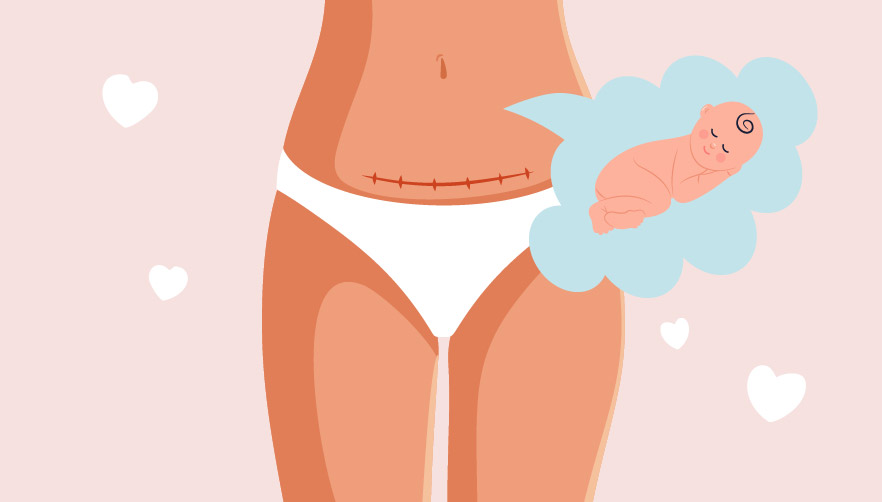
A caesarean section, commonly called a caesarean section or “caesarean section,” is a surgical procedure in which a doctor makes an incision in the mother’s abdomen and wall of the uterus, and then delivers the baby through the incision.
According to the WHO, the global caesarean section rate has increased significantly from 7% in 1990 to the present. twenty one% today. This increase is due to many factors, including increased access to life-saving medical procedures and more women choosing to undergo medical procedures because of their age.
Despite how common this surgery is, there are still many misconceptions about C-sections, their potential complications, whether their pelvic floor is healthier than vaginal births, and how they affect your baby.
Why you (or your doctor) choose a C-section
If there are problems that prevent a normal vaginal delivery of your baby, your doctor may be forced to perform a Caesarean section. Your doctor may also discuss an elective (planned) cesarean section if a vaginal birth might be dangerous.
Although you may choose a C-section even if you are not facing any complications, most doctors agree that vaginal delivery (when possible) is best. the safest way To give birth to a child. You, your partner, and your obstetrician should discuss your options and choose what’s best for you.
Why you and your doctor plan a C-section
Although not all women in these situations will require a cesarean section, common reasons for a planned cesarean section include:
- have had a caesarean section before
- The baby is in a breech position (butt first rather than head first, or feet first) and cannot turn
- Baby is sideways (sideways) and unable to change direction
- the placenta blocks the cervix
- You are having twins, but your first baby is breech
- giving birth to 3 or more babies
Why doctors perform unplanned C-sections
- The contractions are not strong enough or are not progressing
- The cervix opens too slowly or not at all
- Baby’s head is not down or in the pelvis
- After the water broke, the umbilical cord prolapsed through the cervix and into the vagina.
- Baby shows signs of compromised health
- Health problems that increase the risk of birth for you and your baby, such as high blood pressure
Potential risks of caesarean section for mothers
In most countries with modern medicine, caesarean section is a relatively safe surgical procedure and is performed all the time, but like any major surgical procedure, it carries certain risks for both mother and baby. Common risks and complications during surgery include:
- blood clot in leg
- Above average blood loss
- long-term hospitalization
- the endometrium becomes infected
- The question of whether vaginal birth will be possible in the future
- pain around the incision
- Anesthesia-related complications
The myth of tightness
There is a common misconception that delivering a baby by caesarean section allows the vagina to remain tighter than delivering a baby vaginally.
while it’s still there evidence This suggests that births by caesarean section have a lower risk of pelvic organ prolapse and urinary incontinence than vaginal births, that vaginal tightness depends on the health of the pelvic floor, and that caesarean sections still affect the health of the pelvic floor muscles and the entire lower body. For example, women who have a C-section are more likely to experience pain not only during intercourse, but also in their genitals, lower abdomen, and urinary tract.
After giving birth, our bodies change no matter what we do. Even if your baby does not pass through the vaginal canal during a C-section, your pelvic floor muscles, vulva, and vagina are still stressed.
A C-section is an important surgery that often affects the alignment and strength of your pelvic floor and core. This means that even if you don’t give birth vaginally, you can still develop pelvic floor dysfunction after giving birth.
You may be at increased risk of developing postpartum pelvic floor dysfunction if:
- Already have pelvic floor dysfunction
- Giving birth at an older age
- Your BMI is higher than the recommended value at birth
- I’m planning on giving birth to a bigger baby.
- Have a family history of pelvic floor problems
Some childhood symptoms may be correlated with C-section
It is important to note that the potential risks to your baby during a Caesarean section are actually: much less than when giving birth vaginally. However, there are some studies that show a positive correlation between certain health conditions and babies delivered by caesarean section.
One of them is breathing problemsespecially if a C-section is performed before 39 weeks, as fluid is removed from the baby’s lungs during the delivery process. There seems to be a correlation between being born by caesarean section and baby growth. asthma later in life.
Other health conditions that may potentially correlate with cesarean delivery include:
- asthma
- allergic rhinitis or conjunctivitis
- atopic dermatitis or eczema
- food allergy
- Allergic sensitization of offspring
Again, whether you choose a C-section or vaginal birth depends on your health and personal preferences. Your obstetrician should explain all aspects of childbirth and guide you in making informed decisions about your health.