in one study According to a 2017 study published by The Independent, 44% of girls have no idea what’s happening when they get their period. Additionally, 60% felt scared, 58% felt embarrassed, and half of them hid their periods and didn’t tell anyone.
Menstruation is a natural function that most women experience and indicates that you are healthy and fertile. The path to eliminating the stigma surrounding normal, healthy bodily function begins with educating our growing and developing daughters about their bodies.
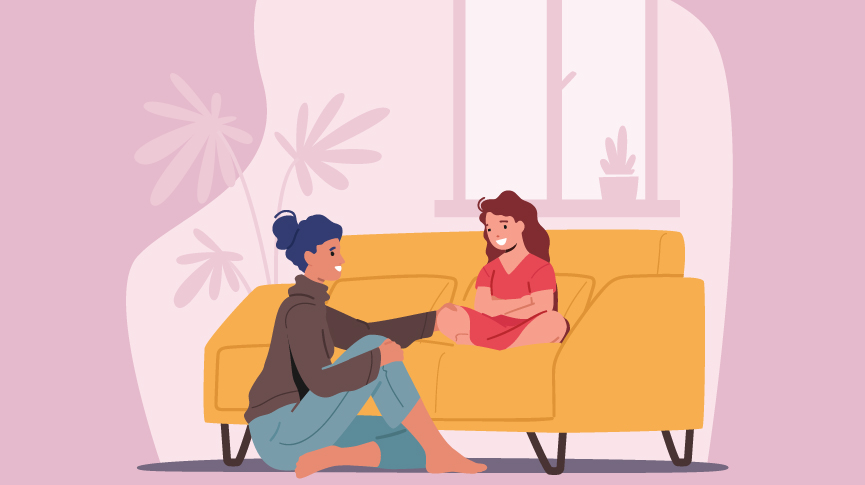
Here are some tips on how to talk to your daughter about menstruation.
When should I discuss menstruation with my daughter?
While this topic usually suggests that there is one big conversation to have with your child, the goal should instead be an initial discussion that starts an ongoing dialogue so that you can address questions as your daughter grows.
It is important to note that menstruation also needs to be explained to sons. Even if you don’t experience it, it helps you understand biological differences, body awareness, and general respect for what others are experiencing.
There is also the aspect of age-appropriate conversation. That means the way you teach your daughter about changes in her body will also change over time.
If your 5-year-old sees a sanitary pad and asks what it is, you can explain that women bleed a little from their vaginas every month, and that this is not an injury. Your body bleeds as it prepares to have a baby, and tampons and pads catch the blood so it doesn’t get on your clothes.
As your child gets older and asks more questions, you can give them more information. If your child doesn’t spontaneously ask questions about the topic, start the conversation yourself.
Most children begin to understand how periods work around the age of 6 or 7. It can be called naturally in the following situations:
- When your child asks, “Where do babies come from?”
- When children start asking questions about something, Body changes and puberty
- If you are purchasing tampons or pads at a store
First, ask your daughter if she knows what a period is. Next, we’ll cover the basics, such as:
- As a girl grows into a woman, her body begins to change in preparation for having a baby when she gets older.
- Babies grow in a place called the uterus.
- Each month, the walls of the uterus prepare for the birth of a baby. If the baby is not present, the walls of the uterus will slough off and a small amount of blood will come out of the woman’s vagina.
It’s also worth mentioning that some women still get their periods even if they choose not to have a baby.
Tips to keep in mind when talking about periods
What you say to your child will depend on their age and developmental level. Below are some general guidelines to keep in mind.
- Be factual: You may not be an expert or a gynecologist, but it’s important to be as informative as possible about how periods work, what they are, why they happen, and what your daughter will experience when she has them.
- Be prepared and helpful. We discuss practical tips on what to expect before and during your menstrual cycle. Don’t be shy about sharing your experiences, even (especially) “embarrassing” ones. Because it can be a bonding experience that shows how natural and human menstruation is. Hearing about your own experiences can help demonstrate firsthand why menstruation shouldn’t be embarrassed, shamed, or feared.
- Skip the lecture: While you can certainly proceed like an at-home health class, it’s often more effective to treat the conversation like an open discussion where your daughter is encouraged to express her concerns, thoughts, and questions. This will make it seem less intimidating and your daughter will feel more comfortable continuing the conversation when she has more questions.
- Discuss the products of the time: Inform your daughter about all her options, from tampons to maxi pads. menstrual cup and sanitary underwearso that she can feel reassured that she has options. If your daughter is already having her period, plan a shopping trip to try out different menstrual products so she can choose the one that feels most comfortable. Make sure she understands that how she deals with her period is about her own hygiene, health, and comfort, not what others recommend or what her friends use.
- Boys need to learn about periods too. The majority of women who have experienced menstrual shame say it was a male acquaintance who made them feel that way. All children are interested in the human body and are part of passing through the past period shame We educate all young people about basic biological functions.