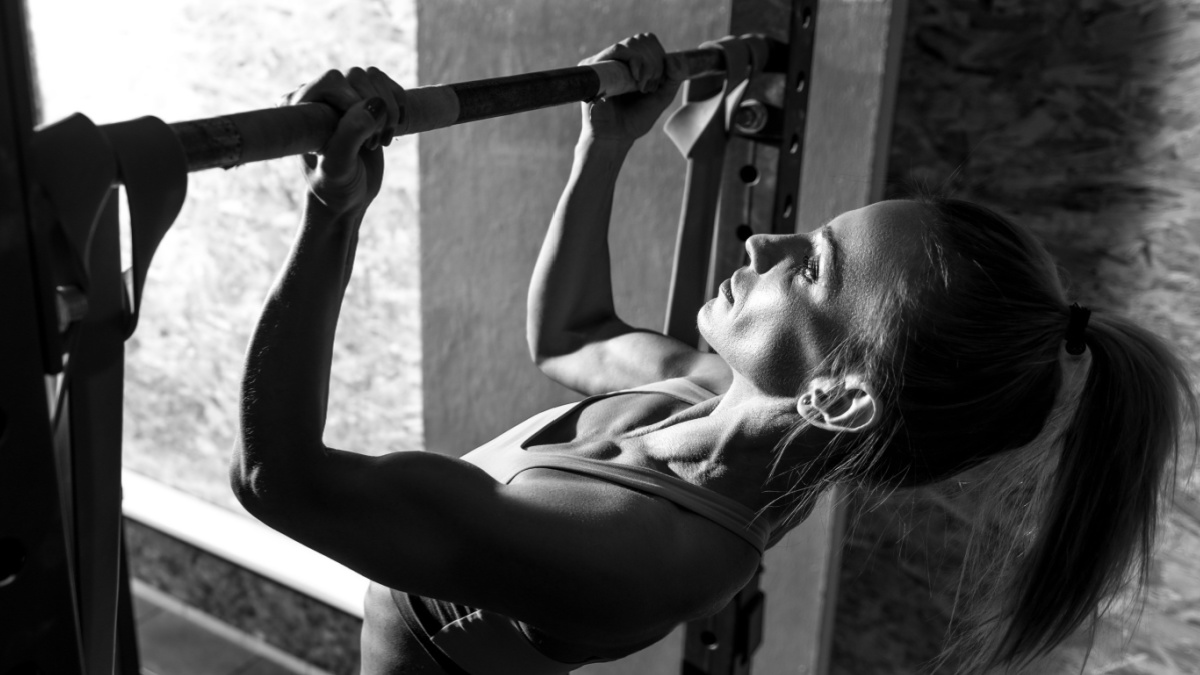
Increase arm size without the gym.
If you asked a random 1,000 lifters if they wanted more muscular arms, very few (honest) would say no. Biceps are one of the most visible body parts, and an impressive set of guns is usually enough to make your head spin.
But training your biceps has other benefits beyond adding some extra meat under your sleeves, including improved muscle strength, shoulder stability, and joint health. (1) It can also be used to lose fat and maintain lean muscle while cutting calories.
People usually imagine biceps training as an afterthought after training larger areas of the body, such as the back or midriff, or approach it as part of a pure arms-only gym session consisting primarily of single-joint (isolation) exercises.
But if you’re smart and creative, or you’re in a situation where you have little equipment, you can omit the weights and reap many benefits, giving your body a refreshing and effective workout. Whether you’re new to the gym, traveling abroad, or just looking to get in the mood, try one of these weightless workouts to take your biceps training to the next level.
best biceps workout
The best biceps workout using only your own body weight
Training without weights allows you to go back to the basics of training and master your body. If you’re tired of lifting the iron and want to get back to your true self, try this routine. Because the biceps are involved in so much more than simple arm flexion, it would be a waste to do only single-joint (alone) exercises.
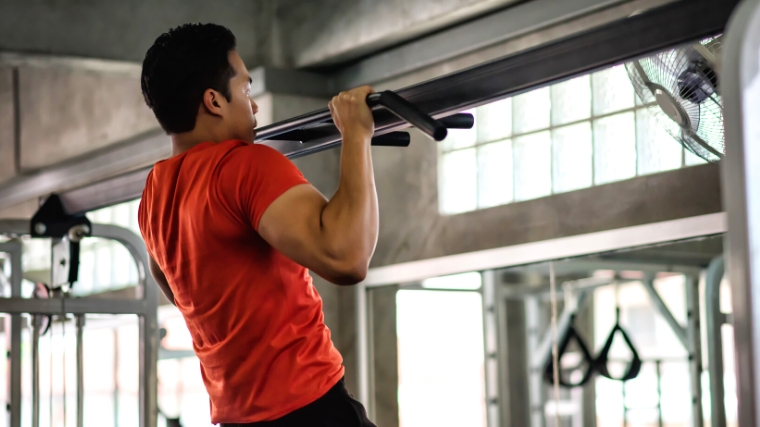
This workout uses a combination of multi-joint exercises and isolation movements tailored to focus on the biceps. This provides the perfect stimulation for body strength, muscle growth, and fat loss while covering all the functions of this muscle. In fact, multi-joint exercises are generally better in terms of muscle adaptation and calorie burn, while single-joint exercises are great for improving the mind-muscle connection or working on specific weaknesses.
no weight training
For best results, perform this workout once a week after warming up. You can’t add weight to move forward, so you have to use other methods. Once you can comfortably perform the number of reps per set, increase the reps to the top of your range. For example, if an exercise requires 12 to 15 repetitions, try increasing to 15 sets once you can perform all 12 sets. Then try adding another set. Finally, you can also gradually reduce your break time.
command pull-ups
Position yourself under the pull-up bar and grab it with your thumbs facing you and your hands touching. Hang onto the bar and tighten your core to stabilize your body. Begin the movement by pulling your shoulder blades down, bending your elbows and raising your body toward the barbell, turning your head to the left side of the bar.
Make sure your right shoulder touches the bar. Controllably lower your body back to the starting position, this time turning your head to the right side of the bar and repeat, aiming to touch the bar with your left shoulder. Repeat as many times as necessary. For the next set, swap hands so that the person closest to you is furthest away on the pull-up bar.
- Number of sets and reps: 4×4-8
- Break time: 3 minutes between sets.
headbanger pull-ups
Position your body underneath the pull-up bar and grip it using a supinated grip at approximately shoulder width (palms facing you). Brace your core, squeeze your shoulder blades together and lower, and lift your body up until your arms are at about a 90-degree angle.
Hold that position and begin to move your body toward and away from the bar by extending and bending your arms. The rest of your body shouldn’t move and it should look like you’re trying to headbutt the bar, but don’t. Repeat this action for the target time. This can be a difficult exercise, so start with a short range of motion (only partially extending your arm) and gradually work your way up to full extension.
- Number of sets and reps: 3 x 30-60 seconds
- Break time: 2 minutes between sets.
towel curl
Grab a sturdy towel with both hands and twist it until it forms a noodle or spiral. Sit on a chair or bench with your back flat and chest high. Place the center of the towel under one foot and hold the ends with both hands.
Keep your elbows at your sides and begin to bend your arms toward your face against the resistance of your legs. When you’re at the top and your hands are near your shoulders, reverse the movement and slowly extend your arms, keeping tension throughout your legs.
- Number of sets and reps: 3×10-15
- Break time: 90 seconds between sets.
lateral plank walk
Get into a plank position with your hands on the floor, arms extended, and legs straight. Keep your core tight, shoulders engaged, and body in a straight line. Step your right arm and right foot out to the side. Move your left hand and foot in the same direction.
Repeat a few steps in the same direction, then move in the opposite direction. Continue for the desired period.
- Number of sets and reps: 3 x 60 seconds
- Break time: 60 seconds between sets.
reversed row
Position yourself under a pull-up bar in a low doorway, a dip bar, under a table, or under a sturdy broom placed between chairs. Grip the bar using a shoulder-width pronated grip (palms facing away from you). Tighten your core and bend your legs so your body is in a straight line.
Bend your elbows and pull your chest toward the bar so your chest is touching the bar. Lower your body in a controlled manner until your arms are straight and repeat as many times as possible. Try to beat your score in each session.
- Number of sets and reps: The maximum number of repetitions before muscle failure is doubled.
- Break time: It’s 2 minutes.
Best resistance band biceps training
Bands are very interesting lifting tools. adaptive resistance — Stretching the band further increases tension and force. This type of resistance provides a unique sensation and more training possibilities. Bands are also an effective way to complement bodyweight training, as they allow you to choose from a wide range of exercises and focus on specific muscles. Band training is also very beneficial for joint and tendon health. (2)
There’s strong evidence supporting resistance band training, so give this biceps workout a try to build strength, build muscle, and lose fat.
one band biceps workout
For best results, perform this workout once a week after warming up. To progress, you can use heavier bands or combine several smaller bands to provide enough resistance. You can also play by adjusting the volume. For example, if an exercise requires 12 to 15 repetitions, try increasing it to 15 sets once you can perform all 12 sets. Then try adding another set. Finally, you can also reduce your weekly break time.
band assisted pull-ups
Wrap the band around the pull-up bar. Hang onto the bar with your hands shoulder-width apart and using a supinated grip (palms facing you). Place your feet on the band with your legs straight. Keep your core tight, chest up, shoulder blades down, and bend your elbows to pull yourself toward the bar until your chest touches the bar.
Lower your body in a controlled manner until your arms are straight. Repeat as many times as necessary. Bands make the exercise easier at the beginning of the movement, allow you to do more repetitions, and give your arms a slight advantage during the movement.
- Number of sets and reps: 3×8-12
- Break time: It’s 2 minutes.
single armband hammer curl
Stand tall and place one end of the band under your feet. Grasp the other end with your working hand. Place your elbows at your sides. Bend your elbows and bend your arms toward your face. Only move your forearms, not your shoulders.
Contract for 2 seconds at the top and lower to the starting position with control. Perform all reps on one side before switching hands. To increase resistance, hold each end of the band with one hand.
- Number of sets and reps: 3×12-15
- Break time: 60 seconds between sets.
band concentration curl
Attach the band to a sturdy object near the ground. Sit on a chair near the band and grab the band with the arm closest to you, placing your elbow on the inside of your thigh, just above your knee. Widen your stance to make room for your arms. Bend your elbows, bend your arms toward your face, and squeeze at the top for about a second.
Then slowly straighten your arms until they are straight again. Repeat as many times as necessary before switching arms. Make sure that no part of your body is moving except your forearms during the exercise. Do not compress your knees to assist your arms. To increase the difficulty, sit further away from the band attachment.
- Number of sets and reps: 3×10-12
- Break time: 60 seconds between sets.
band reverse curl
Stand in the center of the band and grasp the ends with both hands, pronating (palms facing down) at shoulder width. Stand tall, tighten your core, and squeeze your shoulder blades together. Flex your biceps, bend your elbows, and pull the band toward your face. Move only your forearms and do not move your elbows forward. Keep your palms facing down during the exercise.
Lower your hands with control until your arms are straight and repeat as many times as necessary. For more intense exercises or severe burns, you can add a few more partial range reps and only go halfway to complete the arm.
- Number of sets and reps: 3×15-20
- Break time: 90 seconds between sets.
biceps muscles
The biceps are probably the best known and most frequently flexed muscle. Although well-developed biceps are coveted primarily for cosmetic purposes, they also cover a variety of functions for health and performance.
biceps
The biceps brachii is the largest flexor muscle of the arm and is the pad located on the upper arm. It has two heads, hence the prefix ‘bi’. The biceps muscle attaches from the ulna (forearm bone) through the shoulder joint complex to the scapula (shoulder blade).
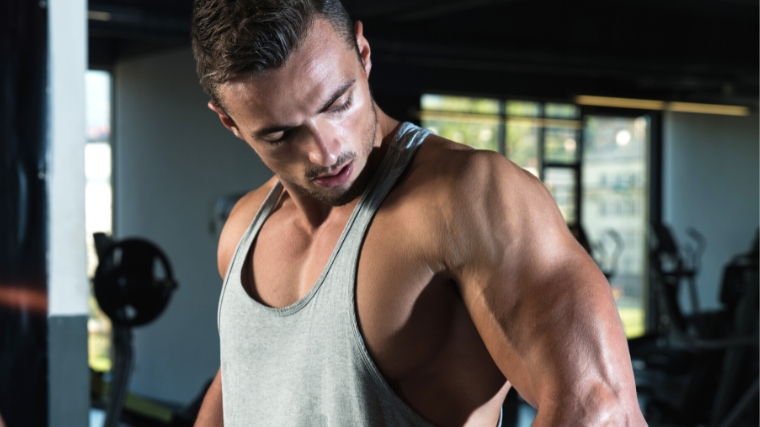
It is primarily known as the arm flexor and supinator muscle (rotating the palm toward the face), but it also helps raise the arm and stabilize the shoulder and humerus (upper arm bone). Having healthy and strong biceps is a prerequisite for maintaining upper body strength and health.
brachialis muscle
This muscle is part of the brachial complex and is located directly below the biceps. It refers to the area from the elbow to the top of the humerus and is involved only in elbow flexion (bending the arm). In fact, your arm flexors, not your biceps, are your strongest.

Developing this muscle can also be helpful if you are only interested in appearance. Going bigger can actually increase the “peak” of your biceps by pushing them higher. If you’re lean enough, you can even notice a really impressive set of guns. To emphasize this muscle, assume a neutral (hammer) grip during the curl.
brachioradialis muscle
Another friend of the biceps brachii, the brachioradialis, also attaches from the ulna to the humerus. It is the largest and strongest of the forearm muscles. It works synergistically with the biceps and brachialis muscles to help flex, supinate, and pronate (rotate the palm outward) the forearm.
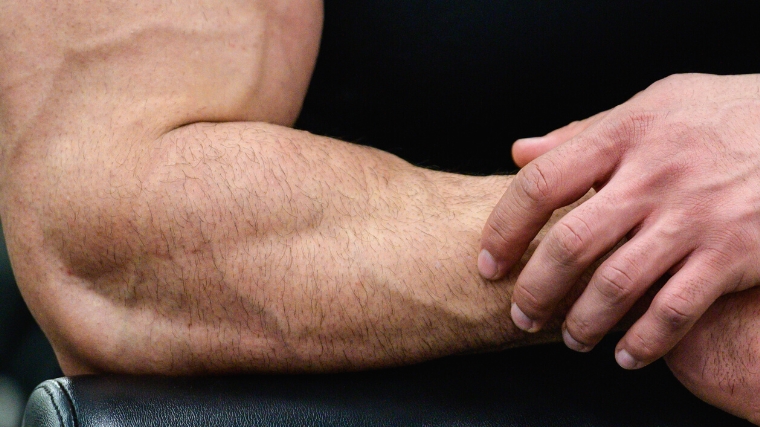
Having big, strong forearms is useful for many exercises, but it can also act as a visual illusion to compensate for shorter biceps by making them appear larger. Emphasize this muscle with a pronated (palms facing down) grip.
biceps warm up
Warming up before your workout can improve your performance while minimizing the risk of connective tissue strain and injury. (3) The elbow is known to be a sensitive joint, especially before performing biceps exercises, as some biceps exercises involve the shoulder complex, which is the most unstable joint in the entire body.
A good biceps warm-up should at least recruit the biceps and triceps, but if the exercise requires other body parts, be sure to include them as well. Here’s a complete resistance band warm-up to prepare your body before a bicep workout.
biceps band warm up
- Band over and back: Grip the band with both hands using a very wide, pronated (palms facing down) grip. Stand tall, hinge at the hips, lean forward slightly while keeping your back flat, and maintain this position. Raise the band over your head, then lower it to your hips, keeping your arms straight. Extend your arms straight and, keeping them tense, rotate back to the starting position. Repeat 15 times before moving on to the next exercise.
- Pulling the band apart: Hold a resistance band in your hand and stand with your palms facing down. Raise your arms in front of your chest to shoulder height. Pull the band with your hands and bring it aside until it touches your chest. Keep your arms straight at all times. Return to starting position. Repeat 15 times before moving on to the next exercise.
- Band column: Secure the band to a sturdy item just below chest height. Stand tall, chest up, and grab with a neutral grip (palms facing each other). Pull with your elbows and squeeze your back as hard as you can until your hands are at your sides. Undo the motion with the controls. Repeat 15 times before moving on to the next exercise.
- Band curl: Step onto the band and hold it at arm’s length with your palms facing up. Keeping your body steady, curl the band toward your face and tighten your biceps. Extend your arms in a controlled manner and repeat 15 times before moving on to the next exercise.
- Band press down: Attach the band high, at least at eye level. Hold the end with a pronated grip. Bend your hips slightly forward and tuck your elbows into your ribs. Extend your arms fully down, moving only your forearms and squeezing your triceps. Return your hands to your chest and repeat for a total of 15 reps, then complete the full circle again for a thorough warm-up.
Arm yourself with bigger weapons
No weight? No problem. There is no need to use them to fill the sleeves. Performing these weightless biceps workouts will increase arm size and strength, and help you shed fat in the process. This body part may catch your eye, but there’s more to biceps training than meets the eye.
References
- Rodsky MW, Harner CD, Fu FH. The role of the long head of the biceps brachii and the superior labrum in anterior shoulder stability. J Sports Medicine. January-February 1994;22(1):121-30. doi:10.1177/036354659402200119. PMID: 8129095.
- Kim GJ, Oh H, Lee S, Lee K, Kim K. Effects of resistance exercise using rubber bands on pain and function in patients with knee osteoarthritis. J Phys Ther Sci. 2020 January;32(1):52-54. doi:10.1589/jpts.32.52. Epub 2020 1 22. PMID: 32082029; PMCID: PMC7008024.
- Fradkin AJ, Zazulin TR, Smoliga JM. Effects of warming up on physical performance: A systematic review with meta-analysis. J Strength Condition Resist Jan 2010;24(1):140-8. doi: 10.1519/JSC.0b013e3181c643a0. PMID: 19996770.
Featured image: YAKOBCHUK VIACHESLAV / Shutterstock