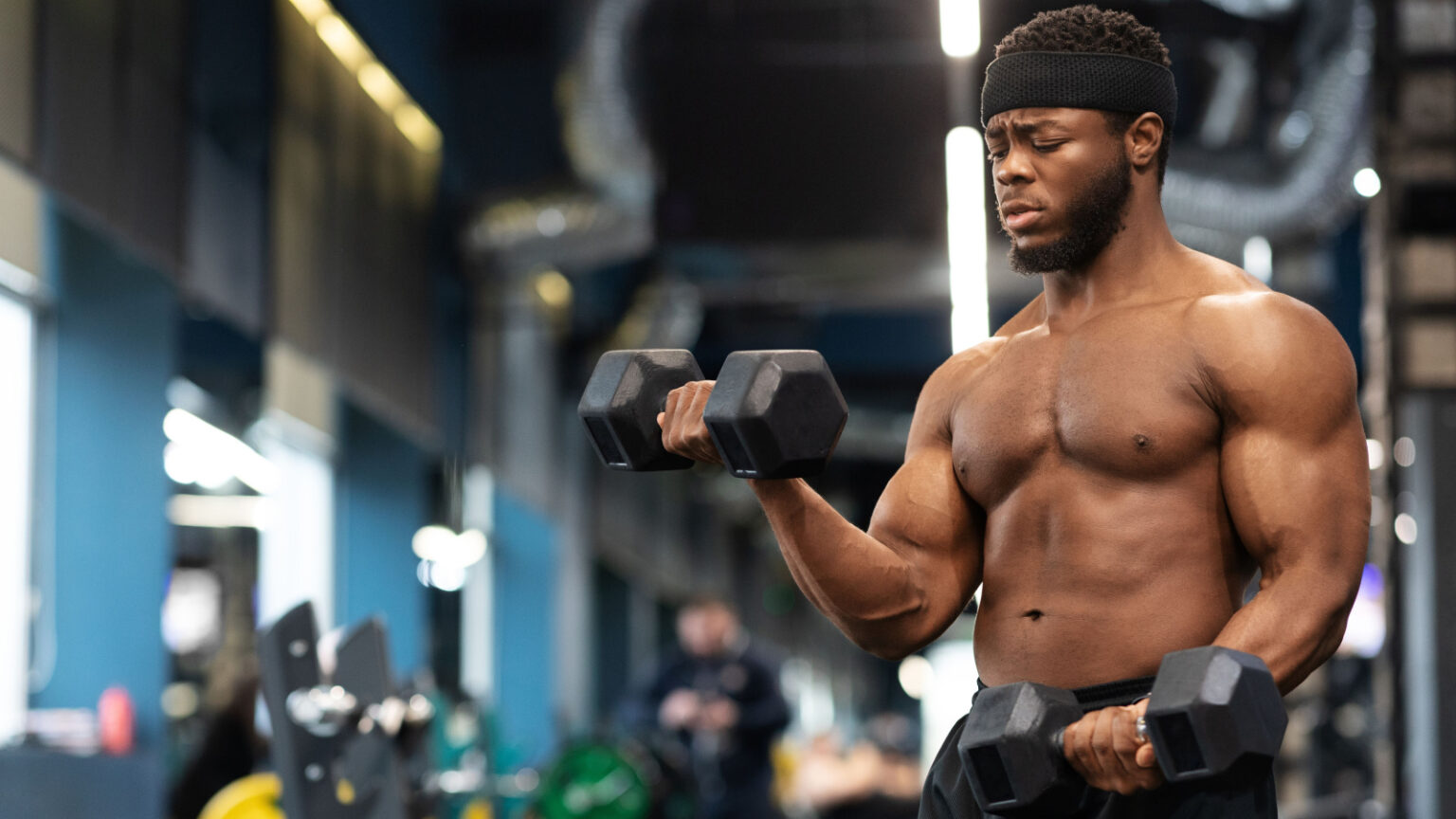
Build your physique and build serious strength with these targeted workouts.
Pairing your back and biceps in one workout has been a classic muscle-building session for decades. This is a reliable, effective, and proven approach that simply makes sense. Most rowing and pulling type movements that target your back will also work your biceps.
Even if your biceps haven’t received a great deal of stimulation from your back exercises, your biceps will have warmed up and built up some fatigue towards the second half of your workout, which you can finish off with a direct bicep workout.
It’s a match made in heaven, and any program that splits many body parts would be incomplete without a solid day for your back and biceps. Whether you’re new to the gym or think you’ve tried them all, here are some of the best back and bicep workouts to build size and strength.
back and biceps training
Back and biceps training for beginners
The goal of beginner-level training is to lower the barrier to entry and get stronger using exercises that are relatively easy to learn. Many lifters new to the gym are drawn to using barbell rows to train their backs. Barbells are a great tool for back training, but they often require skill and can be very tiring, especially for beginners.
base building back and biceps
This back and biceps workout routine uses exercises that are relatively easy to learn and good for establishing a foundation of strength and muscle. If you focus on the target muscles and apply strict techniques, you’ll end up with a terrible pump in the muscles you pull by the end of the session. Strictly speaking, if you had to break down the workout in detail, you could think of it as a “back, biceps, and shoulders workout,” since it also pays direct attention to the occiput of the shoulder muscles.
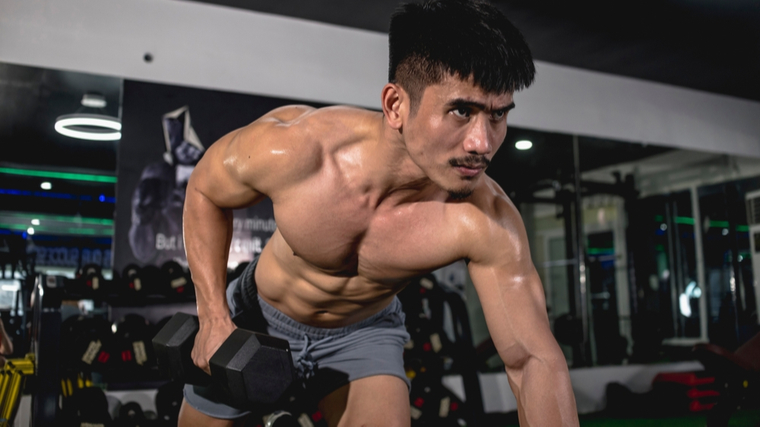
bent over dumbbell row
Bent-over dumbbell rows provide a powerful stimulus that builds your back without taxing your erector spinae (lower back) muscles like barbell rows. Avoid shaking your torso to shift your weight.
manner: Hold dumbbells in each hand and stand with your arms straight down by your sides. Bend your legs slightly and bend your hips forward, keeping your back in a natural position without rounding. Place your hands facing each other so that the weights reach your toes. Move your elbow back over your ribs and feel the muscles in your back contract. Return the weight to the extended position before repeating. Maintain the same hip angle throughout the exercise.
sets and reps:3×8~12
Break time: 60-90 seconds between sets
close grip lat pulldown
Close-grip lat pulldowns stretch your lats and help you hit them in a way you can’t do with rows. Combining vertical pulls (such as lat pulldowns) with horizontal pulls (such as rows) is a very effective way to target multiple muscles in your back.
manner: Attach a neutral grip (palms facing each other) to the pull-down cable. Grab the handles and sit with your arms straight and extended overhead. Place your feet flat and secure your knees under any available padding. Keep your upper body nearly vertical and lean back slightly. Lower your elbows until the bar is near your face or chin. Control the stretch as you return your arms to the overhead position.
sets and reps:3×8~12
Break time: 60-90 seconds between sets
machine reverse fly
The machine’s reverse fly hurts the rear deltoid muscles. Although the posterior deltoid is technically part of the shoulder muscles, the posterior muscle head is involved in many back exercises. The rear deltoids, like the biceps, are pre-fatigued after a back workout, so it makes sense to train them directly as part of your back and biceps routine.
manner: Sit with your chest against the pad of a reverse fly (or “reverse spec deck”) machine. Place your hands in front of you at shoulder height and grip the handlebars with a thumbs-up grip. Keep your elbows slightly bent. Pull your hands back until they are in line with your shoulders. Don’t “pull too hard” to reach behind your body. Return your hands to the forward position without slamming the weight into the stack.
sets and reps:3×8~12
Break time: 1 minute between sets
alternating dumbbell curls
Alternating dumbbell curls allows you to focus on each arm individually, which is a great way to train your biceps. Slight supination (rotation of the wrist) helps recruit more muscles throughout the biceps, including the brachioradialis, making it a top-notch bicep-building exercise.
manner: Stand with dumbbells in each hand and arms hanging at your sides. Raise your left hand to a thumbs-up position. Once your hands pass your hips, turn your palms up and continue curling until your weight is near shoulder height. Reverse the movement and shift the weight back toward you. Repeat this movement with your right hand. Alternate arm movements with each repetition.
sets and reps: 3 x 10-20 per arm
Break time: 45-60 seconds between sets
how to progress
As a beginner, your goal is to get stronger while learning proper form with simple movements. As long as you increase the intensity of your compound (multi-joint) exercises while using proper technique, you should be strengthening muscles in the right places.
Continue pushing through each set until you finally reach the end of your rep range. Once you reach that limit, increase the load and repeat the process, but only if your form remains strict. Don’t get into the habit of cheating just to shift weight. Once the load increases significantly (approximately 30% or more), you can jump to the next program.
Once you reach the intermediate stage, you’ll feel like you’ve improved your skills in the gym and put a little muscle on your shirt, but you might be tempted to start “ego lifting,” especially if you start noticing the big lifters at the gym throwing their weights around when they row. Please don’t do that. You can injure yourself, and it actually doesn’t irritate your back too much because it uses a snappy, strict technique.
If you keep your form adjusted, you should feel your back working deeply across the target muscle fibers, which will encourage growth. The same principle applies to your biceps. Swinging is prohibited. Let your biceps do the work, not your ego. It’s not the force, but the way you bend your elbow that stretches your arm.
Training your back and biceps from a new angle
As you transition to an intermediate lifter, you may be able to handle a little more volume as long as you’re getting enough nutrients to recover and grow. It’s also a good time to introduce different variations to prevent overuse injuries while stimulating muscle areas in different ways. (1) This back and biceps gym workout uses several different movements to target your muscles.
Chest-supported rows are perfect for your first exercise of the day. It is stable and does not require as much warm-up as free-standing rows. It feels stable so you can concentrate on your back. Single-arm rows allow you to lift more with one arm than lifting two dumbbells together, allowing you to take advantage of unilateral (single-arm) strength gains. This unilateral focus also helps correct imbalances.
Incline dumbbell curls elicit a greater growth response because they stretch the biceps more than standing movements. (2) Stretching movements increase your range of motion and may cause more pain, but you should be able to manage it now that you have more experience.
chest support row
This movement fully supports your upper body and essentially removes your lower back from the equation, making it a strict back-building exercise with almost no restrictions. Chest-supported rows are a great way to start a back-focused workout because they work your lats and large back muscles without fatiguing your lower back.
manner: Lie down on your chest on a supported bench and grasp the handles with a palm-down grip. Remove the weights before pulling the bar as high as possible. Pause briefly in the contracted position before fully extending the weight.
sets and reps:3×8~12
Break time: 60-90 seconds between sets
wide grip pulldown
This movement is one of the most basic variations of the pulldown. The emphasis on long overhead stretches with strong contractions makes the wide-grip pulldown a staple in many back workouts.
manner: Attach a long bar to the pull-down station. Sit down with your grip slightly wider than shoulder width apart. Keep your knees locked under the pads and your arms straight above your head. Keeping your torso nearly upright, lower your elbows and pull the bar to approximately chin level. Pause briefly before returning to the overhead position.
sets and reps:3×8~12
Break time: 60-90 seconds between sets
single arm dumbbell row
The single arm dumbbell row is a classic back training exercise. Mastering this movement is essential for long-term back growth. You can train your back muscles one side at a time while significantly reducing stress on your lower back.
manner: Hold a dumbbell in one hand, palm facing toward your body. Support your non-moving hand on a flat bench or knee on the same side. Move your arms up and down until the dumbbells are near your ribs. Pause for a moment to reach maximum contraction, then lower to full extension. Perform all repetitions on one arm before switching sides.
sets and reps:3×8~12
Break time: No rest between arms, 1 minute between sets
cable rear delt fly
Using cables instead of machines to train your rear deltoid muscles increases the amount of time you’re under tension and improves muscle-building stimulation. (3) This unique motion allows you to get more benefits with a relatively lower weight.
manner: Stand in the center of a double cable station with high pulleys and grab the cables from opposite sides with both hands. Flex your abdominal muscles and slightly bend your knees. Keeping your arms slightly bent, pull your elbows down. When fully contracted, your arms should be slightly behind your torso. Cross your arms in front of your body and return to an extended position.
sets and reps:3×10~15
Break time: 45-60 seconds between sets
incline dumbbell curl
Incline dumbbell curls are a great way to train your biceps. Intense stretching and focused contractions create a huge trigger for muscle growth. Prioritize technique over heavy loads. Done properly, even a relatively light weight can feel very heavy. Resist the urge to flirt.
manner: Set the adjustable bench to approximately 45 degrees. Lie on your back holding a dumbbell in each hand. Place your head, shoulders, and back on a bench pad. Let your arms hang straight with your palms facing forward. Curl the weights while moving only your hands and dumbbells. Keep your elbows, upper arms, and head still. Once you reach the highest possible position without moving your elbows or upper arms, slowly lower the weight until it is fully extended.
sets and reps:3×10~15
Break time: 45-60 seconds between sets
how to progress
Once you can reach the end of the repetition range of the exercise, increase the resistance on your next workout. It’s basic, bread and butter progress. There’s no need to overcomplicate things. If you keep your form strict, eat enough and build strength, your arms will expand and eventually your back will get a zip code as well.
Advanced back and biceps training
As you get stronger, you should add lifting straps and work on new variations regularly. What often happens to advanced lifters is that their grip strength and forearms become limiting factors during back exercises, leaving them with an underdeveloped number of reps to build progress on each set.
At this stage of development, the back should be much stronger than the small muscles in the forearms. Using lifting straps strategically can provide more stimulation to your back and biceps while preventing fatigue in your forearms.
Back and Bye for Experienced Lifters
As an advanced lifter, you need to hit all areas of your back more specifically. Barbell rowing is the first exercise in your workout, as it is very comprehensive and requires skill. Next, to more thoroughly target your lats, do a vertical pull. At this point, you should be strong enough to do at least five grueling pull-ups. If not, stick to lat pulldowns and determine if you lack strength or if excess body weight is hindering your pull-up progress.
The Jefferson Curl is a unique movement added to work the erector spinae muscles from top to bottom. This unconventional exercise sometimes gets a bad rap because it requires you to round your back, which you are usually warned about, but it also rounded your spine. designed These controlled, dynamic contractions grow muscles best.
If you want to create a thick, back-enhancing look in both your upper and lower back, Jefferson curls could be your secret weapon. Needless to say, do it with control and don’t load up your ego. Finish the workout with the addition of barbell wrist curls. We use straps that supplement grip strength, so you can maintain growth by providing some protection for your forearms.
barbell row
sometimes considered of The ultimate back exercise, the bent-over barbell row plays a key role in building size and strength. Don’t be seduced by the ability to move heavy weights and cheat on your technique. Keep your form strict and don’t bounce or swing the weight.
manner: Stand in front of a loaded barbell in a stable shoulder-width stance. Hinge at your hips and grip the bar with an overhand grip slightly wider than shoulder width. Tighten your core and explode the weight toward your lower abdomen below your belly button. Be sure to pause very briefly before using the controls to lower the weight.
sets and reps:3×8~12
Break time: 2 minutes between sets
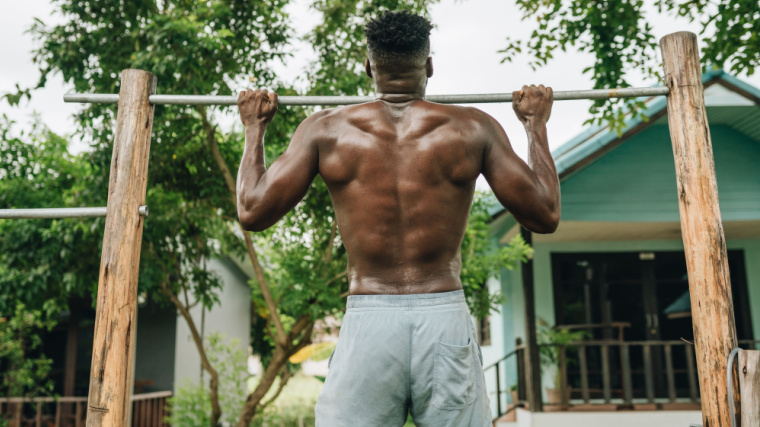
pull-up
Pull-ups are a classic bodyweight exercise. In many training circles, pull-up performance is considered second only to bench press ability as a measure of true experience and aptitude in the gym.
manner: Grasp an overhead pull-up bar about shoulder-width apart with your palms facing away from your body. Flex your abdominal muscles and keep your body in a roughly straight line. Resist the urge to “kick” your legs as you lift. Pull your chest towards the bar and lean back slightly. Once your mouth or chin is near the height of the bar, controllably lower your body to a fully extended position (arms extended). Do not free fall to the bottom.
sets and reps:3×5~10
Break time: 2 minutes between sets
jefferson carl
The Jefferson Curl is performed against the most important rule of weight training. was supposed to Make sure your back is rounded during the exercise. Most other movements, such as squats, deadlifts, and rows, usually require proper technique to keep the spine stiff and neutral. The goal during the Jefferson curl is to intentionally round your spine (with complete control, of course).
manner: Hold a light barbell in your hands and place your straight arms in front of your body. Lean your hips forward and imagine curling each vertebrae down as you reach towards your legs. Keep your arms straight and the bar close to your legs. Once you reach your maximum flexibility, slowly “uncurl” and return to a standing position.
sets and reps:3×5~10
Break time: 1 minute between sets
cable rear delt fly
Cable rear delt flies are a reliable, high-intensity way to finish off your rear delts at the end of your back and biceps workout. Keep your form strict and focus on feeling your deltoid muscles working.
manner: Stand in the center of a double cable station with high pulleys and grab the cables from opposite sides with both hands. Flex your abdominal muscles and slightly bend your knees. Keeping your arms slightly bent, pull your elbows down. When fully contracted, your arms should be slightly behind your torso. Cross your arms in front of your body and return to an extended position.
sets and reps:3×8~12
Break time: 1 minute between sets
incline dumbbell curl
Build your biceps with incline dumbbell curls. Great for toning your arms with intense stretches and intense contractions.
manner: Set the adjustable bench to approximately 45 degrees. Lie on your back holding a dumbbell in each hand. Place your head, shoulders, and back on a bench pad. Let your arms hang straight with your palms facing forward. Curl the weights while moving only your hands and dumbbells. Keep your elbows, upper arms, and head still. Once you reach the highest possible position without moving your elbows or upper arms, slowly lower the weight until it is fully extended.
sets and reps:3×8~12
Break time: 1 minute between sets
barbell wrist curl
Barbell wrist curls work your forearms (especially your wrist flexors). Targeted movements give some attention to the forearm muscles, but using lifting straps during heavy back exercises may not stimulate the forearm muscles enough.
manner: Place the barbell on a flat bench with an underhand (palms facing up) grip. Support your forearms across the bench. Extend your wrists down to lower the weight and rotate the bar toward your fingertips. Curl your hands closed and raise your wrists without lifting your forearms off the bench. The range of motion is relatively short, so focus on applying tension without swinging.
sets and reps:3×10~15
Break time: 45-60 seconds between sets
how to progress
Progress is the same as before. Train hard, don’t swing weights, and add more reps or resistance each week.
If you can match or exceed the performance of your reps, that’s great. Once you reach the top of your rep range, add more resistance the following week. If you find yourself lifting heavy weights but still feeling fatigued and underperforming, you may need to lighten your load at some point.
However, in most cases, continued growth comes down to a continuous increase in physical strength due to constant nutrient intake. Be careful when proceeding with pull-ups. It’s tempting to justify repeated swings, but that can be a hasty addition to the load.
Most weeks focus on form and only count the number of times you perform in a controlled manner. Once you reach 10 exact pull-ups, add 5 to 10 pounds of weight, reduce the reps to 5 pounds, and continue.
Benefits of back and biceps training
While each body part split and potential workout setup has its own benefits, there are some clear reasons to consider scheduling a back and bicep day within your weekly training split.
better joints and better posture
People who have strong backs and frequently perform pulling exercises will have more comfortable and healthy joints. Excessive bench presses, overhead presses, and not balancing your muscles during rows, pulldowns, and pull-ups can cause problems with your shoulders. (4)
Your joints and connective tissues begin to demand more rowing and a stronger back. This creates a healthier spine, improves joint function, and promotes better posture.
Become better at moving things
Sure, no one wants to be “that friend” that everyone in the group calls out to when they need help moving, but the alternative is even worse – if you become friends, no one contacts you to help you move because they’re scared of breaking you in half.
Therefore, it is important to keep your back and biceps strong and stable every day. Their abilities improve through everyday life, and moving furniture feels like child’s play. In addition to the practical benefits, strengthening your back, biceps, and grip strength can also help improve your performance in the gym. Everything from the obvious exercises like the farmer’s walk and deadlift to the overhead press, which strengthens your back and improves upper body stability.
Build eye-catching muscles
Many people correctly associate biceps training with being essential for a more beautiful physique. Chest, abs, and even shoulders are often thought of as body parts that attract attention, but a muscular back can take muscularity to the next level and create an undeniably athletic and powerful look.
Strengthening your back and arms will make it easier to wear any t-shirt instead of looking like a malnourished college freshman swimming in baggy clothes. A larger back can also make your waist look smaller in comparison, in case you’re making an effort to shed some extra hairballs.
Basic anatomy of the back and biceps
Here’s a quick summary of all the muscles that are worked in each back and biceps workout. Yes, you are training your “back” and “biceps”, but you need to consider it a little more closely.
trapezius muscle
The trap is a diamond-shaped muscle that makes up most of your upper back. It runs from the middle of the neck to just below the shoulder blades. Although the trapezius muscle has many muscle fibers and several “sections” (upper trap, middle trap, and lower trap), different horizontal and vertical pulls affect the entire muscle. The rowing exercise is particularly effective because its main function is scapular retraction (pulling the shoulder blades together).
latissimus dorsi
The latissimus dorsi, or latissimus dorsi, is another large muscle group. It occupies the outer part of the middle of your back and runs from your armpits down to the beginning of your hips. The latissimus dorsi muscle is well known for appearing wide.
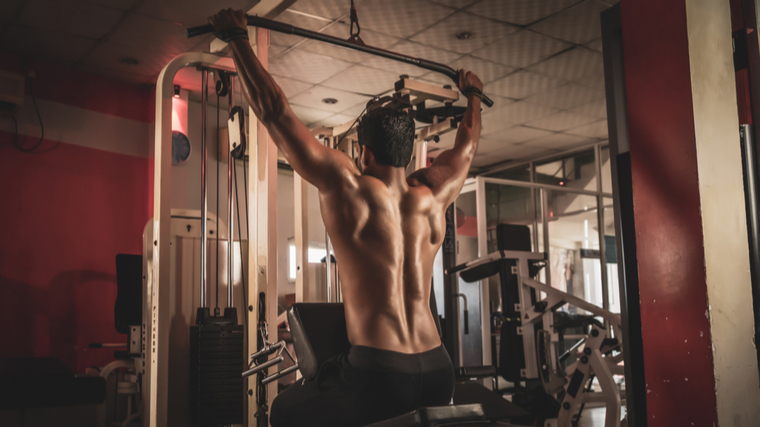
Some lifters consider the lats to be the wingspan muscle because they give you a visible back extension from the front. Needless to say, it also makes your waist look thinner. All vertical pull exercises, like all pulldown exercises, create a strong contraction and long stretch of the lats.
erector spinae
These are two long, thick beams that run from the top to the bottom of your back, including what is usually called the “hips.” Like the traps, the erector spinae muscles are involved in controlling posture near the lower back, so they are stimulated in almost all back exercises. These are trained directly as the main focus during the Jefferson curl, as well as pulling and hip hinge movements that actively arch your back.
rhomboids
The rhomboids are relatively small back muscles that attach to the center of the spine, lie partially under the shoulder blades, and form part of the upper back musculature. The rhomboids play a similar role to the trap, helping the shoulder blades contract and improving posture. All horizontal rows hit the rhomboids well, especially if you focus on pulling your elbows back and squeezing your shoulder blades.
posterior deltoid
The posterior deltoid is the back of the shoulder. Developing this relatively small muscle will “round” your shoulders and make your entire back look more perfect.
People who ignore or underestimate back training usually have back shoulders. Like many types of rowing, any pulling exercise that moves your elbows behind your body will impact your rear deltoid muscles.
Some lifters argue that there’s no need to train the rear deltoids directly as long as you’re building enough back muscle mass each week, but it’s never a bad idea to do some well-planned isolation work, especially if you want to focus on strengthening a specific part of your body.
biceps
In fact, the “biceps brachii” is made up of three related muscles: the biceps brachii, brachialis, and brachioradialis.
The biceps brachii is a remarkable biceps muscle that consists of two heads, a long head and a short head. Both are visible and create what most people think of as biceps on the upper arm. Unless you’re incredibly thin or incredibly muscular, you won’t see a clear separation between the two heads.
The brachialis is a small muscle located between the biceps and triceps. Although it is hardly visible due to its anatomical location, it creates size in your arm by “lifting” your biceps. Unless you’re extremely muscular or toned like a competitive bodybuilder, you don’t often see the muscles themselves.
The last major muscle of the biceps brachii is the brachioradialis muscle. Located at the top of the upper forearm, it also helps rotate the wrist to a neutral (thumbs up) position and bend the elbow. It is more visible than the brachialis muscle, and when developed it helps to puff out the sleeves, especially near the forearm.
All of the biceps mentioned above work primarily during elbow flexion (bending your arm), so these muscles are worked on every kind of curl, as well as every row and pulldown. This is why you don’t need to do many sets of bicep workouts to get great results if you’re getting stronger with different back exercises and adding hard curls.
back and biceps time
Start applying these exercises to your back and biceps. Take an honest assessment of your experience level and work on your rows, pulldowns, and curls. We’ve looked at the most efficient ways to plan these back and biceps exercises. Go to the gym and aim for growth. Your back will widen and your arms will also widen. Your upper body will look more impressive, and as a side effect, you may find that your figure attracts even more fans.
References
- Cassiano, Witaro 1; Nunez, João Pedro 1; Costa, Bruna 1; Ribeiro, Alex S. 1,2; Schoenfeld, Brad J. 3; Cirino, Edilson S. 1. Do various resistance exercises promote superior muscle hypertrophy and strength gains? A systematic review. Journal of Strength and Conditioning Research 36(6):p 1753-1762, June 2022. DOI: 10.1519/JSC.0000000000004258
- Oranczuk, DJ, Storey, AG, Nelson, Ark., & Cronin, J.B. (2019). Isometric training and long-term adaptation: The influence of muscle length, strength, and intention: A systematic review. Scandinavian Journal of Sports Medicine and Science, 29(4), 484–503. https://doi.org/10.1111/sms.13375
- Bird, N. A., Andrews, R. J., West, D. W., Little, J. P., Cochran, A. J., Hector, A. J., Kasiabak, J. G., Jibara, M. J., Potvin, J. R., Baker, S. K., & Phillips, SM (2012). Time under muscle tension during resistance exercise stimulates subfraction synthetic responses of different muscle proteins in men. physiology journal, 590(2), 351–362. https://doi.org/10.1113/jphysiol.2011.221200
- Cools, AM, Whitbrough, EE, Maheu, NN, Danielles, LA (2005). Isokinetic scapular muscle performance in overhead athletes with and without impingement symptoms. athletic training journal, 40(2), 104-110.
Featured image: Prostock-studio / Shutterstock