Want better results in your rear sector? Start toning your butt muscles with glute isolation exercises.
Indeed, compound exercises such as squats and lunges are the cornerstone of lower body strength. do Strengthens your glutes (along with your core, quads, hamstrings, and calves). However, if building a better butt is your top priority, you should supplement your training with glute training alone.
To get started, we’ve compiled a list of the best exercises to grow your butt. However, before we get into the main topic, let’s review a little about the basic structure.
Anatomy of the buttock muscles
The butt is primarily made up of three separate muscles that all work together to extend (straighten) the hip, stabilize the pelvis, and rotate the thigh.
gluteus maximus
As the name suggests, the gluteus maximus is the largest of the three gluteal muscles. In fact, the gluteus maximus is the largest and most powerful muscle in your entire body. Also, because it is located on the surface, it affects the shape and size of the buttocks.
But looks aren’t everything. The gluteus maximus plays an important role in hip extension and thigh rotation. (If your glutes aren’t working, you can’t run, jump, climb stairs, or even stand up.)
It begins in the pelvis and sacrum and inserts into the top of the femur and iliotibial canal (also known as the IT band).
gluteus medius
The fan-shaped muscle next to the gluteus maximus is the gluteus medius. The gluteus medius is a hip stabilizer and leg abductor, meaning it moves the leg away from the midline of the body. It also helps rotate your thighs.
The gluteus medius muscle originates from the ilium and inserts into the top of the femur.
gluteus minimus
Small in size but large in function, the gluteus minimus sits below the gluteus medius and assists the large hip stabilizer in leg abduction, thigh rotation, and pelvic alignment.
The gluteus minimus also originates from the ilium and inserts into the femur.
10 Best Glute Isolation Exercises
These 10 glute-focused exercises are great for building muscle mass and strength. Incorporate one or more of these into your next workout.
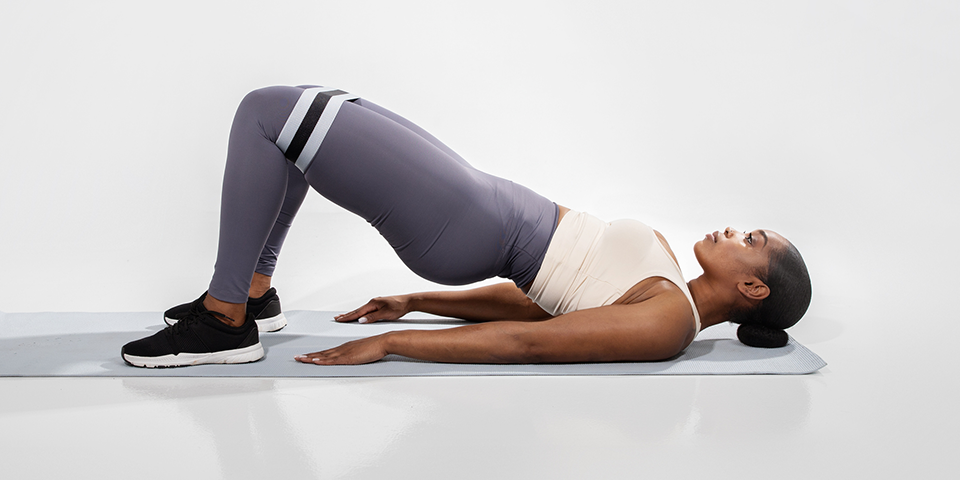
1. Groot Bridge
This solo glute exercise for beginners uses only your own body weight to build strength. To increase the difficulty, separate one side of your body by lifting your feet off the ground.
- Lie on your back and drop your arms to your sides. Bend your knees and place your feet flat on the floor.
- Pull in from your belly button to tighten your core muscles. squeeze your glutes Push your hips up to form a straight line from your knees to your shoulders without arching your body.
- Place your head on the floor and focus your eyes toward the ceiling.
- Hold the position for one beat and repeat the raising and lowering.
2. Hip thrust
Hip thrusts allow you to isolate your glutes while adding external resistance (and lots of it), increasing muscle activation for better results.
- Sit on the floor with your back against the long side of a gym bench and place your feet flat on the floor (if using weights, place a barbell on your hips). The bench pad should be placed directly below the shoulder blades.
- Let’s train our core Press through your heels and lift your hips toward the ceiling, keeping your chin tucked to avoid arching your back too much.
- Squeeze your glutes at the top of the movement and slowly lower your butt to within a few inches of the floor, then repeat.
3. Lateral band walk
The side-to-side movement of the lateral band walk targets the gluteus medius and minimus, which are often weak even in active people.
- Wrap a looped resistance band around your legs just above your knees and stand with your feet together.
- Keep your back flat, abdominal muscles engaged, hips pushed back, knees bent, and lower your body into a squat, shifting your weight toward your heels.
- While maintaining a squat, simultaneously raise your hips a few inches and step your right foot to the right, lowering your hips completely.
- Raise your hips a few inches again and bring your left and right feet together, then lower them all the way down, keeping tension on the band to keep your knees from caving in.
- Repeat on the other side, alternating sides. Perform the same repetitions on both sides.
4. Side leg lift
This floor exercise may look retro, but activating your glutes couldn’t be more meaningful. Lifting the leg laterally activates the hip abductor muscles (gluteus medius and minimus), which help stabilize the pelvis.
- Support your upper body with your forearms, straighten your left leg, and lie on your right side with your head and right leg at a 90-degree angle.
- Keeping your core engaged, slowly lift your top leg until you feel your hips begin to tilt upwards.
- Pause and lower your top leg to the starting position. Once you’ve completed all your reps, switch sides and perform the same reps on both.
5. Donkey Kick
Donkey kicks help improve your mobility by strengthening your gluteus maximus muscles. This hip extension exercise involves lifting your legs as high as possible while maintaining maximum tension in your glutes.
- Get on all fours and place your hands directly below your shoulders and your knees directly below your hips. The back should be flat and the neck should be neutral.
- With arms straight, core engaged, and knees bent at 90 degrees, lift your right knee off the floor and push the sole of your right foot toward the ceiling. At the top of the movement, squeeze your right glute (butt muscle) as hard as possible.
- Reverse the movement and lower your right knee to the starting position.
- Repeat the prescribed number of reps, making sure to perform the same number of reps on each leg.
6. Fire hydrant
What fire hydrant exercises lack in elegance, they more than make up for in glute strengthening. Lifting your legs laterally specifically trains your gluteus medius and minimus, increasing stability through the full range of motion of your hip.
- Get on all fours with your hands under your shoulders and your knees under your hips. This is the starting position.
- Keeping your hips level and your core engaged (see below for more information), raise your right knee outward as high as possible and hold for 1 second.
- Lower your right leg and return to the starting position for a total of 15 repetitions. Then switch sides and repeat the sequence.
7. Clamshell
The seemingly simple clamshell exercise is actually very versatile. It can be performed with or without resistance, and by slightly changing your body position and leg movements, you can target different glute muscles.
- Lie on your right side with your feet and hips stacked together, knees bent 90 degrees, and head resting on your right arm.
- Pull your knees toward your body until your feet are in line with your hips. Place your left hand on your left hip and avoid leaning back. This is the starting position.
- Engaging your abdominal muscles and keeping your feet together, raise your left knee as far as you can without rotating your hips or lifting your right knee off the floor.
- At the top of the movement, squeeze your glutes and hold for 1 second, then slowly lower your left knee to the starting position.
- Repeat this and repeat on the other side.
8. Frog Pump
The frog pump’s unique plantar-to-plantar positioning takes leg power out of the equation and forces you to use your glute muscles to lift your hips.
- Lie on your back with your arms at your sides, palms facing down. Alternatively, you can make a fist with your hand, place your elbow on the floor, and raise your fist so your forearm is perpendicular to the floor.
- Bend your knees and press the soles of your feet so your feet form a “frog leg” or “butterfly leg” shape.
- Press the outsides of your feet into the floor, engage your core, and use your glutes to lift your hips. Make sure your shoulders and upper back remain fixed to the floor.
- Pause and slowly lower your hips to the floor. repeat.
9. Lateral step up
Lateral step-ups utilize an everyday, functional movement: stepping onto an elevated surface to strengthen the gluteus medius and minimus.
- Stand on your right side on a knee-height bench or box, holding dumbbells by your side at arm’s length, palms facing inward.
- Place your right foot in the center of the bench. This is the starting position.
- Keeping your chest up and core engaged, push your body up with your right leg until it’s straight (make sure your left foot doesn’t touch the bench).
- Pause, then lower your body back to the starting position. Perform the same repetitions on both sides.
10. Cable side leg lift
This leg raise variation challenges your balance while engaging your hip stabilizers (gluteus medius and minimus) on both the stance and working legs.
- Select the lightweight stack on the cable machine and slide the pulley to the bottom pin.
- Wrap the Velcro cuff cable attachment around your left ankle. Stand with your right shoulder facing the machine and hold the vertical part of the machine for stability. This is the starting position.
- Keeping your legs straight and core engaged, lift your left leg straight out to the side as high as possible without tilting your pelvis or upper body.
- Slowly lower your legs back to the starting position. Repeat this, then switch sides.
Tips to make glute training more effective
Glute separation exercises only work if done correctly and as part of a more comprehensive health and fitness plan. To ensure you optimize your glute training, consider the following tips:
1. Activate your glutes
It may sound obvious, but when doing glute isolation exercises, make sure that: actually Activate your glutes and don’t allow other muscles (especially your back and legs) to compensate.
Warming up your glutes before a workout can be helpful, as can using a mirror or manual cues (such as tapping your butt to remind you to “turn it on”). Also, don’t underestimate the mind-body connection. When training your glutes alone, think about them contracting.
2. Vary your exercises
As mentioned above, the glutes are made up of three separate muscles, and different exercises are designed to target different muscles. If you’re repeating the same few movements over and over again, you might be neglecting a certain area (you might be neglecting your glute strength).
Make sure each glute workout includes exercises that work the glutes maximus, medius, and minimus, and change up your routine every few weeks.
3. Prioritize recovery
The effects of strength training are seen during the post-workout recovery period. When you are at rest, your body has a chance to repair and rebuild muscles that were damaged during exercise.
Therefore, if you habitually sleep less or skip the gym, you won’t reap the rewards of your hard work.
4. Be consistent
As with any fitness endeavor, consistency is key. Doing one glute workout here and there won’t give you lasting results. But if you train your glutes two to three times a week, you’ll start to notice changes in strength, stability, and appearance.
5. Eat the right protein (and carbohydrates and fats)
Proper nutrition is essential for building and maintaining physical fitness. You need protein to fuel muscle growth, but you also need carbohydrates and fat for energy and a myriad of other biological processes.
Your best bet is to stick to a balanced diet that includes fresh fruits and vegetables, whole grains, and lean protein. (And try to avoid dietary trends that encourage you to omit entire food groups.)
Benefits of glute training
Strength training is always a good idea because it can improve bone density, combat age-related sarcopenia (muscle loss), help you lose and maintain weight, and make everyday functional movements easier.
On top of that, specifically targeting the glutes has some unique benefits.
1. Shaper rear
While it may not be the most noble reason to perform glute isolation exercises, aesthetic benefits can be a motivator. Prioritizing your glutes in your fitness routine will increase muscle mass and help you create a rounder, more shapely butt.
2. Pelvic stability
Strengthening your hip muscles, especially the hip abductors gluteus medius and minimus, can help stabilize your hip and pelvis. This forms a strong foundation for efficient movement, such as walking, running, climbing stairs, and playing sports.
3. Speed and power
Whether you want to jump higher during a pick-up basketball game or get to the elevator before the doors close, strengthening your glutes will increase your speed and power, accelerate faster, and improve control of your movements.
4. Improved posture and fewer injuries
Weak glutes often cause painful compensation in the lower back, leading to chronic ankle sprains and knee pain. Strengthening your glutes can improve your posture and minimize factors that increase your risk of injury.
5. Improved balance
Strong glutes help you maintain balance, especially when shifting your weight from one leg to the other. This will help you avoid falls (the risk of which increases with age) and deal with obstacles (uneven ground, raised curbs, potholes, etc.) when moving around.
Combined exercises and single exercises
Compound exercises work multiple joints and work multiple muscle groups, while isolation exercises typically work only one joint and focus on a single muscle or muscle group.
For example, a squat requires you to bend your hips and bend your knees and ankles. Although it targets your glutes, it also works your quadriceps, hamstrings, calves, and core muscles. In contrast, the clamshell focuses solely on hip rotation and isolates the gluteus medius and minimus.
Both compound and solo exercises have value. The “best” practice depends on your goals. If you want to lift heavy loads and build functional strength that you can use in your daily life, compound lifts are the way to go.
You can also work more efficiently because you work multiple muscle groups on each rep.
If you want to develop specific muscles or address muscle imbalances, isolation exercises can help you narrow your focus. For example, the classic isolation exercise, bicep curls, strengthens your biceps, but doesn’t do much else.
And while the aforementioned clamshell itself won’t add pounds of muscle mass to your butt, it will strengthen your glutes minimus and medius, which are hard to target with compound lifts.