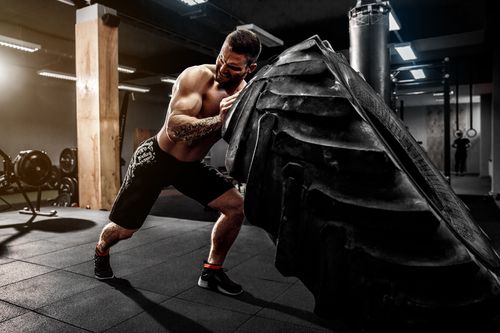
HIIT stands for high-intensity interval training, which is intense training performed over short periods of time with short breaks in between. This cardiovascular workout works wonders in losing excess weight.
HIIT workouts get your heart rate up and maintained, allowing you to burn more fat in less time. HIIT workouts typically last between 10 and 30 minutes.
Research shows that training for a short period of time can provide the same health benefits as twice as much moderate-intensity exercise.
These are intense exercises that should be done before a short rest. These aerobic exercises are the best way to burn fat in a short period of time. With technological advancements such as smart scales on the market today, managing your weight has become increasingly easy.
The Healthify Smart Scale has been carefully designed to provide you with the right data combined with the benefit of a professional coach’s experience.
These electronic devices track details about your body composition, such as body fat percentage, bone mass, muscle mass, and weight, providing comprehensive information about your health.
HealthifyPro is a complete package with smart scales to track your progress, expert coaches to provide personalized feedback, and smart AI assistance for an advanced CGM experience at your fingertips.
10 Best HIIT Cardio Training for Weight Loss
Before you start your HIIT routine, there are a few things to consider for your safety.
- Choose a low-intensity modality that you are familiar with. For example, if you haven’t jogged in a while, don’t run as hard as you can.
- Start with a few sessions, twice a week. HIIT exercises can be very taxing, especially if you use high-impact methods.
- Work sessions should not exceed 30 seconds. Work intervals longer than 30 seconds make it difficult to maintain the intensity needed to qualify as HIIT.
- Make sure you have enough time to relax. You can only maintain the appropriate intensity for HIIT by resting for equal or more minutes than you work.
- If you have joint pain, start with low-impact activities like cycling or swimming.
1. Burpees
This is a two-part exercise that includes push-ups followed by aerial jumps. Burpees work all the muscles in your body, but primarily target your calves, chest, triceps, shoulders, biceps, glutes, and lats.
How do you do burpees?
Burpees are very easy to perform as they do not require any machines or weights. To perform burpees, get into a partially squat position and bend over.
Keep your back straight and ground your chest. Push-ups and frog jumps with your feet together and your hands in the air. Return to starting position and repeat.
2. High knee
This is another easy exercise that requires no training equipment. Elevating your knees strengthens your leg muscles while increasing your heart rate, further improving your body coordination and flexibility.
How to do high knees?
To perform a high knee, place your feet hip-width apart, lift your left knee toward your chest, and repeat with the opposite leg at a running speed. When performing the exercise, keep your arms extended so that your knees touch your palms.
3. Lunge jump
Lunge jumps are an advanced variation of the regular walking lunge exercise. This exercise involves jumping high into the air and placing your other foot in front of you before landing. This exercise requires no equipment and burns a huge amount of calories. It also helps increase your heart rate.
How to do a lunge jump?
To perform a lunge jump, stand with your legs at least shoulder-width apart. Move your legs forward while keeping your back straight. Next, bend your legs and lower yourself down, making sure your feet are perpendicular to the floor. Now jump at the end and bring your other leg forward and repeat the exercise.
4. Jumping Jack
Jumping jacks, also known as side straddle hops, are a full-body exercise that can be performed almost anywhere as they don’t require any training equipment.
How to do jumping jacks?
To perform jumping jacks, stand up straight with your feet at least hip-width apart. Relax your shoulders and look straight ahead.
Then jump and spread your legs to the sides. At the same time, move your hands up and down above your head. Repeat the steps following the same steps.
5. Climber
Climbing a mountain is not easy. But what happens when the mountains become flatlands? Well, that’s all mountaineers practice.
This exercise is well-known for its benefits, including increasing cardiorespiratory endurance and agility while focusing on the entire body.
How to become a mountain climber?
To perform the mountain climber, get into a straight-arm plank position. Place your hands a little wider than shoulder width apart.
Then, without raising your hips, bring your right knee toward your chest. Then move it back and bring your other knee forward. Repeat the procedure as soon as possible.
6. Jumping rope
Rope jumping, also known as skipping, is preferred by thousands of people to running because of its many benefits. It’s relatively easy to do, burns a lot of calories, and is certainly fun.
How to jump rope?
All you need to jump rope is a rope. Stand up straight with your feet close together and your elbows close to your stomach. Then jump and move the rope in a circular motion around your body from head to toe and repeat.
7. Push-ups
Push-ups can be difficult for beginners, but they are one of the most common bodyweight exercises. Perfect for training your upper body. Helps build the chest, shoulders and triceps.
How do you do push-ups?
No training equipment is required for push-ups. To practice push-ups, you need to take a cat position with your palms and toes on the ground. Then lower your chest and touch the ground. Make sure your spine is not bent and your legs are straight. As you gain experience, you can venture closer to your toes.
8. Side Jackknife
The side jackknife is an exercise that targets your obliques, shoulders, and quadriceps. This also includes your glutes and hip flexors.
How to do a side jackknife?
To perform a side jackknife, lie on your side and place one leg over the other, one hand behind your head and elbows apart.
Place your other hand on the ground in front of you to balance your weight. Next, try bringing your thighs and elbows closer together and returning to the starting position. Then repeat the steps to implement the training.
9. Russian Twist
Russian twists are a simple yet highly effective way to strengthen your core and hips. This is a popular exercise among athletes, thanks to its aftereffects that help with twisting movements and quick changes of direction.
How to do a Russian twist?
To perform the Russian Twist, sit on the ground with your knees up in an AV position. Make sure your feet are about shoulder width apart. Then twist from one side to the other. Repeat this several times to train your body.
10. TRX pull up
TRX pull-ups require significant upper body strength. But it’s easy if you know the correct technique and practice it many times. To do this, you will also need a TRX trainer.
How to do TRX pull-ups?
To perform a TRX pull-up, squeeze your TRX. Next, spread your legs shoulder-width apart and use your back and arms to pull yourself up.
Your chest should be at the same level as the handle and your body should be held in this position for a few seconds. Gradually lower your body and repeat the same steps.
Don’t worry if you can’t get the handle level at first. It will take a few days of training to get there, but you will get there eventually. Patience and determination are key.
Benefits of High Intensity Interval Training (HIIT) Workouts
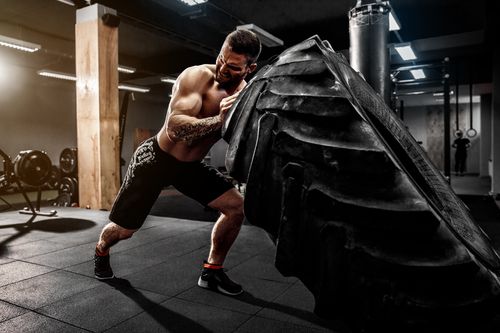
- Research shows that HIIT cardio training can burn a lot of calories in a short amount of time.
- HIIT cardio has the amazing ability to increase your body’s metabolic rate for hours after your workout. According to one study, HIIT can continue to improve your metabolic rate for hours after your workout. As a result, it helps you burn calories even after your training session. Other research shows that HIIT can shift your body’s metabolism from consuming carbohydrates to using fat for energy.
- HIIT aerobic training can also help increase muscle mass when done using the appropriate weight and technique for a specific individual.
- HIIT aerobic training also improves an individual’s ability to consume oxygen. One study showed that participants who did 20 minutes of HIIT training four days a week for five weeks increased their oxygen uptake by 9%.
- Research shows that high-intensity exercise may be beneficial for people at risk for type 2 diabetes. HIIT cardio also lowers blood sugar levels in diabetics. HIIT also improves insulin resistance compared to regular exercise.
- Research shows that HIIT can lower heart rate and blood pressure in overweight or obese groups, where high blood pressure is prevalent.
- HIIT cardio training usually does not require any training equipment. The 10 exercises suggested above do not require any expensive heavy equipment other than a rope that is easily available at home.
healthy notes
HIIT improves cardiovascular health, manages blood sugar levels, and reduces body fat. It’s a very effective workout and easy to start at home. If you have a busy schedule and want to stay healthy, HIIT is a great way to start.
conclusion
HIIT cardio training is one of the best ideas for training without spending too much money on expensive equipment. However, we highly recommend seeking professional advice to ensure proper execution and avoid injury.
Be sure to wear suitable footwear, along with other protective elements. In order to train effectively, at the same time as training, you should also pay attention to the proper dietary requirements of the body. Have a good start!
Disclaimer: The purpose of this article is only to spread knowledge and share awareness. It is not a substitute for professional medical advice.
HIIT Workout – Frequently Asked Questions (FAQ)
Q. Is HIIT safe?
Generally yes, but this depends on your own fitness level and circumstances. If the foundation of aerobic endurance is developed over time and training protocols are followed properly, HIIT can be a safe and effective method of exercise. If you are new to working out or have a severe heart condition, you should get your doctor’s permission before beginning strenuous exercise. HIIT isn’t the only form of exercise you can do during the week, but it can be helpful if you’re short on time and need a quick workout.
Q. Can I do HIIT multiple times a day?
For the average person, I don’t recommend doing HIIT more than once a day. The goal of a HIIT workout is to give 100% effort during the workout, followed by adequate recovery time (ranging from 24 to 48 hours depending on your fitness level). A second HIIT workout may not be as efficient or effective as the first, and excessive exhaustion can lead to injury. Instead of two HIIT workouts, you can also add power walking or low-intensity cardio later in the day for active recovery. You don’t always have to work your hardest to reap the benefits of HIIT.
Q.Can I do HIT at home?
Yes, HIT can be very effectively performed at home or while traveling with little equipment. A simple and effective bodyweight HIT routine can be built using the following exercises, for example:
Push-up variations
dips
Pull-ups/chin-ups
Line variants
sit on the wall
squat
Plank variations
Q. Is HIIT beneficial for athletes?
HIIT serves as an excellent overall strengthening and conditioning stimulus for athletes engaged in sports and other challenging physical activities. There are some additional considerations when applying HIIT for athletes, such as properly scheduling workouts alongside skill and specific conditioning training or competitive events. A big benefit of HIIT for athletes is its safety. The chances of getting injured while performing proper HIIT are very low.
Q. Is it necessary to warm up before HIIT?
Warming up is necessary for many physical activities, especially when exposed to strong or sudden forces. But HIIT is different. The forces experienced by the musculoskeletal system during HIIT training are relatively low, and there is no sudden increase in force during HIIT training. However, there is still a hidden warm-up for each HIIT exercise. The first 30 seconds or so of a properly applied HIIT set is a warm-up for the higher-intensity portion of the second half of the set, and the efficiency of HIIT kicks in again.
Q. My knee hurts. Can I still do HIIT?
With a focus on safety and controlled force exposure, HIIT is as safe as exercise. However, if you have knee pain, it’s best to see your doctor and, if possible, train with a HIIT personal trainer first.
Q. How can HIIT help?
HIIT improves aerobic and anaerobic fitness, promotes fat oxidation, maintains muscle mass, improves blood pressure, and improves cholesterol levels due to cardiovascular health.
Q. Does HIIT help you lose weight more than traditional endurance training?
There are two components to losing weight: diet and exercise. To lose weight you need to be in a calorie deficit, and diet and exercise can help you achieve this. If you go for a two-hour run, you’ll probably burn more calories than completing a 20-minute HIIT session, but if you’re short on time, a HIIT session will give you the best results. HIIT combined with the right diet is much more effective at losing weight than exercise or diet alone.
Q. How long should I continue HIIT training?
For optimal results, we recommend keeping your HIIT workouts between 30 and 45 minutes, but the length ultimately depends on your fitness goals.
Q. Does HIIT help you lose weight?
HIIT can play a role in fat loss as well as lean tissue gain. If you have excess fat to lose, applying HIIT along with a proper diet will reduce body fat. Utilization of stored glycogen, release of fat-burning hormones, and increased metabolic rate stimulated by HIIT all support individuals aiming to reduce body fat levels. In this scenario, the weight on the scale typically decreases between weigh-ins, but it is also possible for the weight on the scale to remain the same for a period of time if body fat has decreased by the same amount as lean tissue has increased over that period. Conversely, people who don’t have excess body fat to lose may end up gaining weight on the scale due to lean tissue gain.
Q. Can anyone do HIIT?
HIIT can be applied to all types of people as long as it is properly programmed and managed. There’s evidence that all types of people can benefit from HIIT
Q. How can I do HIIT safely?
Always check with your trainer before starting a new workout routine, especially if you haven’t been working out. Initially, keeping your HIIT workouts low-intensity is a great way to stay safe. Once you feel good enough to add jumps and movements to your exercises, you’ll feel more confident. Also, if you feel pain, please stop training and consult your trainer.
Q. What are the main body parts that HIIT focuses on?
Most HIIT exercises focus on overall agility and strength, but many target the core, arms, legs, glutes, and biceps.
editorial team
Saravanan “Shal” Hariram, ACE Certified Personal Trainer